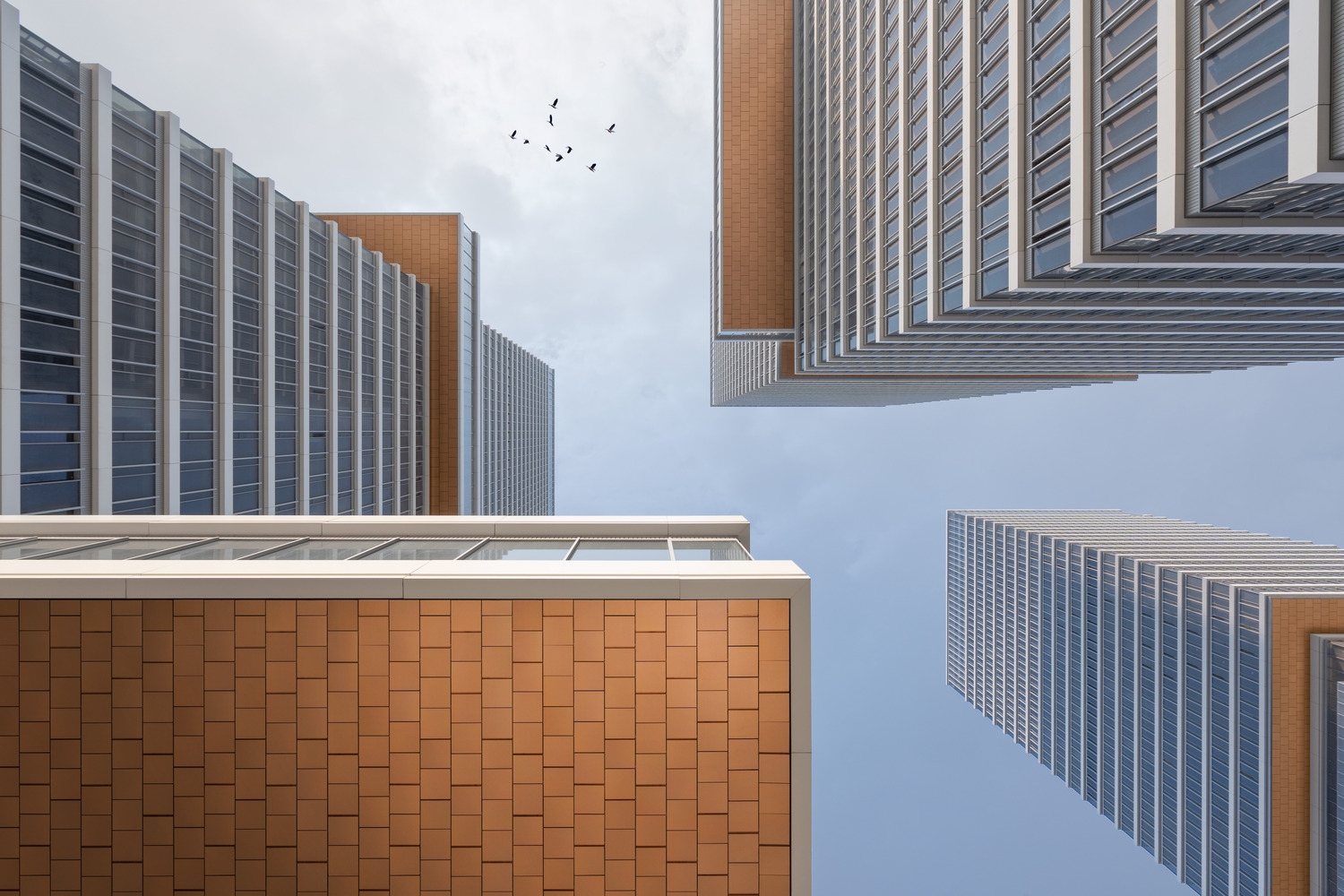
Huamu Lot 10 – The Summit by KPF: Sky Galleries Redefine Towers
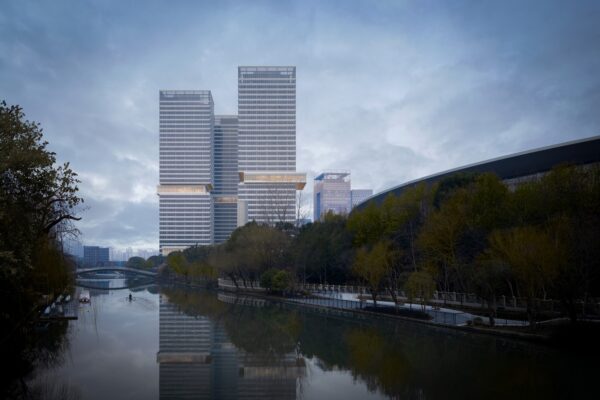
KPF (Kohn Pedersen Fox) has been awarded Best of the Best in the High Rise Buildings category at the Architecture MasterPrize for Huamu Lot 10 – The Summit, a mixed-use development in Shanghai that reimagines the tower typology and elevates public life in the city. The project’s three office towers are organized around a central plaza, with cantilevered sky galleries creating cultural and social connections at mid-height rather than at the crown of the buildings.
We gained insight from Lead Architect, Jeff Kenoff into the vision for Huamu Lot 10 – The Summit, its design process, and how it connects commerce, culture, and civic life along the Huangpu River.
Could you share some background about yourself or your practice and your work on Huamu Lot 10 – The Summit?
Jeff Kenoff: Certainly. I’m a Design Principal at KPF with over three decades of experience. My focus has been on large-scale mixed-use projects around the world, especially in Asia, Southeast Asia and the US, where I’ve led many of KPF’s major urban interventions. Throughout my career, I’ve been an advocate for designing buildings that engage with urban environments and advancing the discourse of architecture and urbanism. Specifically exploring how architecture operates at the scale of the future city and how tall buildings can contribute to public life rather than exist as isolated objects through finding ways to integrate density, connectivity, and identity into projects that feel both ambitious and grounded in their context.
What was the brief for the award-winning project Huamu Lot 10 – The Summit?
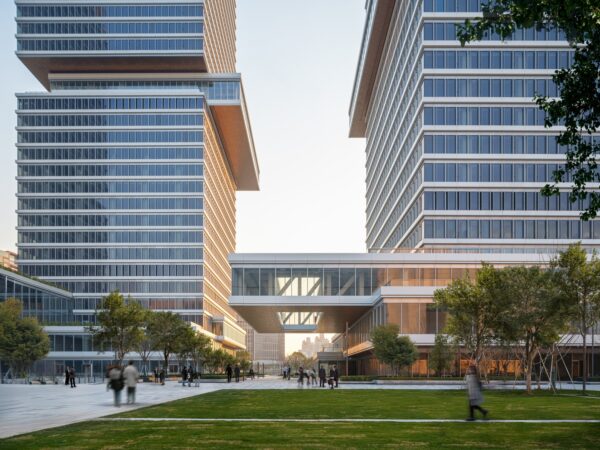
Jeff Kenoff: From the outset the brief was quite ambitious. We were asked to design a mixed-use development that seamlessly combines commercial and cultural spaces on a prominent site along Century Park. The client didn’t want just another set of towers, they envisioned a wholistic destination that would bring together workplace, a major new museum, and vibrant public space. In essence, the project was conceived as “an integrated place of culture and commerce.” The site itself is adjacent to both the Park and the Huangpu River, which was largely a neglected riverfront. Thus, part of the brief was to reactivate that underused waterfront while creating a new civic hub for the district. We needed to design three towers that would house much of the labs, workplaces, galleries, libraries, research spaces, studios and commercial aspects for the museum – one that could bring culture, commerce, and public life together in a cohesive and engaging way.
Can you describe your design process and approach to Huamu Lot 10 – The Summit?
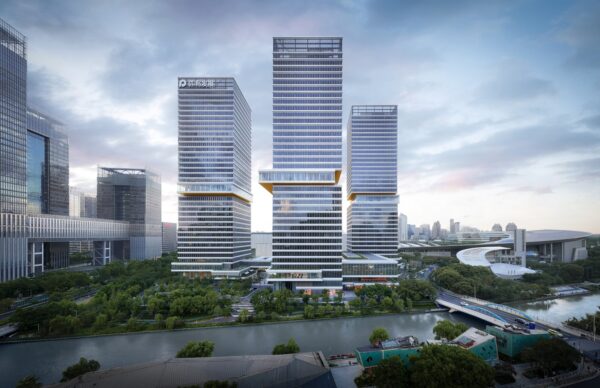
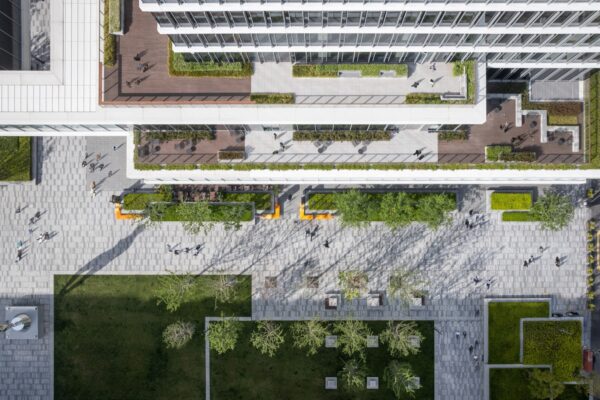
Jeff Kenoff: We approached the project as an urban remediation rather than a collection of individual buildings. One of our earliest and most important moves was reorganizing site circulation, pushing vehicles to the perimeter and freeing the center of the site to become a pedestrian-focused public plaza. This allowed the development to open directly to the waterfront and adjacent park.
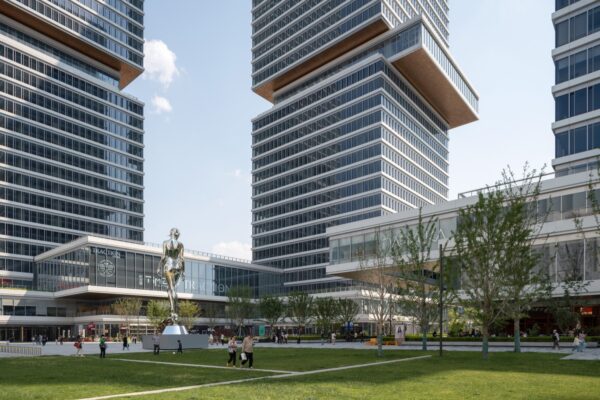
Architecturally, we challenged the conventional tower typology by introducing large cantilevered sky galleries at mid-height. Instead of placing the project’s defining moment at the top of the towers, we concentrated it in the middle, creating a strong visual identity and a physical link between the office towers, the museum, and the public realm. These galleries became a central organizing idea for the project, both spatially and conceptually.
What were the main challenges during the project, and how did you resolve them?
Jeff Kenoff: One of the primary challenges was integrating multifarious programs – commercial and public cultural institution – into a unified experience. The sky galleries became the key solution, acting as both a literal and symbolic bridge between culture and commerce. Structurally, they were complex, but through close collaboration with our engineering team, they became one of the project’s most defining features. They remain some of the largest cantilevers in the city.
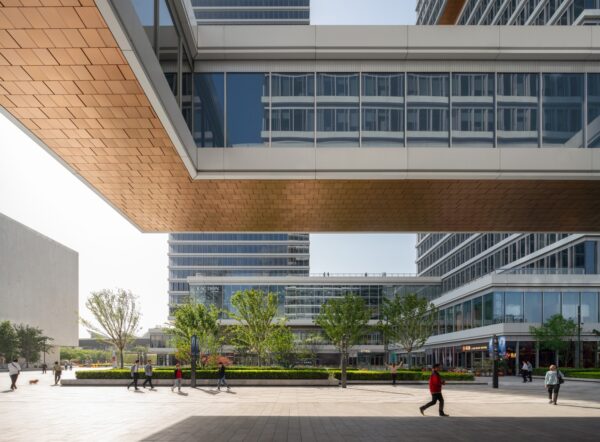
Another challenge was connectivity. The site was isolated and disconnected from its surroundings. By rethinking circulation, prioritizing pedestrians, and creating a generous public plaza, we were able to transform the site into an open, accessible destination that engages the broader city.
What do you consider the most distinctive or innovative aspect of Huamu Lot 10 – The Summit?
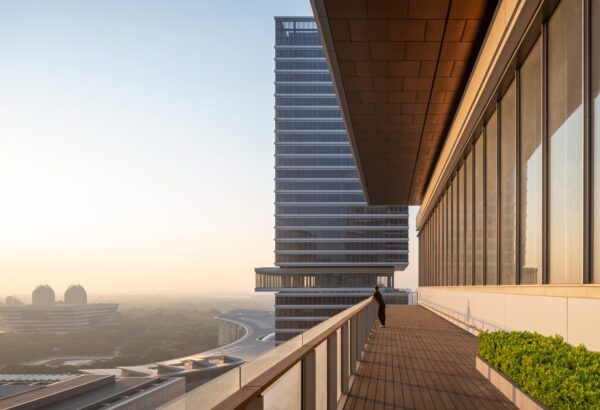
Jeff Kenoff: The cantilevered sky galleries mentioned previously are the most distinctive element. Placing a shared, cultural space at mid-height rather than at the crown of the towers flips expectations and introduces a new way of thinking about cultural space in tall buildings. They define the project and the adjacent museum while reinforcing the idea that vertical urbanism should actively participate in public and cultural life.
Which outcomes of Huamu Lot 10 – The Summit are you most proud of, and why?
Jeff Kenoff: I’m most proud of how the project functions as part of the district. What was once an underutilized riverfront site is now an active civic space. The plaza, museum connection, and permeability of the development have created a lively public environment, and seeing people genuinely use and inhabit those spaces is incredibly rewarding.
I’m also proud of the project’s environmental performance and the quality of space it provides for occupants. Daylight, views, access to fresh air, and shared amenities were all critical to the design, and they contribute to a healthier and more engaging workplace.
What inspires your work, and who or what has had the strongest influence on your approach within your discipline?
Jeff Kenoff: Cities themselves and their externalities are one of my greatest source of inspiration, how people move, gather, and interact within them. I’ve been strongly influenced by mentors and collaborators who emphasized the importance of context, architectural responsibility, and vertical urbanism. Working across different cultures and cities has reinforced the value of blending global ideas with local conditions and cultures.
What does receiving the Architecture MasterPrize for Huamu Lot 10 – The Summit mean to you, and how do you see it influencing your future work or practice?
Jeff Kenoff: Receiving the Architecture MasterPrize is deeply meaningful because it affirms the core ideas behind Huamu Lot 10 – The Summit. It validates the value of taking thoughtful risks and pursuing integrated, civic-minded design. More than anything, it motivates us to continue pushing forward, designing projects that are ambitious, responsible, and genuinely contribute to the life of the city.
We thank Jeff Kenoff, Design Principal at KPF (Kohn Pedersen Fox) for sharing the story behind Huamu Lot 10 – The Summit, a project where innovative architecture, cultural engagement, and public space converge to redefine vertical urbanism in Shanghai. The development demonstrates how tall buildings can actively participate in civic life, connecting commerce, culture, and the community.