What Is Cultural Architecture? A Guide with 10 Award-Winning Examples
April 7, 2026Cultural architecture does more than house collections or seat audiences. At its best, it defines how a community understands itself, who it has been, and who it aspires to become. These are ten of the most significant cultural buildings recognized by the Architecture MasterPrize.
What Is Cultural Architecture?
Cultural architecture refers to buildings designed to serve the cultural life of a community or society. Museums, galleries, concert halls, opera houses, libraries, theatres, cultural centres, and civic arts institutions all fall within this category. These are not buildings defined by a single function; they are defined by a shared purpose: to preserve, create, celebrate, or transmit culture from one generation to the next.
The category is broader than it might first appear. A mosque, a temple, or an indigenous community hall can all be works of cultural architecture. A science centre, a national archive, or a memorial can be too. What unites them is that they serve as physical expressions of collective identity and shared values, spaces where society gives tangible form to what it considers worth remembering, celebrating, or protecting.
Cultural architecture is also one of the most technically demanding typologies. These buildings must manage acoustics, climate control, exhibition lighting, crowd circulation, and accessibility at a high level, while simultaneously operating as civic landmarks that represent an entire institution or community. Getting that balance right requires exceptional design, which is precisely why the Architecture MasterPrize has dedicated a category to it since the program’s founding.
Why Cultural Architecture Matters
The cultural buildings a society builds reveal its priorities. When the Basque government commissioned Frank Gehry to design the Guggenheim Museum Bilbao in the early 1990s, it was not only investing in a museum: it was making an argument about what Bilbao deserved to become. When Tadao Ando designed the He Art Museum in Guangdong, he was making an argument about what private cultural philanthropy in China could look like. When Renzo Piano placed the Istanbul Museum of Modern Art on the Bosphorus waterfront, opening the previously inaccessible shoreline to the public, he was making an argument about the relationship between a museum and a city.
Cultural architecture is important for several reasons beyond aesthetics. It preserves heritage and history, providing permanent homes for collections and archives. It shapes contemporary identity, giving communities spaces to gather around shared cultural experiences. It drives economic development: the ‘Bilbao Effect,’ the phenomenon of a landmark cultural building transforming a city’s trajectory, has been studied and replicated across the world. And it signals civic ambition, demonstrating that a city or institution takes seriously its responsibility to future generations.
Cultural buildings are among the most watched and discussed projects in the world. An exceptional museum or concert hall becomes a reference point for an entire city’s global identity, and a benchmark against which all subsequent architecture in that place is measured.
What Makes Cultural Architecture Exceptional?
The Architecture MasterPrize jury evaluates cultural architecture against the same criteria applied across all 41 AMP categories: design excellence (including aesthetics, environmental sensitivity, cultural relevance, and contextual consideration), originality, the use of innovative materials or technologies, and how well the building fulfills its functional requirements. In the cultural architecture category, two additional factors consistently distinguish the Best of Best from the very good.
- Civic presence.
Does the building contribute to its urban or landscape setting in a way that enriches the public realm? The best cultural buildings do not simply sit inside their sites but engage with them, opening up views, creating new public spaces, and establishing a dialogue with their surroundings.
- Programmatic ambition.
Does the building serve its community in ways that go beyond the minimum brief? Museums that include free educational spaces, concert halls that host community events, cultural centres that knit together multiple functions: these are the projects that consistently attract the jury’s highest recognition.
AMP Cultural Architecture Winners: Quick Reference
The table below covers the ten featured projects, drawing primarily from the 2025 Architecture MasterPrize edition, with the strongest 2024 and 2020 winners included for their international standing.
| Project | Architect | Country | AMP Distinction |
| Sports & Cultural Center Marie-José Perec and Joséphine Baker | Onze04 Architectes | France | Design of Year 2025 |
| Saint-Jean-de-Luz Cultural Centre | Dominique Coulon & Associés | France | Best of Best 2025 |
| La Coursive | PROJECTILES | France | Best of Best 2025 |
| CMP Inspiration | Kengo Kuma and Associates | Taiwan | Winner 2025 |
| Shenzhen Science & Technology Museum | Zaha Hadid Architects | China | Winner 2025 |
| Yohoo Museum | Aedas / Ken Wai | China | Winner 2025 |
| Border Library and Public Park | Fernanda Canales | Mexico | Winner 2025 |
| Istanbul Museum of Modern Art | Renzo Piano Building Workshop | Turkey | Best of Best 2024 |
| Zhuhai Jinwan Civic Arts Centre | Zaha Hadid Architects | China | Best of Best 2024 |
| He Art Museum | Tadao Ando | China | Design of Year 2020 |
Table: Selected Architecture MasterPrize winners in the Cultural Architecture category.
10 Outstanding Cultural Architecture Examples, Recognized by the Architecture MasterPrize
1. Sports and Cultural Center Marie-José Perec and Joséphine Baker, France – Onze04 Architectes
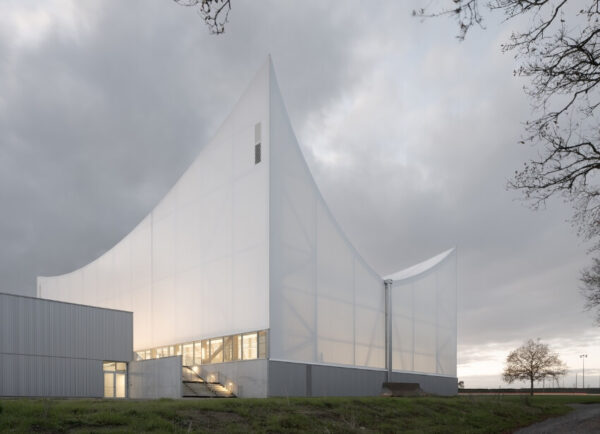
The Sports and Cultural Center Marie-José Perec and Joséphine Baker by Onze04 Architectes is the 2025 Architectural Design of the Year, the highest distinction the Architecture MasterPrize confers. Located in La Bouëxière, France, the building is designed as a civic connector rather than a closed object: it is organized into two distinct volumes, a multi-sports hall and a dance hall, with a public promenade running directly through the complex, physically linking existing community facilities with the surrounding neighbourhoods.
The main sports hall is covered by a dramatic textile roof with four rising peaks, reaching between 13 and 28 metres in height. The textile covering provides even, consistent natural light throughout the day, eliminating the harsh shadows and glare typical of sports halls. The project is named after two French sporting icons born to families with roots in the French Caribbean, and its programming reflects a commitment to sport and dance as tools of community cohesion. The jury’s recognition of a relatively modest-budget community building as the year’s highest architectural honour signals the AMP’s evolving definition of what design excellence means.
2. Saint-Jean-de-Luz Cultural Centre, France – Dominique Coulon & Associés
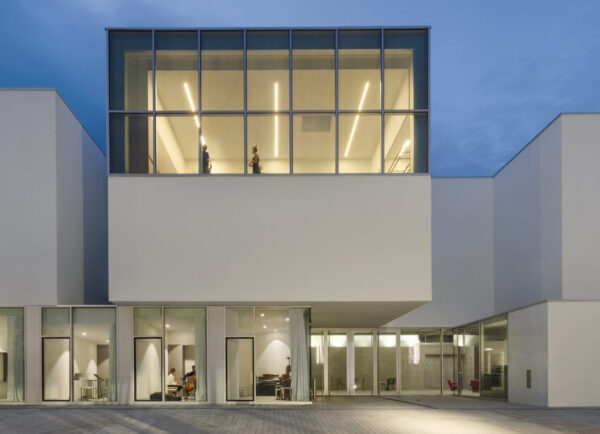
The Saint-Jean-de-Luz Cultural Centre by Dominique Coulon & Associés is a 2025 Best of Best winner, photographed by Eugeni Pons. Dominique Coulon is one of France’s most respected cultural architects, a practice that has now received AMP recognition across multiple editions, including the 2024 Architecture Firm of the Year title. The Saint-Jean-de-Luz project extends this record into the Basque Coast of southwest France.
Cultural centres on the Basque coast carry a particular weight: this region has one of the most distinct linguistic and cultural identities in Western Europe, and its cultural buildings are expected to serve not just functional but symbolic roles. Coulon’s design addresses this with the directness and material intelligence that characterises all his work. The 2025 Best of Best recognition confirms the project’s standing among the year’s most considered cultural buildings from around the world.
3. La Coursive, France – PROJECTILES
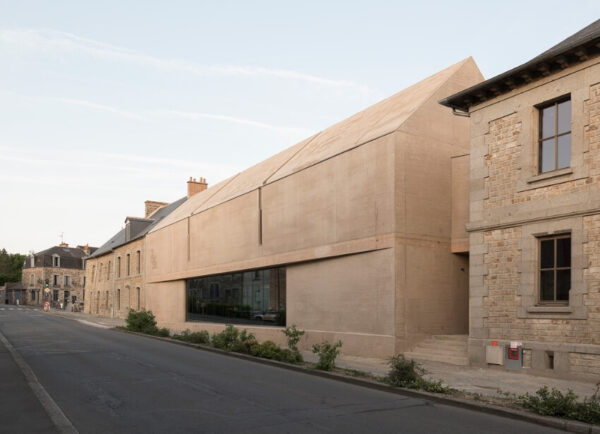
The La Coursive Heritage Interpretation Centre by Paris-based practice PROJECTILES is the second 2025 Best of Best winner in Cultural Architecture. Located at the foot of Fougères Castle, the largest medieval fortress in Western Europe, La Coursive is an Architecture and Heritage Interpretation Centre that tells the story of the city of Fougères in Brittany.
The project’s complexity lies in its context: the site falls within a strict heritage protection zone, and the design had to negotiate a set of existing historic buildings, including an 18th-century inn, a 19th-century adjoining structure, and a former school. PROJECTILES resolved this through what they describe as ‘urban sedimentation’, a contemporary extension that perpetuates the compositional logic of the historic surroundings while establishing a clearly new architectural identity. The 630 square metres of permanent and temporary exhibition space trace Fougères’ history of glassmaking, shoemaking, and the literary figures who shaped its cultural identity.
4. CMP Inspiration, Taiwan – Kengo Kuma and Associates
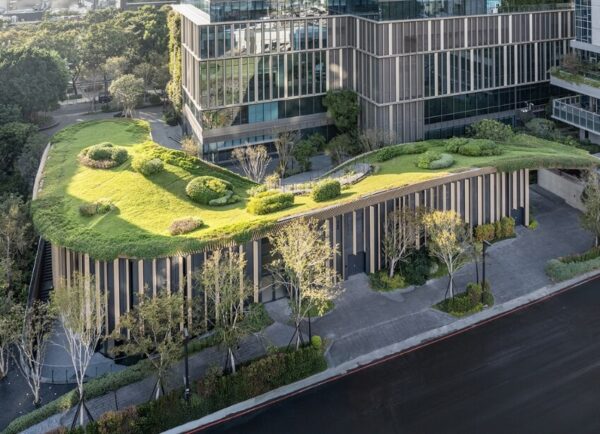
The CMP Inspiration cultural hub in Taichung, Taiwan, designed by Pritzker laureate Kengo Kuma and recognized in the 2025 AMP edition, repurposes a disused commercial area and former elementary school into a cultural landmark integrating public art, green infrastructure, and intergenerational exchange.
Kuma’s approach, dissolving architecture into its landscape rather than imposing upon it, is expressed here through the careful integration of vegetation, natural materials, and public programming that blurs the boundary between building and park. The project has transformed a once-declining district of Taichung into a vibrant space of everyday creativity over the 16 years since its conception. Its AMP recognition sits alongside Kuma’s broader presence in the 2025 edition as one of the Pritzker laureates whose work was featured across the program.
5. Shenzhen Science & Technology Museum, China – Zaha Hadid Architects
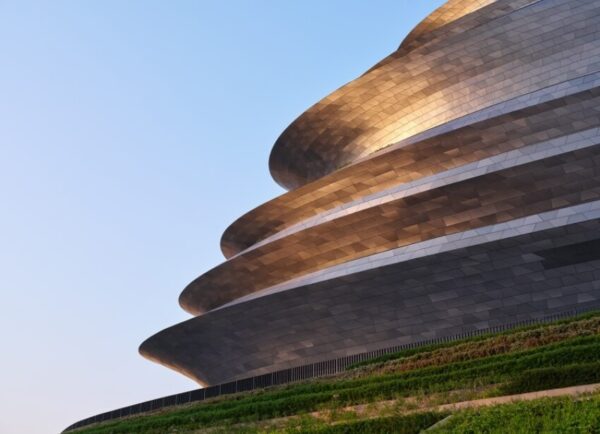
Zaha Hadid Architects’ Shenzhen Science and Technology Museum is among the firm’s most significant 2025 AMP-recognized projects, adding to a Hall of Fame record that includes the BEEAH Headquarters (BOB 2022), the Chengdu Science Fiction Museum (2024), the Zhuhai Jinwan Civic Arts Centre (BOB 2024), and the Masarycka mixed-use development in Prague.
The Shenzhen Science and Technology Museum is one of the most ambitious science institution commissions in Asia, serving a city that has become one of the world’s most significant technology and innovation centres in less than four decades. ZHA’s design continues the firm’s tradition of fluid, parametric form in service of large-scale public cultural institutions, creating a building whose architecture mirrors the dynamism and forward momentum of the discipline it houses.
6. Yohoo Museum, China – Aedas
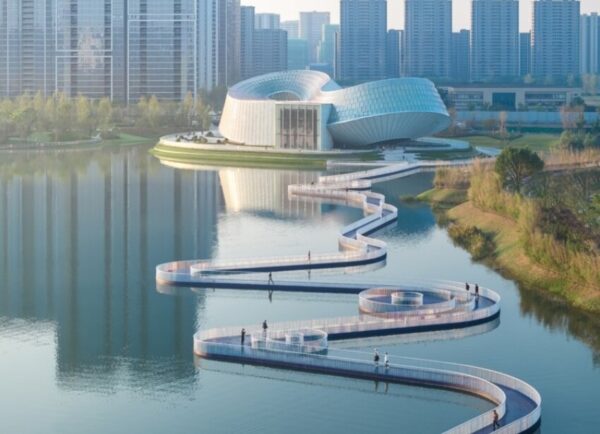
The Yohoo Museum by Aedas, designed by Lead Architect Ken Wai and located on Hangzhou’s Yohoo Lake, is a 2025 Architecture MasterPrize winner in Cultural Architecture. The building is defined by a double-ring structure inspired by ancient jade, the material that has been central to Chinese cultural identity for millennia. Photographed by Terrence Zhang, the building appears to float via a steel frame, its translucent ’emerald glass’ facades combining crystal clarity with jade-like warmth.
The circular courtyards at the heart of the building create a sequence of contemplative spaces that connect the building’s cultural program with the lake and landscape beyond. The Yohoo Museum extends Aedas’s remarkable record at the AMP, with the firm holding more than 33 Best of Best awards across multiple editions, the highest cumulative total of any practice in the program’s history. The project was commissioned by Hangzhou Liangzhu New City Transportation Investment Co., Ltd.
7. Border Library and Public Park, Mexico – Fernanda Canales
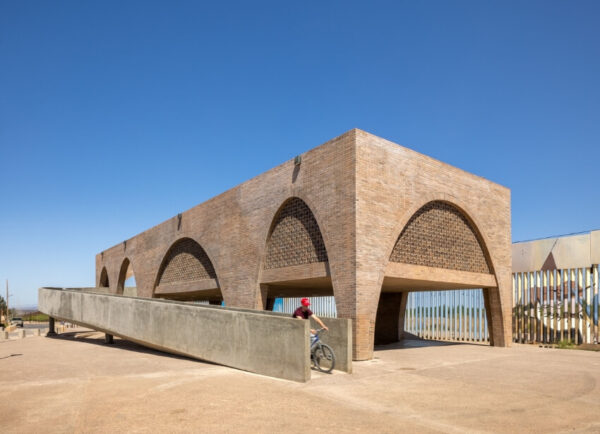
The Border Library and Public Park by Fernanda Canales is among the 2025 AMP’s most politically and socially resonant cultural architecture winners. Working at the literal border between Mexico and the United States, Canales has designed a library and public park that asserts the value of knowledge, access, and shared public space precisely where those values are most contested.
Fernanda Canales is one of Latin America’s most internationally respected architects, and the Border Library confirms her practice’s commitment to architecture as a form of civic argument. The building does not simply provide library services to a border community; it makes a case for what a border community deserves. Its AMP recognition places it alongside the program’s long tradition of celebrating cultural buildings that serve specific communities with particular care and precision.
8. Istanbul Museum of Modern Art, Turkey – Renzo Piano Building Workshop
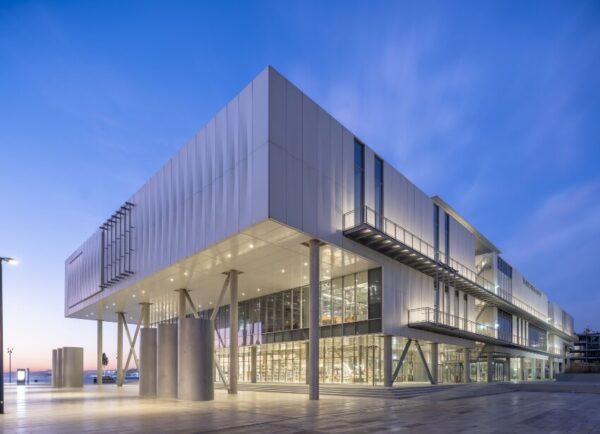
Pritzker laureate Renzo Piano’s new home for Istanbul Modern received Best of Best recognition at the 2024 Architecture MasterPrize, alongside the ArchDaily Building of the Year in Cultural Architecture and the World Architecture Festival’s top prize in Completed Buildings Culture. Opened in May 2023 on the Karaköy waterfront where the Bosphorus and Golden Horn meet, the building’s 10,500 square metres are wrapped in iridescent aluminium panels that subtly reflect the colours of the water and the changing sky.
Turkey’s first museum of modern and contemporary art has hosted 8.5 million visitors and provided free art education to 850,000 children and young people. Piano explicitly drew on the imagery of fish scales in the cladding, evoking the maritime history of a site used as a harbour for millennia. A transparent ground floor opens the previously inaccessible Bosphorus shoreline to the public for the first time, creating a new civic promenade connecting the waterfront with Tophane Park.
9. Zhuhai Jinwan Civic Arts Centre, China – Zaha Hadid Architects
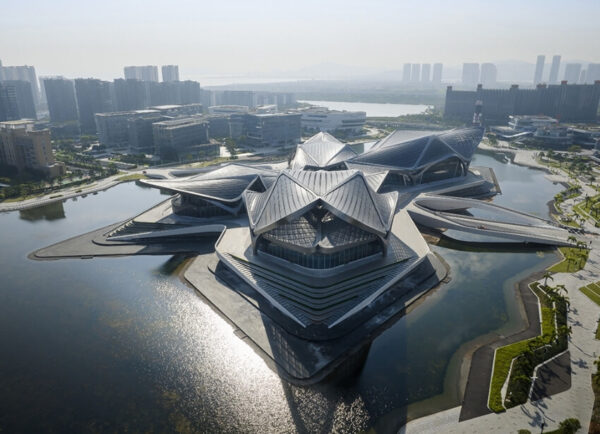
The Zhuhai Jinwan Civic Arts Centre is one of the most ambitious multi-institution cultural complexes built anywhere in recent years, and a Best of Best winner at the 2024 Architecture MasterPrize. It integrates a Performing Arts Centre, Science Centre, and Art Museum under latticed steel canopies whose configuration is optimized through repetition, symmetry, and scale variation.
The building’s landscaping and lake are integral elements of Zhuhai’s ‘sponge city’ initiative, targeting the natural permeation, storage, and re-use of 70% of the city’s rainwater. The double-insulated glazing is optimized for thermal performance in the sub-tropical climate. The result is a cultural centre that also functions as a piece of environmental infrastructure, a model for the integration of civic and ecological ambition that the AMP jury consistently recognizes with its highest distinctions.
10. He Art Museum, China – Tadao Ando
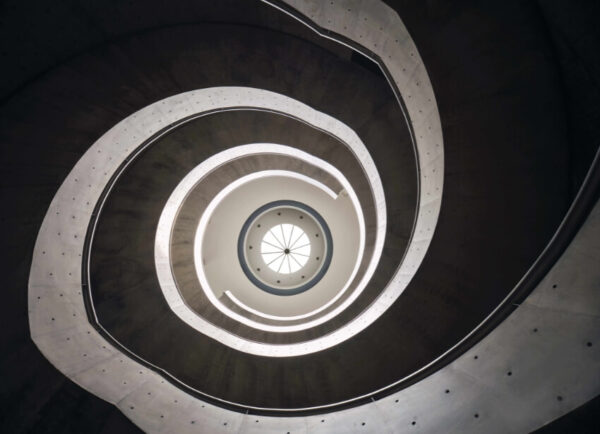
The He Art Museum in Shunde, Guangdong, designed by Pritzker laureate Tadao Ando, won the Architecture MasterPrize Architectural Design of the Year in 2020. It is the defining example of what Ando calls ‘spatial integration’: the use of geometric elements, principally the square and the circle, to create spaces that hold natural light as a material in its own right.
The museum features the world’s first and only double-helix staircase built in raw concrete, rising through the building’s circular central atrium to create a spatial experience that is simultaneously intimate and monumental. Established as a non-profit private art museum by the He family, the institution was conceived as a cultural gift to the surrounding community, hosting multi-dimensional exhibitions, educational programs, and events for both art enthusiasts and local residents.
How the Architecture MasterPrize Evaluates Cultural Architecture
The Architecture MasterPrize Cultural Architecture category is judged by an international jury of architects, curators, academics, and design critics. Entries are evaluated on design excellence, originality, the use of innovative materials or technologies, and the degree to which the project fulfills its functional brief. Cultural Architecture is one of 41 categories in the AMP.
Projects that score highest across the entire competition field receive the Best of Best title, the top distinction at the AMP above a standard Winner. From among the Best of Best projects, the jury selects the Architectural Design of the Year, which is the highest honour the prize can confer. In 2025, this distinction went to a cultural building, the Sports and Cultural Center Marie-José Perec and Joséphine Baker, confirming the category’s central place in the AMP’s values.
Architects and design firms from around the world can submit cultural architecture projects to the 2026 Architecture MasterPrize. Entries are accepted for completed buildings and works in progress.
Frequently Asked Questions: Cultural Architecture
Q: What is cultural architecture?
A: Cultural architecture refers to buildings designed to serve the cultural life of a community or society. This includes museums, art galleries, concert halls, opera houses, theatres, libraries, cultural centres, civic arts institutions, religious buildings, and memorials. These buildings are defined not by a single function but by a shared purpose: to preserve, create, celebrate, or transmit culture from one generation to the next.
Q: What are the main types of cultural buildings?
A: The main types of cultural buildings include museums and galleries (art, history, natural history, science), performing arts venues (concert halls, opera houses, theatres), libraries and archives, religious and ceremonial buildings (mosques, cathedrals, temples, synagogues), cultural centres and community arts spaces, and commemorative buildings such as memorials and mausoleums. Each type presents distinct architectural challenges around acoustics, lighting, climate control, and public circulation.
Q: Why is cultural architecture important?
A: Cultural architecture is important for several reasons. It preserves heritage and history by providing permanent homes for collections and archives. It shapes contemporary identity by giving communities spaces to gather around shared cultural experiences. It drives economic development: the ‘Bilbao Effect’ describes the documented phenomenon of a landmark cultural building transforming a city’s economy and global profile. And it signals civic ambition, demonstrating that a society takes seriously its responsibility to future generations.
Q: Which cultural buildings have won the Architecture MasterPrize?
A: Cultural architecture is one of the Architecture MasterPrize’s most competitive categories. The 2025 Architectural Design of the Year was awarded to the Sports and Cultural Center Marie-José Perec and Joséphine Baker by Onze04 Architectes (France). 2025 Best of Best winners include the Saint-Jean-de-Luz Cultural Centre by Dominique Coulon & Associés and La Coursive by PROJECTILES. Other notable winners include the Istanbul Museum of Modern Art by Renzo Piano Building Workshop (Best of Best 2024) and the He Art Museum by Tadao Ando (Design of the Year 2020). See the full list of winners.
Q: What makes a cultural building award-winning?
A: Award-winning cultural buildings consistently demonstrate a combination of exceptional design quality, strong contextual engagement, and programmatic ambition. The Architecture MasterPrize jury looks for projects that fulfill their functional brief at the highest level while making a meaningful contribution to the public realm, that use materials and technologies in innovative or distinctive ways, and that serve their community in ways that go beyond the minimum requirements of the program.
Q: How do I enter a cultural architecture project in the Architecture MasterPrize?
A: Architects and design firms from around the world can submit projects to the Architecture MasterPrize Cultural Architecture category. Entries are accepted for completed buildings and works in progress. Submit your project. The 2026 edition is currently accepting entries.
Q: What is the difference between cultural architecture and heritage architecture?
A: Cultural architecture is a broad category that includes all buildings designed to serve cultural functions, regardless of their age or style. Heritage architecture refers specifically to historic buildings and structures preserved or restored for their historical, architectural, or cultural significance. Many heritage buildings are also works of cultural architecture, but the categories are not the same. The Architecture MasterPrize has separate categories for Cultural Architecture and Heritage Architecture.
Explore More Award-Winning Cultural Architecture
To explore the full list of AMP cultural architecture winners, visit the AMP winners archive. For the complete Architecture MasterPrize Hall of Fame across all categories, see the AMP’s Icons of Architecture..
The Architecture MasterPrize 2026 edition is open for entries. Submit your cultural architecture project and join the architects recognized for building the institutions that shape how communities understand themselves. Submit your project.