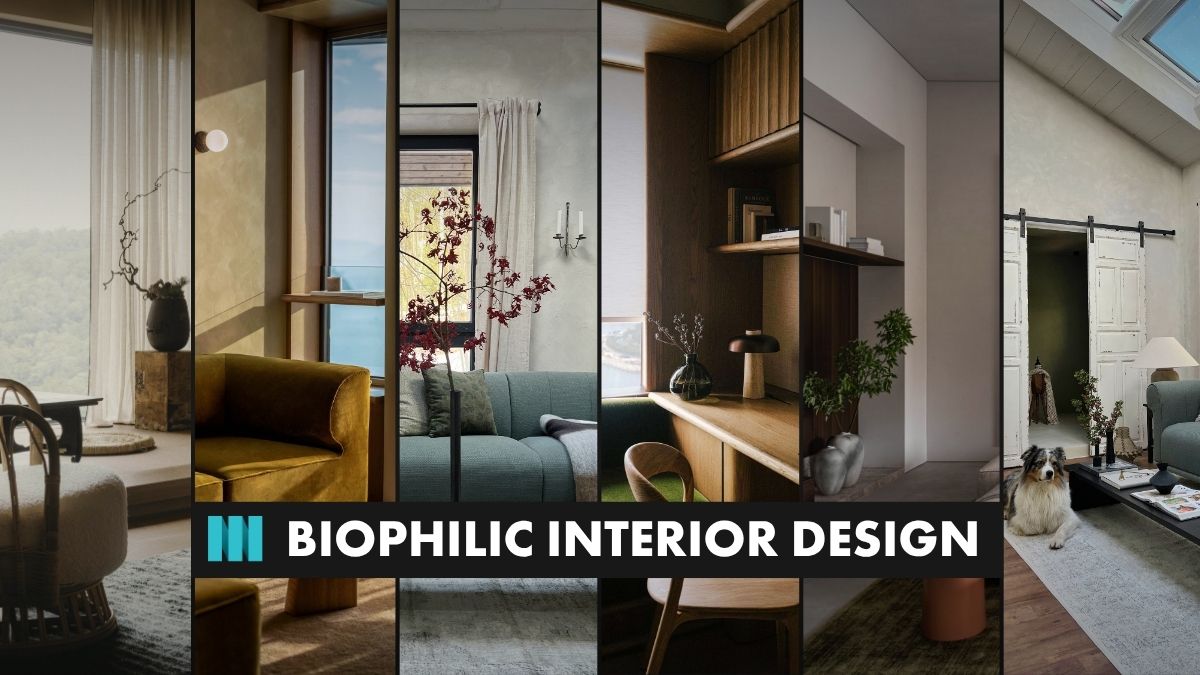
Biophilic Interior Design: The Evidence, the Principles, and 7 Award-Winning Projects
June 1, 2026People spend around 90% of their lives indoors. That figure, from the US Environmental Protection Agency, has quietly become one of the most-cited statistics in contemporary design. It sits behind a growing body of research and, increasingly, behind a design philosophy: biophilic interior design.
Biophilic interior design is the practice of connecting people, within built environments, to the natural world. It draws on the biophilia hypothesis, the idea, developed by biologist E.O. Wilson in the 1980s, that human beings have an innate need to connect with other living systems and natural processes. That need did not disappear when we moved inside. What changed is that most of us now spend most of our time in spaces that offer no meaningful connection to nature at all.
Biophilic design is the profession’s answer to that problem. It is not a style or a trend. It is a framework for making interiors that work with human biology rather than against it. This guide covers what biophilic interior design actually involves beyond the surface-level understanding of it, what the evidence says about its effects, how designers apply it at its most considered level, and eight projects recognised by the Architecture MasterPrize (AMP) in the 2025 edition that demonstrate what the approach looks like when taken seriously.
What Is Biophilic Interior Design?
Biophilic interior design integrates natural elements, patterns, materials, and spatial qualities into interior spaces with the intention of creating a meaningful connection between occupants and the natural world. The key word is meaningful. Adding a potted plant to a lobby is not biophilic design. Biophilic design is a considered, evidence-based approach to the relationship between a space and the people who inhabit it.
The framework most widely used by designers and researchers is Terrapin Bright Green’s 14 Patterns of Biophilic Design, published in 2014 and since adopted in design practice around the world. The patterns fall into three categories:
- Nature in the Space:
direct experiences of nature within the interior: living plants, water features, animals, breezes, scents, natural light, and dynamic weather through windows
- Natural Analogues:
indirect references to nature through organic forms, natural materials, textures, colours, and patterns that evoke natural environments without requiring living elements
- Nature of the Space:
spatial configurations that reflect patterns humans have evolved to find comfortable, including prospect (open views), refuge (sheltered spaces), mystery (partially revealed spaces), and risk (a perceived but safe sense of peril)
A biophilic interior might draw on all three categories simultaneously. A well-designed biophilic office, for example, might have access to daylight and views of trees (Nature in the Space), use natural timber and stone surfaces (Natural Analogues), and be organised around a central open atrium with quieter enclosed alcoves at the perimeter (Nature of the Space). None of these elements in isolation makes a space biophilic. It is the intentional integration of them, calibrated to the specific context and the specific needs of the people who will use the space, that defines the discipline.
Why Biophilic Interior Design Works: What the Evidence Shows
The appeal of biophilic design is not merely aesthetic. The discipline is grounded in a substantial and growing body of peer-reviewed research across psychology, environmental health, neuroscience, and occupational science.
Productivity and creativity
A Human Spaces study of 7,600 workers across 16 countries found that employees in environments incorporating natural elements reported a 6% increase in productivity and a 15% increase in creativity compared with those in conventional offices. Separate research published in the International Journal of Environmental Research and Public Health found strong positive effects on productivity, workplace satisfaction, and collaborative behaviour in biophilic-designed office buildings. These are not marginal effects. In the context of operating costs for a commercial building, even a 6% productivity improvement substantially outweighs the cost of the design interventions that produced it.
Stress and wellbeing
Exposure to natural elements has been shown to reduce cortisol levels, lower heart rate, and improve reported mood in multiple controlled studies. Research from the University of Minnesota found that workers in environments with access to greenery reported 15% higher levels of overall wellbeing. In healthcare settings, the effects are more dramatic: a systematic review published in Frontiers in Built Environment found that biophilic design elements in hospitals reduce patient hospitalization time, pain levels, and anxiety, as well as reducing stress among medical staff. The implications extend well beyond hospitals. Any interior where occupants experience stress, which includes most offices, schools, and public spaces, is a candidate for biophilic intervention.
The 90% problem
The EPA statistic that people spend around 90% of their lives indoors is the context that makes biophilic design not a luxury but a practical necessity. We evolved in natural environments over hundreds of thousands of years. The indoor environments most of us now inhabit, with their artificial lighting, controlled temperatures, hard surfaces, and absence of living systems, are a very recent development. Biophilic interior design does not ask us to abandon buildings. It asks us to make buildings that acknowledge what we are.
What Biophilic Interior Design Is Not
The most common misunderstanding of biophilic design, reflected consistently in online discussions among designers and non-designers alike, is that it is essentially about plants. Add enough greenery and you have a biophilic space. This misreads both the science and the practice.
Plants are one tool among many in a biophilic interior designer’s kit. They provide direct contact with living systems, can improve air quality in certain concentrations, and have documented psychological benefits. But a space with living walls and no natural light, no connection to the exterior, no natural materials, and no spatial variety is not a biophilic space. It is a space with a lot of plants.
Genuine biophilic interior design works at a more fundamental level. It considers how daylight enters and moves through a space across the day. It addresses how materials feel as well as how they look. It thinks about the acoustic environment: natural spaces have varied and layered sound profiles that hard, parallel surfaces in conventional interiors cannot replicate. It considers the spatial sequence: how a person moves through a space, what they see, where they can pause and feel sheltered, where they have prospect and view.
A second common misconception is that biophilic design is expensive and therefore only for premium projects. Cost-effective biophilic interventions include maximising natural light through window placement and interior layout, using natural materials that are cost-competitive with synthetic alternatives, incorporating views of existing landscape rather than imported planting, and designing spatial variety into floor plans that would have been planned without it. The most cost-effective moment to introduce biophilic thinking is at the outset of a project, before spatial decisions have been made that are expensive to reverse.
7 Award-Winning Biophilic Interior Design Projects: AMP 2025
The following seven projects were recognised by the Architecture MasterPrize in the 2025 edition. They span residential, commercial, hospitality, and mixed typologies across Japan, Russia, Indonesia, Hong Kong, and Austria. Each takes a different approach to the central challenge of biophilic interior design: how to make an indoor space that genuinely connects its occupants to the natural world.
1. SYMBOLPLUS OFFICE
SYMBOLPLUS INC. | Satoshi Nobekawa | Interior Design of the Year, AMP 2025 | Japan
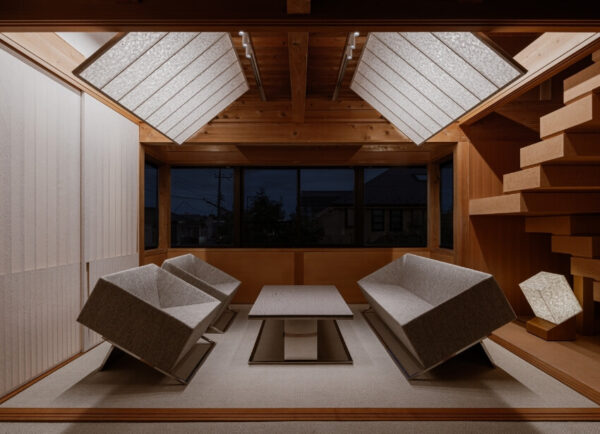
The highest interior design honour in the 2025 AMP edition went to a project that is, in many respects, an argument made in materials. SYMBOLPLUS OFFICE, in Tokyo, takes a 23-year-old timber building and transforms it into a hybrid-era workplace using red earth plaster, reclaimed Tosa washi paper, and traditional Japanese carpentry. There are no conventional finishes. Every surface is a natural material chosen for both its sensory quality and its cultural meaning.
The result is an interior that demonstrates one of biophilic design’s most important principles: that connection to nature does not require living plants if the materials themselves carry the depth, variation, and warmth of the natural world. The textures of red earth and handmade paper are not decorative choices. They are spatial ones, shaping how light behaves in the room, how sound moves, and how the people who work there feel across the course of a day. SYMBOLPLUS OFFICE is the Interior Design of the Year for 2025 because it gets this right at every scale.
2. TEN: Design That Blurs the Boundaries Between Interior and Nature
BABAYANTS ARCHITECTS | Artem Babayants | Interior Design | AMP 2025 | Russia
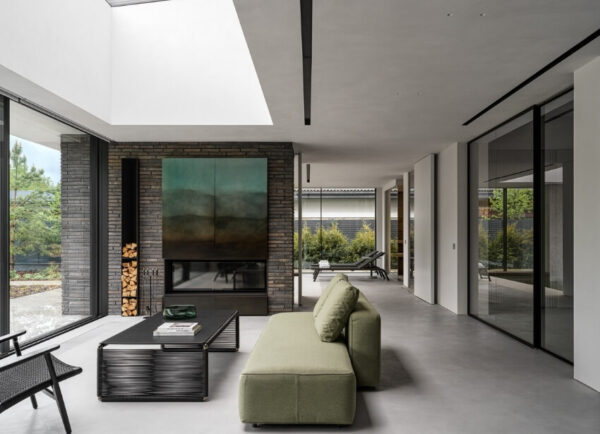
The title of this project is also its thesis. BABAYANTS ARCHITECTS’ TEN is a residential interior in Russia that approaches the boundary between inside and outside as a design problem to be dissolved rather than defined. The interior does not contain nature as a decorative element. It extends into it, with spatial sequences, material transitions, and visual connections that make the distinction between the built environment and the landscape around it genuinely ambiguous.
Projects like TEN demonstrate biophilic design at its most architecturally ambitious: not the addition of natural elements to a finished interior, but the reconception of what an interior fundamentally is. The name refers both to the design philosophy and to the ten spatial principles that structure the project, each of which addresses a different dimension of the human-nature connection within the built environment.
View TEN: Design That Blurs the Boundaries Between Interior and Nature
3. Sagehaus Office Garden
RAD+AR | Leviandri | Commercial Interior | AMP 2025 | Indonesia
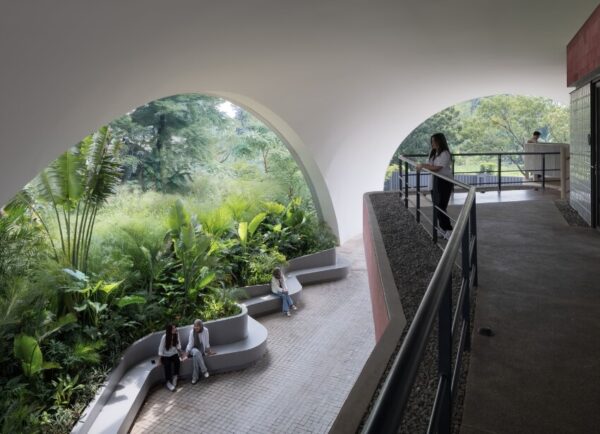
The Sagehaus Office Garden in Indonesia takes the biophilic office concept at face value: this is not a workspace that contains a garden as an amenity. It is a garden that has been organised to support work. RAD+AR’s design inverts the conventional relationship between the built and the planted, treating the landscape as the primary spatial system and the constructed elements as secondary to it.
The project is an instructive example of biophilic design’s ‘Nature of the Space’ dimension. The spatial organisation provides both prospect, through open garden views, and refuge, through sheltered work zones within the planted landscape. The result is an office environment that addresses the disconnection from nature that characterises most conventional workplaces not through decoration but through a fundamental rethinking of how a work space is structured.
4. Sanctuary Tunnel Garden
RAD+AR | Partogi Pandiangan | Installations & Structures | AMP 2025 | Indonesia
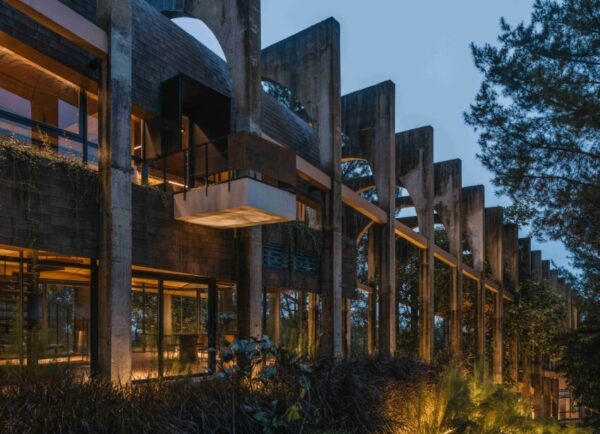
Also by RAD+AR, the Sanctuary Tunnel Garden approaches biophilic interior design through a spatial concept that is both literal and experiential. The project creates a tunnel through which living nature is not viewed but inhabited: the visitor moves through a sequence of planted spaces in which the vegetation is not background but enclosure. The experience is closer to moving through a landscape than entering a room.
This project addresses one of the most challenging aspects of biophilic design: how to give urban occupants access to the quality of immersion in nature that most of them no longer have in their daily lives. The tunnel format concentrates the sensory experience, intensifying contact with living plants, filtered light, and natural sound in a way that more diffuse interior greening rarely achieves.
5. Bamboo Sanctuary
Canter & Gallop Design Ltd. | Jonathan Ng, David Kung, Rafael Pardo | Residential Interior | AMP 2025 | Hong Kong
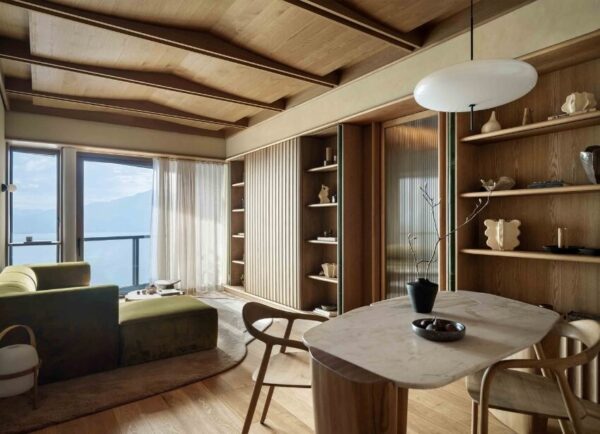
Bamboo Sanctuary is a residential interior in Hong Kong that uses bamboo not as a decorative motif but as a structural and atmospheric material. Canter & Gallop Design Ltd.’s project treats the material’s qualities, its density, its translucency when backlit, its association with forest environments, as the generator of the interior’s spatial and sensory character.
The project is a precise example of the Natural Analogues dimension of biophilic design: the bamboo does not represent nature as a symbol. It carries the actual qualities of a natural material, the organic variation of a growing thing, the warmth of plant matter, the visual rhythm of a grove, into an urban apartment context where direct access to landscape is limited. The interior gives its occupants a genuine sensory connection to the natural world within the constraints of high-density urban living.
6. House of Soil
Soil Studios | OJ Miu | Residential Interior | AMP 2025 | Hong Kong
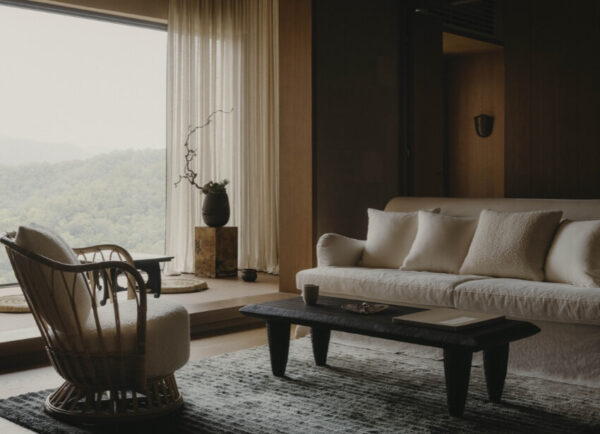
The name of this project is a programme statement. House of Soil, by Soil Studios, is a residential interior whose primary material is earth: raw, processed, and expressed in ways that make the geological world, rather than the manufactured one, the dominant presence in the space. The walls, surfaces, and spatial enclosure of the interior carry the texture, colour, and material intelligence of soil in its various states.
This is biophilic design operating at the level of material philosophy. The project does not gesture toward nature. It builds with it. The effect on occupants is not one of decoration but of grounding, a quality that the research on biophilic environments consistently identifies as among the most significant contributors to a sense of calm and belonging within an interior. House of Soil is among the most conceptually rigorous examples of biophilic interior design in the 2025 AMP edition.
7. Greenwood
interiorbygini | Angelina Doerfler | Residential Interior | AMP 2025 | Austria
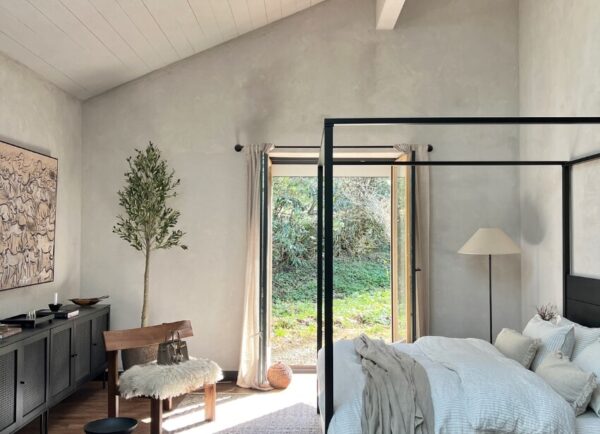
Greenwood, by interiorbygini, is a residential interior in Austria that takes the forest as its primary reference: not as a theme to be illustrated, but as a spatial and sensory model to be inhabited. The interior draws on the quality of light within a woodland, the layering of material from floor to canopy level, the variation in density and openness that characterises a natural forest environment, and translates these into the conditions of a domestic space.
The project is an example of biophilic design’s capacity to produce interiors that feel genuinely restorative, in the technical sense that the research uses the term: spaces that allow the kind of directed-attention recovery that exposure to natural environments consistently produces. Greenwood achieves this not through a literal representation of a forest but through a precise understanding of what makes forest environments psychologically beneficial and a careful application of those principles to a domestic interior at a human scale.
How Designers Apply Biophilic Interior Design in Practice
For designers approaching a biophilic brief, the starting point is almost never the selection of materials or plants. It begins with an analysis of the specific people who will use the space, the specific natural environment of the building’s location, and the specific constraints of the project. Biophilic design that is rooted in place, using local materials, responding to local climate and light conditions, connecting to local landscape, produces consistently stronger results than biophilic design that applies a generic formula.
The practical sequence that most experienced biophilic designers follow moves from the strategic to the specific:
- Maximise daylight access and quality first:
natural light is the single most impactful biophilic element in most interiors, and it costs nothing if addressed at the layout stage. Window placement, interior partition heights, material reflectivity, and ceiling heights all affect how daylight moves through a space
- Establish visual connections to the exterior:
even where outdoor access is impossible, views of landscape, sky, or water have documented positive effects on occupant wellbeing. Interior planning that preserves and frames these views is fundamental biophilic strategy
- Select materials for sensory quality, not just appearance:
natural materials carry variation, warmth, and textural depth that synthetic alternatives cannot replicate. Timber, stone, earth, bamboo, and natural textiles contribute to a biophilic environment through touch and acoustic quality as well as visual character
- Create spatial variety:
the monotony of open-plan spaces with uniform ceiling heights and identical lighting conditions is antithetical to biophilic design. Varied zones that offer different degrees of prospect and refuge support different activities and different psychological states
- Introduce living elements where they can be sustained:
plants require maintenance. Biophilic design that cannot be maintained is biophilic design that degrades. Plant selection and placement should be calibrated to the realistic care capacity of the space’s occupants
Frequently Asked Questions About Biophilic Interior Design
What is the difference between biophilic design and just adding plants?
Biophilic design is a comprehensive approach to the relationship between an interior and its occupants’ need for connection with nature. It encompasses daylight quality, natural materials, spatial organisation, acoustic environment, views, and living elements. Plants are one tool within this framework. A space with extensive planting but no natural light, no natural materials, and no spatial variety is not a biophilic interior. A space with carefully positioned windows, natural timber surfaces, and varied spatial zones but few plants may be more genuinely biophilic than a plant-heavy interior that does not address these other dimensions.
Does biophilic interior design cost more than conventional design?
Not necessarily, and often not significantly. The most impactful biophilic interventions, daylighting strategy, view preservation, spatial variety, and natural material selection, are most cost-effective when addressed at the design stage before construction decisions have been made. Natural materials such as timber and stone are cost-competitive with many synthetic alternatives, particularly when maintenance and replacement costs are factored in over a building’s life. The most expensive biophilic interventions are typically living walls and complex water features, both of which also carry the highest maintenance requirements. These are not necessary for effective biophilic design.
What spaces benefit most from biophilic interior design?
The research evidence is strongest for offices, healthcare environments, educational spaces, and residential interiors. In offices, biophilic design is linked to measurable productivity and creativity gains. In hospitals, it reduces patient recovery times and staff stress. In schools, access to natural light and views correlates with improved learning outcomes. In residential settings, biophilic interiors contribute to the sense of home as a genuinely restorative environment. That said, any interior where people spend significant time, which includes most built environments, is a candidate for biophilic intervention.
Is biophilic design the same as sustainable design?
The two are related but distinct. Sustainable design prioritises the environmental performance of a building: reducing energy consumption, minimising embodied carbon, using responsibly sourced materials. Biophilic design prioritises the psychological and physiological wellbeing of the people inside the building, specifically through connection with nature. The two approaches are frequently complementary: natural materials, daylighting, and natural ventilation benefit both human wellbeing and environmental performance. But a building can be highly sustainable without being biophilic, and a biophilic interior can include elements that are not particularly sustainable. The most considered contemporary practice integrates both.
Biophilic Interior Design and the Future of How We Work and Live Indoors
The 90% figure, the share of our lives spent indoors, is not going to decrease. If anything, the proportion of time people spend in built environments is likely to increase as urbanisation continues and as more work is conducted remotely from home environments. The question for designers, clients, and developers is not whether biophilic interior design matters. The research has settled that. The question is how to apply it with the rigour and specificity that produces genuine benefits, rather than the surface-level gestures that appropriate its language without delivering its substance.
The eight projects above represent a range of answers to that question, from the material philosophy of House of Soil and SYMBOLPLUS OFFICE to the spatial radicalism of TEN and Sagehaus Office Garden to the concentrated sensory experience of Sanctuary Tunnel Garden. What they share is a commitment to the foundational premise of biophilic interior design: that the spaces we inhabit should work with our biology, not in spite of it.
Interior designers, architects, and clients who take that premise seriously tend to produce spaces that are not only more pleasant to be in, but measurably more supportive of the health, creativity, and wellbeing of the people who use them. In a built environment where most interiors still offer their occupants very little connection to the natural world, that is a significant competitive and ethical advantage.
Enter the Architecture MasterPrize 2026
The AMP is open to interior designers, architects, and studios from anywhere in the world. The 2025 Interior Design of the Year, Best of Best distinctions, and Interior Design Firm of the Year are awarded alongside architecture and landscape categories in a single global program. The Regular Entry deadline is June 30, 2026.