Last updated: March 12, 2026
In today’s retail landscape, architecture does more than house products. It shapes brand identity, influences customer journeys, and transforms physical spaces into memorable brand experiences. Whether it’s a flagship store that immerses shoppers in storytelling or a mall that doubles as a civic hub, retail architecture plays a critical role in how consumers connect with brands.
From mixed-use developments to pop-up boutiques, retail design blends functionality with emotion. Awards that honor excellence in this space recognize not only aesthetic quality but also innovation, sustainability, and impact on the customer experience.
In this guide, we explore the most significant retail architecture awards in 2026, the standout winners from recent years, and what makes these programs worth your attention.
Esteemed Award Winners in Retail Architecture
Recent years have showcased groundbreaking examples of retail architecture that blur the line between commerce and culture.
The Google Store – Mountain View Flagship
The Google Store by Aidlin Darling Design is part of the new Google headquarters. Designed to activate curiosity, the store features spine-like sculptural installations that wind through the space. The inspiration from the store’s designs comes from its surrounding environment. Namely, the San Francisco Bay estuaries.
QUILICOT
Designed by DKA, Quilicot’s new building combines a distribution center, boutique and head office into one space. The design offers the spaciousness of a department store while maintaining the look and feel of your local bike shop. Inside, 42 bicycles are hung throughout the store utilizing a grid lighting system.
NOWSEE
NOWSEE, by Informal Design is envisioned as both a social and retail destination. One of the goals of lead designer Sheng Wang was to help provide visitors with a break from the urban concrete jungle. This has been achieved by making NOWSEE an integrated part of the community by creating a communal hub that brings together neighborhood living, retail, art exhibitions, and family-friendly experiences.
Other Recent AMP Winners
The Architecture MasterPrize (AMP) continues to honor outstanding retail environments worldwide. Recent winners include the UNIQLO Tokyo Flagship Store by Herzog & de Meuron and the Muji Shenzhen Bay Store by Yuko Nagayama & Associates. Both have been recognized for blending minimalist design with experiential retail. These projects have been showcased across Designboom and ArchDaily, reinforcing AMP’s global visibility for awardees.
Best Retail Architecture Awards in 2026
1. International Property Awards (Retail Categories)
The International Property Awards recognize outstanding achievements in real estate and architecture, including dedicated retail categories. Projects are judged on innovation, functionality, and sustainability, with entries divided by region and then elevated to an international stage.
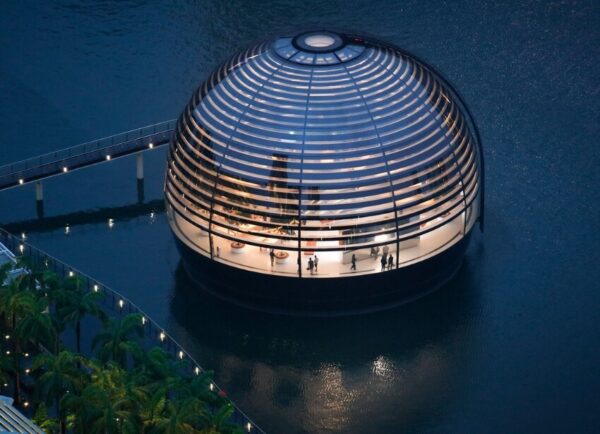
Apple Store Marina Bay Sands by Foster + Partners (Credits Foster + Partners)
Winners have included the Dubai Mall Zabeel Extension by RMJM Dubai and the Apple Store Marina Bay Sands by Foster + Partners. For retail designers, this award offers both global recognition and networking with developers and investors.
2. Architecture Masterprize (Retail Interior Category)
The Architecture MasterPrize celebrates design excellence in architecture globally.
Part of their commercial awards, the retail interior category recognizes projects that enhance brand identity, user experience, and spatial innovation. The award covers categories such as flagship stores, shopping centers, and mixed-use developments.
Recent award winners include the Marisfrolg Showroom and In the Depths of the Bamboo Grove: A Collective Store, both winners in the Retail Interior category.
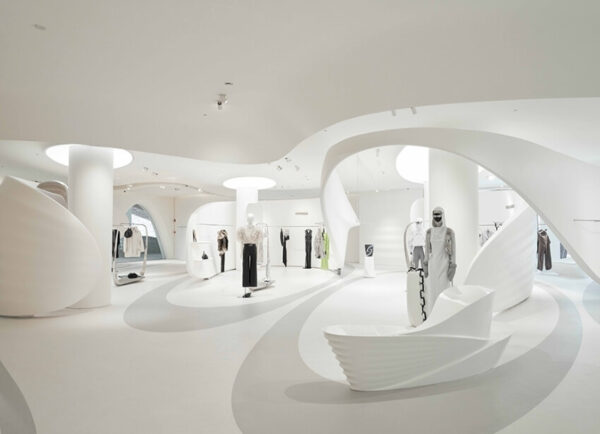
Marisfrolg Showroom by Zaha Hadid Architects (Photo Courtesy Marisfrolg)
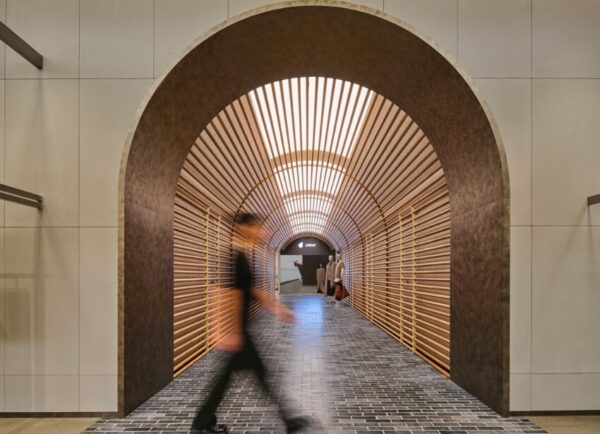
In the Depths of the Bamboo Grove A Collective Store by Young H Design
What makes AMP’s award unique is their international reach and focus on design impact. Award winners gain exposure through AMP’s online platform, annual publication, and global press coverage on global outlets.
3. Creative Retail Awards
The Creative Retail Awards celebrate excellence in retail design, visual merchandising, and store innovation. Organized by the SDEA (Shop & Display Equipment Association), these awards spotlight projects that merge creativity with measurable business success.

Harrods Beauty Halls (London) by Virgile + Partners (Credits_ Virgile + Partners)
Recent winners include Harrods Beauty Halls (London) by Virgile + Partners and Nike Concept Stores in Europe, both recognized for using storytelling and sensory design to enhance the customer journey. Winners are featured in Retail Focus and Design Week.
Entries for the 2026 Creative Retail Awards are currently open, with the ceremony expected to take place in September 2026.
4. ICSC Global Design & Development Awards
The ICSC Awards celebrate the best retail and mixed-use developments that redefine the shopping experience. Judging criteria emphasize economic performance, community impact, and design innovation.
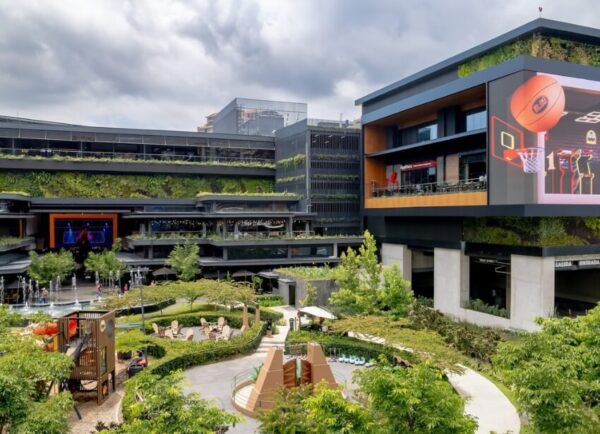
Oakland Place, Guatemala City (Courtesy Oakland Place) The most recent Best-of-the-Best Award went to Oakland Place in Guatemala City, a project that reimagines a traditional mall as a connected urban district, while past winners include Hudson Yards (New York) and ICONSIAM (Bangkok).
5. Asia Pacific Property Awards (Retail Projects)
Part of the International Property Awards, the Asia Pacific Property Awards highlight the region’s best commercial developments. The retail category celebrates projects that advance regional architecture while maintaining cultural integrity.
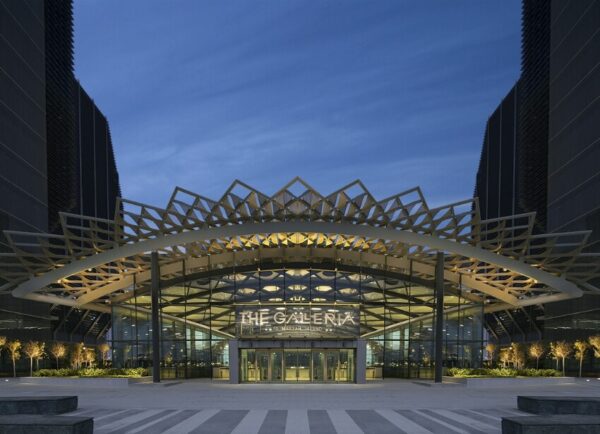
The Galleria Al Maryah Island in Abu Dhabi (Credits_ Architizer, Photo_ Victor Romero, Goff D’Antonio Associates)
Recent winners include The Galleria Al Maryah Island in Abu Dhabi and Seoul Starfield COEX Mall by Gensler + Associates. Winners are published in Asia Property Review and receive international exposure through gala events.
6. RIBA Awards (Retail Buildings)
The Royal Institute of British Architects (RIBA) Awards include retail buildings that demonstrate design excellence and community contribution.
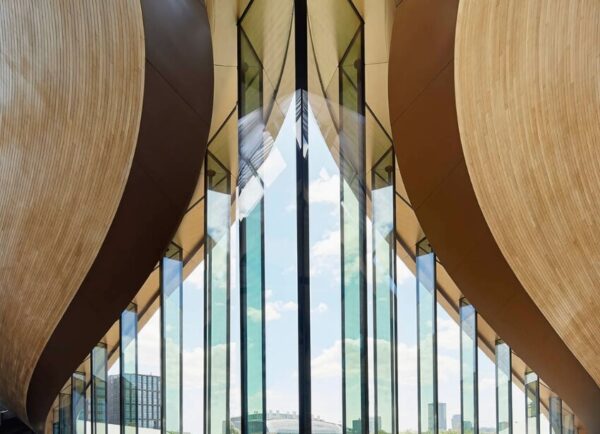
Coal Drops Yard in London by Heatherwick Studio (Credits_ Heatherwick Studio)
The NOMA Block Redevelopment in Manchester by Sheppard Robson and Coal Drops Yard in London by Heatherwick Studio were recognized for blending heritage structures with contemporary retail. These projects appeared in Architects’ Journal and The Guardian as examples of adaptive reuse done right.
What Judges Look for in Award-Winning Retail Architecture
Judges evaluate projects based on several key aspects. Customer flow and spatial efficiency determine how comfortably and naturally visitors navigate the space. Brand storytelling is vital, as successful retail design translates a brand’s identity into form, light, and materials.
Technology and experiential design also play a growing role, with interactive displays, augmented reality, and responsive lighting creating immersive environments. Sustainability is increasingly central, as judges favor adaptable designs using recycled materials or energy-efficient systems. Finally, urban and contextual relevance matters, especially in city centers, where retail projects often double as public gathering spaces.
How to Maximise Your Chances of Winning
Success in award submissions starts with strong presentation. Use professional photography that shows how people interact with the space. Provide performance metrics, such as increases in footfall, dwell time, or sales growth, if available.
Tailor each entry to match specific award criteria. For example, highlight brand storytelling for AMP or sustainability for ICSC. Always include a clear description of the client’s goals and explain how the design elevated the brand experience.
Lastly, plan ahead. Early submissions often benefit from reduced entry fees and better media timing, especially for global awards that align with annual design festivals.
Conclusion
Retail architecture continues to evolve, blending commerce, culture, and community. Winning awards not only validates your creative vision but also strengthens your brand’s credibility in a rapidly changing market.
Competitions like the Architecture MasterPrize and ICSC Awards provide global recognition for firms pushing boundaries in design and experience. As you plan for 2026, review your past projects and identify which awards align best with your aspirations for visibility, growth, and recognition.
Last updated: March 12, 2026
Landscape design goes far beyond creating visually appealing outdoor spaces. Well-designed outdoor spaces shape how communities live with nature, interact with cities, and experience public environments. From ecological restoration projects to innovative urban parks, landscape design has a lasting impact on quality of life.
Awards play an important role in recognizing these contributions. Celebrating innovation, sustainability, and design excellence, they give professionals and firms a platform for industry wide recognition. In this article, you’ll learn why landscape awards matter, discover ten of the most important competitions in 2026, and understand what judges look for in successful submissions.
Let’s dive in.
Why you should enter a landscape design competition
Whether you’re an individual architect or representing a firm, winning an award competition is quite a compelling achievement. Recipients of the top prize automatically have a better reputation, receive more exposure, and can use their awards to secure new projects.
We go into each of these benefits in a little more detail below:
- Better reputation: Winning means that your work has been judged by an expert panel of other architects. They’ve said that your work is of a high standard; the best, in fact. No doubt, this is one of the best ways to build trust among peers and potential clients.
- Increase visibility: Award-winning projects published in leading design journals, featured in exhibitions, and highlighted across digital platforms. Not only that, but competitions often bring together architects, developers, and city planners, creating connections that can lead to future collaborations.
- New projects: When bidding for major commissions, awards serve as valuable evidence that you’re able to take on important, complex and large projects. Commercial projects in particular enjoy being associated with award winning architects.
The Best Landscape Design Awards
Prestigious Global Awards
1. World Landscape Architecture Awards
The WLA Awards, organized by World Landscape Architecture magazine, highlight built and conceptual works from across the globe.
Winners gain significant visibility since their projects are published online and in the WLA annual eBook. In 2024, winning projects included large-scale waterfront redevelopments in Canada and community-focused parks in China.
This year’s winners have also been announced, and they are Surfacedesign Inc’s The Beach at Elliot Bay (Expedia HQ) for Commercial Landscape Design; Vladimir Djurovic and his Gulbenkian Foundation Garden Extension for Institutional Landscape Design; as well as The Opera Park by Cobe for Large Public Space Landscape Design.
The 2026 WLA Awards are now open for entries. The submission deadline is April 24, 2026, with winners expected to be announced on July 21, 2026.
2. International Federation of Landscape Architects (IFLA) Awards
The IFLA Awards celebrate global leadership in landscape design, with categories ranging from built projects to climate-responsive initiatives.
Winners are announced at the IFLA World Congress and featured in publications such as Topos and World Landscape Architecture. In 2024, standout projects included green infrastructure designs in Singapore and cultural landscape restorations in Africa.
Recent winners include James Corner (2024 winner) and YoungSun Jung (2023 winner).
IFLA has launched a brand new Global Landscape Architecture Awards program for 2026, with 20 project categories. Entries are now open, with a final deadline of June 1, 2026. Winners will be celebrated at the IFLA World Congress in Hong Kong in October 2026.
3. Landscape Design MasterPrize (LDMP) by AMP

Bamboo Villa by WEIMAR GROUP, lead architect Chen Xiao, Shanghai, China. Landscape Design of the Year, Architecture MasterPrize 2025.The Landscape Design MasterPrize (LDMP) celebrates creativity, sustainability, and innovation in landscape architecture worldwide. It covers projects ranging from public parks and gardens to large-scale ecological and urban interventions.
What makes LDMP unique is its exclusive focus on landscapes, unlike broader architecture awards. Winners are featured in AMP’s annual book, showcased across international design media, and included in press releases distributed globally.
The 2025 Landscape Design of the Year was awarded to Bamboo Villa by WEIMAR GROUP (lead architect Chen Xiao, Shanghai, China), a minimal-intervention community landscape integrating a mountain lake, central lawn, and interconnected park system. Submissions for the 2026 awards close on August 31, 2026.
Architectural Awards with Landscape Categories
4. SBID International Design Awards (Landscape Subcategory)
The SBID Awards include a subcategory for landscape and urban outdoor projects. Winners gain recognition from both a jury and public vote, and projects are featured in the annual SBID Global Interior Design coffee-table book.
In 2025, winners included residential landscape designs in the UK and mixed-use urban courtyards in Europe, with coverage in SBID’s Global Interior Design publication. The 2025 winners were announced at the Royal Lancaster London on October 24, 2025. Entries for the 2026 SBID Awards are now open, with the ceremony scheduled for November 6, 2026.
National & Regional Awards
5. Australian Institute of Landscape Architects (AILA) Awards
The AILA Awards are the leading recognition for landscape design in Australia, covering categories such as civic landscapes, parks, and small projects.
Winners are promoted across Australian design publications and celebrated at an annual gala. In 2024, projects such as the Barangaroo Reserve in Sydney gained national attention. Winners were announced across multiple categories including Civic Landscape, Community Contribution, Cultural Heritage, Gardens, Infrastructure and more.
The 2025 AILA Award winners have been announced. For 2026 entry dates, check the AILA website directly as the schedule has not yet been formally published.
6. European Garden Award
The European Garden Award highlights the best contemporary gardens and landscape projects across Europe. Categories include innovative concepts, historic garden management, and public engagement.
Winners are celebrated at Schloss Dyck in Germany and covered by Landscape Architecture Europe. 2024 winners were announced across three categories, being: Management or Development of a Historic Park or Garden; Design or Concept of a Contemporary Park or Garden; and, Climate Adaptation Measures in Parks and Gardens.
The winners of each award were Promenades de Reims, Reims, France; Opera Park, Copenhagen, Denmark; and, Warsaw Uprising Mound Park, Warschau, Poland.
As for the 2026 awards, you may keep a lookout for their announcement via the European Garden Award’s official website to which we’ve linked you below.
7. Asia Landscape Design Awards
The Asia Landscape Design Awards celebrate innovation across Asia, recognizing projects that balance tradition with modernity.
Winners gain strong regional exposure and are featured in exhibitions and Asian design publications. In 2025, awardees included large-scale urban parks in China and sustainable resorts in Southeast Asia.
The 2026 Asia Landscape Design Awards were held in Vietnam, with submissions closing in February 2026. Results are expected to be announced later in 2026.
What Judges Look for in Award-Winning Landscape Design
Alongside appearance, judges evaluate five other core areas. They include sustainability, community impact, artistic vision, functionality and integration with architecture. We discuss each in more detail below.
- Sustainability & ecology: Panels will judge landscape design projects on how they restore or enhance ecosystems, promote biodiversity, as well as their use of environmentally responsible methods in design.
- Community impact: Designs that improve quality of life, accessibility, and social interaction often stand out and will score extra points among judging panels.
- Aesthetic and artistic vision: An important element of architecture that hasn’t been forgotten, creativity and visual harmony are still central to judging criteria. Landscapes must inspire the panel and engage people who will use them.
- Functionality and innovation: Forward-thinking and practical outdoor solutions that solve modern problems in new ways are more likely to be scored positively by judging panels.
- Integration with architecture: Strong landscapes connect seamlessly with surrounding buildings and infrastructure. The project needs to make sense given its surrounding environment.
Conclusion
Landscape design awards offer professionals the chance to gain recognition, showcase their projects, and highlight their contribution to both community and ecology. Winning provides credibility, media visibility, and opportunities to connect with clients, city planners, and peers worldwide.
Whether your focus is on sustainable urban parks, cultural landscapes, or innovative garden design, the awards we’ve presented in this guide represent the best platforms to elevate your work.
Browse the website of each, and pick a few awards to submit to that are best suited to you. We’d like to suggest our own Landscape Design MasterPrize, as submission deadlines are right around the corner, being September 30, 2025.
Last updated: March 12, 2026
Residential design reflects not only aesthetics but also how people live, connect, and experience home. From single-family houses to large-scale housing developments, awards play a key role in recognizing excellence in residential architecture.
In 2026, a number of international, national, and specialized awards continue to set benchmarks in innovation, sustainability, cultural sensitivity, and affordability. We’ve curated 6 of the most prestigious residential design awards this year and discuss what makes each unique, who should enter, recent winners, and important deadlines.
Why Residential Design Awards Matter
Residential design awards are a great way to build credibility and trust with homeowners, developers, and communities. Winning an award signals that your project or firm has met high standards and helps clients feel confident in commissioning you for their next project.
Another benefit of winning an award is that they help you achieve media visibility through architectural publications, exhibitions, social media and more. For firms, winning distinguishes them in an already competitive sector.
There’s more to residential design awards than material gains. They encourage innovation like sustainability, affordability, and cultural sensitivity design, as the projects that push boundaries and address real human and environmental needs are those that commonly end up winning.
Best Residential Design Awards in 2026
Below are some of the top awards in residential architecture.
Global Prestigious Awards
1. Outstanding Property Award London
The Outstanding Property Award, London (OPAL Award) honors exceptional work in architectural design, interior design, and property development on an international stage.
Projects are judged on how they reduce environmental impact via thoughtful design, embrace innovation in materials or methods, and deliver positive social outcomes.
Recent winners include Casa AV by Rafael Pardo Architects, a project that won the architectural design of the year prize. Also, Lor Calma and Partners won the residential single home award for their project, Pfleider Residence.
The OPAL Awards accept submissions on a rolling basis. Check their website for the current cycle’s deadlines.
2. Residential Architecture Design Awards by Architecture MasterPrize (AMP)
AMP’s residential design awards in architecture are dedicated to bringing forward the best designs across a number of categories spanning from traditional residential architecture (multi-unit / single-family) to social housing.
The judging panel at AMP evaluates entries based on more than just aesthetics. They also look at the project’s context, functionality, sustainability, innovation, and how well the design responds to the residents’ lives and the environment. Worth noting, a single residential project can be submitted across multiple categories of AMP’s residential design award.
The Residential Architecture Design Awards by Architecture MasterPrize are well suited for architects, designers, and developers working on projects such as custom single-family homes, multi-unit dwellings, social housing, or residential interior work. You’re able to enter whether you’re an established practitioner or an emerging designer. Your project just needs to be recent (within five years) and well documented. Also, there’s a separate dedicated award for students as well.
Recent AMP residential winners include Knights Park by Alison Brooks Architects (Residential Multi Unit, 2025) and Wood Up by LAN, a 132-unit housing complex with climbing gym and café in Paris (2025).
For 2026, the final deadline for residential and all AMP categories is August 31, 2026, with earlier deadlines available at reduced entry fees.
National & Regional Awards
3. RIBA House of the Year Awards
The RIBA (Royal Institute of British Architects) Awards are among the most prestigious based in the UK. They recognize outstanding residential design through the UK-focused RIBA House of the Year award; affordable housing through the Neave Brown Award; and the RIBA International Awards highlight exceptional residential projects globally.
RIBA has a long history and high profile, especially in architectural excellence, craftsmanship, sustainability, and contribution to the built environment. Winning a RIBA award brings prestige, rigorous scrutiny by peer practitioners, and often public recognition.
Architects working internationally, especially with high-design, high-impact residential projects, or projects that show strong environmental performance or design innovation. Projects that engage with their cultural, social, or environmental context tend to fare well.
Recent winners of the House of the Year Award include Caochan na Creige by Izat Arundell (2025), a self-built stone house in Scotland’s Outer Hebrides, and Six Columns by 31/44 Architects (2024).
Submissions for the RIBA UK Awards 2026 closed in December 2025, with regional shortlists now being announced. The 2027 entry window is expected to open in October 2026.
4. Asia Housing Awards
The Asia Housing Awards honor residential design and housing projects across Asia. They recognize projects that combine design with functionality, affordability, sustainability, and local culture.
They focus specifically on housing/design in the Asian context. That means climate, cultural traditions, materials, community participation, local constraints, and innovation in low-cost or climate-responsive housing are particularly valued when judging.
The awards are open to designers, architects, developers, NGOs working in Asia with residential/housing projects. Projects that address affordable housing, sustainable materials, community, or climate adaptation are particularly encouraged.
There isn’t one single deadline for all “Asia housing awards” as multiple award programs exist
Specialized Awards
5. WAN Awards
World Architecture News (WAN) Awards spotlight a range of architectural work globally, including residential, interiors, and public projects. They often highlight experimental design, sustainability, or creative responses to challenging briefs.
WAN tends to favor projects that push boundaries whether through unusual materials, bold form, or novel social/environmental strategies. They often publish in WAN’s media channels, giving visibility to the architectural discourse as well as design.
Architects or designers with projects that are ambitious, conceptually strong, or that address pressing design issues are encouraged . Ideal for architects who want both critical recognition and publication.
Recent winners included Red Rock by Faulkner Architects and Durham Modular Transitional Housing.
Check the WAN Awards website directly for current entry deadlines, as submission windows vary by category each year.
6. Interior Design Best of Year Awards (Residential Interiors)
This is an award program focused specifically on interior design, including residential interiors. The Best of Year Awards recognizes excellence in interior aesthetics, functionality, materials, and creativity.
It homes in on interior environments, not architectural shells only. Judges pay attention to how spaces feel, how they function for residents, material choices, craftsmanship, and styling. For residential interiors this is especially relevant.
Interior designers, architects with interior-design capability, and firms focused on renovation, luxury interiors, bespoke fittings, or stylish living spaces commonly compete for this award. Projects that carefully balance aesthetics and liveability are well suited.
The 2025 Interior Design Best of Year winners have been announced. Check their website for the 2026 entry schedule.
What Judges Look for in Award-Winning Residential Design
You might have already gotten an idea of criteria that’s important to judging panels for residential design.
Firstly, there’s functionality and livability. Judges look for how well a space supports comfort, daily activities, and the residents’ lifestyle.
Innovation is also highly valued, and projects using new materials, construction techniques, or design concepts have greater chances of winning.
Next, sustainability weighs heavily as well. Energy efficient projects that use eco-friendly materials, climate resilience, and often carbon footprint are favored.
Aesthetics and form are also important, especially how the design responds to its surrounding environment.
Finally, cultural and community values go a long way, and projects that reflect local building traditions, serve social needs, or engage with community identity often stand out.
How to Maximise Your Chances of Winning
To improve your odds of winning any of the competitions we’ve mentioned above, focus on combining strong design innovation with solid functionality. Be sure to showcase your sustainability credentials with measurable data (energy, water, materials). Use professional photography and clear storytelling in your submission. Highlight how your design enhances clients’ lifestyles or benefits the community. And finally, tailor your entry to match the specific criteria of each award.
Final Thoughts & Next Steps
Residential design awards offer more than recognition. They push design forward, encourage new thinking, and help align architecture with human, social, and environmental goals.
If you aspire to gain recognition, choose the awards whose values align with your project best. Document everything with high quality visuals, tell your story clearly, and ensure your project ticks the boxes for innovation, functionality, sustainability, and context.
Last updated: March 12, 2026
Sustainable architecture has moved from being a niche interest to a defining force in the built environment. Today, clients, governments, and communities expect architects to prioritize climate resilience, energy efficiency, and ecological balance. Awards play an important role in this shift. They recognize forward-thinking firms and highlight projects that set new standards for sustainable design.
If you are an architect, designer, or developer, these awards can do more than validate your work. They can amplify your reputation, build trust with clients, and place your projects on a global stage. This guide explores the most respected architecture sustainability awards in 2026, with a special spotlight on the sustainability categories within the Architecture MasterPrize (AMP).
Why Sustainability Awards Matter in Architecture
Awards dedicated to sustainability matter for several reasons. First, they act as independent proof of a firm’s commitment to environmental responsibility. In competitive bidding, that credibility can set you apart.
Second, awards often attract media coverage and industry recognition. Winning or even being shortlisted can open doors to publications, exhibitions, and speaking opportunities. This visibility strengthens your position as a leader in sustainable design.
Finally, sustainability awards often provide practical benefits. They can support funding applications, help secure planning approval, and reassure clients that your projects meet the highest ecological standards. For firms aiming to showcase both design excellence and environmental stewardship, these awards are strategic tools as much as they are accolades.
Globally Recognized Sustainability Awards
1. Holcim Awards for Sustainable Construction
The Holcim Awards for Sustainable Construction are among the world’s most prestigious honors for sustainable design. Organized by the Holcim Foundation, the awards recognize projects that combine architectural excellence with strong environmental, social, and economic performance. Submissions are judged on innovation, scalability, and measurable sustainability outcomes, from reducing carbon footprints to improving community resilience.
With a global reach and regional competitions, the Holcim Awards highlight projects of all scales, from experimental prototypes to large urban developments. Winning an award not only demonstrates leadership in sustainable construction but also provides international visibility and credibility within the architecture and design community.
The 2025 cycle concluded with a ceremony in Venice on November 20, 2025, where five regional Grand Prize winners were announced. The next cycle has not yet opened for submissions.
2. Sustainable Architecture Awards by Architecture MasterPrize
The Architecture MasterPrize (AMP) has built a global reputation for celebrating excellence across all design disciplines. Within AMP, the Green and Sustainability categories recognize projects that successfully merge architectural creativity with environmental responsibility.
What makes AMP’s sustainability recognition unique is its dedicated focus. Unlike broader awards where sustainability is only a subcategory, AMP ensures that ecological innovation takes center stage. Entries span diverse project types, from residential housing to urban-scale developments, and the award welcomes submissions from both established practices and emerging firms.
The Social Impact Project of the Year, introduced in 2024 and awarded to F-AM Arquitectes for “54 Social Housing in Inca, Mallorca”, continued in 2025 alongside AMP’s broader sustainability categories. The 2026 submission deadline is August 31, 2026.
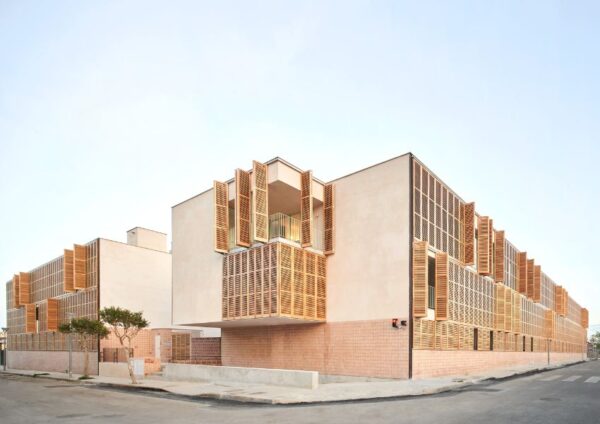
Social Impact Project of the Year award-winner: 54 social housing in Inca, Mallorca, Balearic Islands by F-AM Arquitectes (photo by José Hevia)
3. RIBA International Prize Sustainability Recognitions
The RIBA International Prize Sustainability Recognitions honor projects that exemplify both design excellence and environmental responsibility on a global stage. Awarded by the Royal Institute of British Architects, these recognitions highlight buildings that demonstrate measurable progress in areas such as carbon reduction, energy efficiency, material innovation, and community benefit. Sustainability is integrated into RIBA’s judging process, ensuring that projects are evaluated not only for aesthetics but also for their contribution to a more resilient future. Being recognized by RIBA provides worldwide prestige, media attention, and validation from one of the most respected institutions in architecture and sustainable design.
Specialized Sustainability Awards
Beyond the large global prizes, several niche awards recognize specialized achievements:
4. Passive House Awards
The Passive House Awards celebrate projects that achieve outstanding performance in energy efficiency and comfort using the Passive House standard. Organized by the Passive House Institute, the awards recognize buildings that minimize energy demand through advanced insulation, airtightness, and passive design strategies such as solar gain and natural ventilation. Submissions range from residential homes to large-scale public and commercial projects, all demonstrating how sustainable design can be practical, affordable, and aesthetically compelling. Winning a Passive House Award signals leadership in ultra-low-energy architecture and highlights a commitment to reducing carbon emissions, improving occupant well-being, and setting new benchmarks for sustainable construction.
5. Living Building Challenge Awards
The Living Building Challenge Awards honor projects that achieve the most rigorous standard of sustainable design: the Living Building Challenge. Administered by the International Living Future Institute, these awards recognize buildings that go beyond efficiency to deliver regenerative outcomes. Winning projects often generate more energy than they consume, harvest and recycle their own water, and use non-toxic, locally sourced materials. Submissions must also show positive cultural and community impact, reflecting the program’s holistic vision of sustainability. Earning recognition in the Living Building Challenge Awards positions architects and developers as pioneers in regenerative design and champions of a truly sustainable future.
Recognisable Regional Sustainability Awards
6. AIA COTE Top Ten Awards
The AIA COTE Top Ten Awards are the American Institute of Architects’ highest honor for sustainable design. Organized by the Committee on the Environment (COTE), the awards recognize projects that achieve a balance of design excellence, environmental performance, and social impact. Each year, ten winning projects are selected based on metrics such as energy use, carbon footprint, water efficiency, wellness, and community contribution. Submissions are judged on how well they integrate sustainability into every stage of design and operation. Winning a COTE Top Ten Award positions architects as leaders in climate-responsive design and demonstrates a holistic approach to sustainable architecture.
The 2026 submission window has closed, with winners expected to be announced in June 2026.
7. BREEAM Awards
The BREEAM Awards celebrate projects, organizations, and professionals who set new benchmarks in sustainable building practices using the BREEAM certification standard (Building Research Establishment Environmental Assessment Method). As one of the world’s longest-established sustainability frameworks, BREEAM assesses buildings on energy, water, materials, health, pollution, and ecological impact. The awards highlight exceptional certified projects that go beyond compliance to deliver measurable environmental and social value. Categories span new builds, refurbishments, and infrastructure. Recognition in the BREEAM Awards signals leadership in sustainable development, enhances international credibility, and showcases a commitment to creating buildings and communities that are resilient, efficient, and future-ready.
The 2026 BREEAM Awards are open now, with submissions closing on March 31, 2026. This cycle introduces eight new categories covering climate resilience, digital sustainability, and sustainable cities, with the ceremony taking place at The Peninsula London on September 30, 2026.
What Judges Look for in Sustainable Architecture
While criteria vary, several themes consistently emerge across sustainability awards. Understanding these priorities allows you to tailor submissions so they resonate more strongly with juries.
Here’s what judging panels usually look for:
| Criteria | What It Means | What Judges Expect | Examples |
| Energy Efficiency | Reducing energy demand and integrating renewables. | Demonstrated performance data (kWh/m²/year, renewable % of energy supply). | Passive design strategies, solar PV integration, net-zero energy buildings. |
| Material Choices | Using low-impact, recycled, or sustainable materials. | Evidence of lifecycle assessment, sourcing transparency, and carbon footprint reduction. | Reclaimed timber, low-carbon concrete, cradle-to-cradle certified products. |
| Climate Resilience | Designing for future climate risks. | Strategies addressing flooding, heat stress, drought, or extreme weather events. | Green roofs for stormwater management, shading systems for heat resilience. |
| Human Wellness | Prioritizing occupant health and comfort. | Features that improve indoor air quality, natural light, acoustics, and connection to nature. | Biophilic design, WELL-aligned standards, operable windows for ventilation. |
| Community & Social Value | Ensuring designs benefit society and local communities. | Projects that foster inclusivity, accessibility, cultural relevance, and social equity. | Affordable housing, community centers, designs co-created with local stakeholders. |
| Innovation & Scalability | New approaches that can influence the broader industry. | Designs that showcase replicable models or technologies with industry-wide impact. | Modular net-zero homes, AI-driven energy optimization, regenerative urban developments. |
| Design Excellence | Aesthetics and form complementing sustainability. | Architecture that is not only sustainable but also visually compelling and culturally resonant. | Landmark sustainable museums, civic buildings, or mixed-us |
How to Maximise Your Chances of Winning
Success in sustainability awards requires more than just strong design. Here are some ways to increase your chances:
- Document performance metrics. Numbers matter. Provide data on carbon reductions, energy savings, and lifecycle assessments.
- Tell the story. Go beyond technical details by explaining how your design improves lives and communities. Judges want to see human impact alongside ecological gains.
- Use professional visuals. Strong photography, drawings, and diagrams help communicate your design intent clearly.
- Align with criteria. Each award has unique judging priorities. Tailor your submission to match them.
- Choose your best work. Submitting fewer, stronger projects is better than spreading yourself thin.
- Focus on design and performance. Judges increasingly reward projects that marry beauty with measurable sustainability outcomes.
For the Architecture MasterPrize, this combination of artistry and responsibility is at the heart of what the award seeks to celebrate.
Trends in Sustainability Awards (2026 Edition)
Several trends are shaping how sustainability awards evaluate projects:
- Regenerative design is moving beyond “less harm” to actively restoring ecosystems.
- Climate adaptation is critical, with greater focus on designs that address resilience to extreme weather.
- Digital tools such as AI and GIS are being recognized for their role in optimizing sustainability outcomes.
- Social equity is gaining prominence, with judges rewarding projects that address inclusivity and cultural relevance.
These shifts show that sustainability in architecture is broadening beyond technical performance into cultural, ecological, and social dimensions.
Conclusion
Sustainability awards are far more than trophies. They are markers of leadership in a world where the built environment plays a pivotal role in addressing climate change. Winning recognition in this space signals to clients, partners, and communities that you are serious about shaping a responsible future.
The Architecture MasterPrize’s sustainability categories stand out because of their global reach and dedicated focus on ecological innovation. They highlight projects that not only perform well but also inspire through design.
If you are preparing submissions this year, consider how your projects can demonstrate measurable impact, strong storytelling, and design excellence. Doing so will not only increase your chances of recognition but also strengthen your practice in the eyes of the world.
Last updated: March 12, 2026
Every year, the global architecture community comes together to celebrate its finest achievements through a host of prestigious awards.
From sustainable housing and cultural landmarks to cutting-edge skyscrapers, building design awards put a spotlight on projects that push the boundaries of design.
In this article, we’ll take you through the best awards and discuss what makes winning projects stand out for each.
Whether you’re an architect, firm or enthusiast, this guide is for you.
TL;DR: the best building design awards in 2026 are:
- RIBA National Awards & Stirling Prize
- Architecture MasterPrize
- Holcim Awards for Sustainable Construction
Now let’s get stuck in.
Why Building Design Awards Matter
Building design awards play a crucial role in the architecture industry. They recognize excellence and innovation, helping to advance public appreciation of great architecture. By highlighting exemplary projects, awards set benchmarks for quality and inspire other architects to raise the bar.
These accolades also celebrate the societal value of architecture. For instance, the Royal Institute of British Architects (RIBA) notes that its top award “celebrates buildings that have made a significant contribution to the evolution of the built environment”. In other words, award-winning buildings aren’t just beautiful. They improve communities, pioneer sustainable practices, or solve complex problems in the built world. When a project wins a major award, it sends a message that this design matters and has something to teach the world.
From the architect’s perspective, awards can be career-changing. Winning (or even being shortlisted) puts designers in the spotlight of media and clients. Many award programs publish annual books or press releases of winners, ensuring global coverage. For example, winners of the Architecture MasterPrize award have been featured across a wide range of media channels all over the world. This kind of exposure helps studios attract new clients, talent, and collaborative opportunities. In short, building design awards matter because they reward innovation, influence industry trends, and amplify the impact of great architecture.
Now let’s go through the best building design awards.
Best Building Design Awards in 2026
Several top-tier awards have showcased the best of architectural design across different categories and themes. Below, we delve into the most notable competitions, what they stand for and why they’re considered the best.
1. RIBA National Awards & Stirling Prize
In the United Kingdom, the RIBA National Awards and the Stirling Prize is a well renowned and respected architectural accolade. The RIBA (Royal Institute of British Architects) National Awards are given annually to the best new buildings across the UK, and they serve as the pool from which the Stirling Prize shortlist is drawn. While these awards are national, their influence is international. Architects worldwide pay attention to the Stirling Prize winner each year due to its prestigious reputation.
To be eligible for the Stirling, a building must be designed by a RIBA Chartered Architect and must have already won a RIBA National Award that year. In practice, RIBA National Awards are announced over the summer, typically recognizing around 20 to 30 outstanding projects. From those, an elite shortlist of six finalists is chosen for the Stirling Prize. This two-tier process is one of the most rigorous in architecture, which is why a Stirling Prize winner carries respect.
The 2025 Stirling Prize was awarded to Appleby Blue Almshouse by Witherford Watson Mann, a social housing complex for residents over 65. The project isn’t a flashy skyscraper or museum; it’s a thoughtful redevelopment of an almshouse (affordable senior housing) that the jury praised as “a radical reimagining of later living as a collective experience”. Crowning this kind of project as building of the year shows RIBA’s commitment to architecture that addresses real societal challenges.
While the Stirling Prize is the headline, the RIBA National Awards themselves are a badge of honor. They indicate a project is among the very best in the UK for that year. Many firms use “RIBA Award-winning” as a mark of quality.
2. Architecture MasterPrize
The Architecture MasterPrize (AMP) has become a leading global platform for architectural awards. The MasterPrize now casts a wide net internationally, celebrating design excellence in architecture, interior design, and landscape architecture.
They AMP offers almost 50 categories, of which are significant number are dedicated directly to building design, including the following:
- High Rise Buildings
- Agricultural Buildings
- Industrial Buildings and more.
AMP is respected for their judging and global reach. Each year, thousands of projects from around the world are submitted. The 2025 cycle, for example, saw entries from 72 countries.
Evaluation is done by a jury of top experts at the forefront of the field. The award organizers invite the public to meet the top designers, architects, curators, and academics who comprise the jury. These jurors (including renowned architects and firm principals) ensure that an AMP award is a genuine mark of quality. Notable figures from the jury include architect Valerie Schweitzer who recently served as Head of Jury.
Recent award winners range from Pritzker Prize laureate Álvaro Siza in cultural architecture to landmark projects such as the Capital International Exhibition & Convention Centre in mixed use architecture and the Pirelli 35 Office Building in commercial architecture.
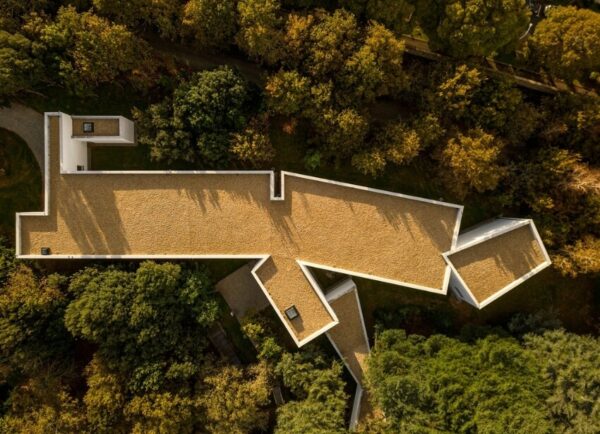
Ala Álvaro Siza – Photo: © Fernando Guerra _ FG+SG
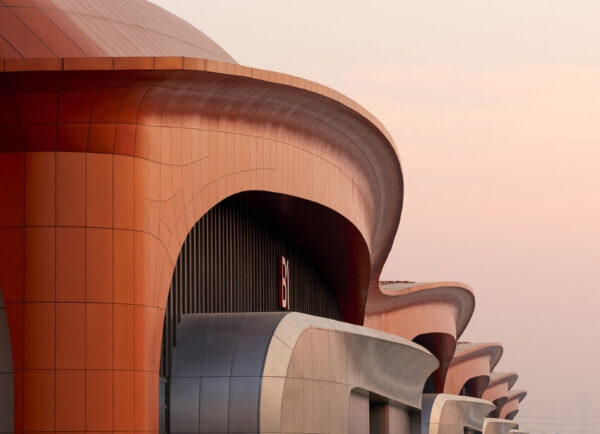
Capital International Exhibition & Convention Centre by Zaha Hadid Architects (Photo Virgile Simon Bertrand)
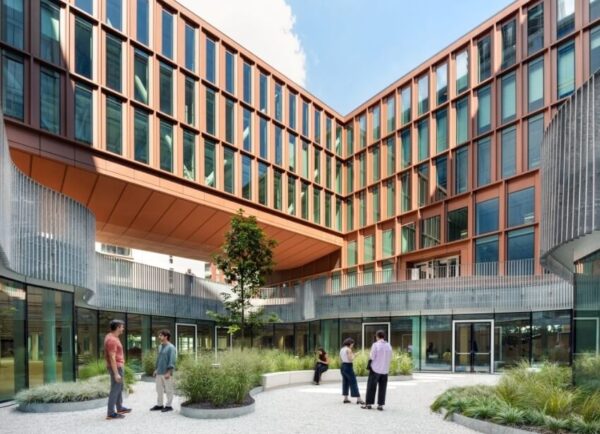
Pirelli 35 Office Building by Park and Snøhetta
3. Holcim Awards for Sustainable Construction
The Holcim Awards for Sustainable Construction are the world’s leading competition for sustainable design. Established in 2005, the program recognizes innovative projects that advance low-carbon construction, circular design, and community-driven planning. The awards run across five regions with regional winners competing for global honors.
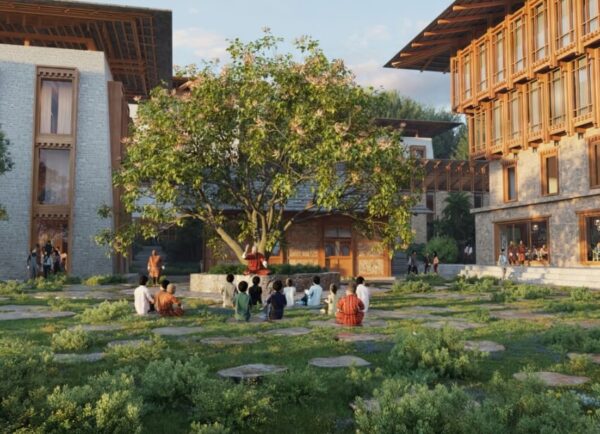
Gelephu Mindfulness City by Bjarke Ingels Group (Credits Holcim Foundation Awards)
The 2025 edition marked the award’s return after a short hiatus, drawing over a thousand entries worldwide. Among the standout winners was Bjarke Ingels Group’s “Mindfulness City” masterplan in Bhutan, celebrated for its integration of nature, wellbeing, and sustainable infrastructure. Other regional winners included flood-resilient schools in Brazil and heritage regeneration projects in the Middle East.
Held in Venice, the 2025 ceremony underscored the awards’ mission: to showcase how architecture can meaningfully address climate, equity, and urban resilience.
How to Select the Right Award
Choosing the right competition to enter can be as strategic as designing the project itself. Each award has its own focus, eligibility rules, and prestige level. So, aligning your entry with the right program can make all the difference.
Below, we’ve left some tips for choosing the best-fit design awards for you:
- Match your project to the award’s focus: Start by identifying what defines your project and find awards that emphasize that strength. For example, a local building might fare better in a national program like the RIBA Awards, while a highly sustainable project could stand out at the Holcim Awards. If you’ve designed a high rise building then AMP may be the best fit.
- Consider geography and eligibility: Some competitions like AMP are open globally. Others, such as RIBA, are limited to specific countries. The Holcim Awards use a regional model, so your work first competes within its continent before advancing globally.
- Assess the scale of competition and category fit: Broad, single-winner programs like the Stirling Prize or Holcim Gold Award are highly competitive. On the other hand, awards with multiple subcategories like AMP improve your chances of recognition. Target categories that precisely describe your project.
- Understand the benefits of winning: Some awards focus on prestige, others on publicity. For example, the Dezeen Awards and AMP highlight winners through their vast online platforms, ensuring strong media coverage. If your goal is international visibility or new clients, awards with built-in editorial promotion are ideal.
- Balance effort and cost: Every entry takes time and money, so focus on quality submissions. Track annual deadlines and prepare materials early so you can tailor each entry efficiently.
Ultimately, the best strategy is to study past winners and ask whether their work aligns with yours. Entering multiple programs can also highlight different facets of a project. Many successful buildings collect several awards in a single year. Even if you don’t win immediately, persistence pays off. With the right match between your project and the award’s mission, recognition often follows.
Conclusion
The 2026 best building design awards season continues to prove that design remains both inventive and deeply human.From the global scope of the Architecture MasterPrize to the prestige of the RIBA Stirling Prize, and the sustainability focus of the Holcim Awards, each program reflected how innovation, context, and compassion define excellence today.
For architects, winning is a milestone, but the true impact of awards lies in how they advance the profession. They inspire dialogue, set new standards, and celebrate design that responds meaningfully to people and the planet, shaping the future of architecture worldwide.
Last updated: March 12, 2026
Interior design shapes the way people live, work, and interact with their surroundings. Homes to offices, retail spaces and cultural institutions all directly influence mood, productivity, and quality of life.
In 2026, interior design awards remain one of the most effective ways for architectural practices and architects to gain recognition, connect with clients, and showcase their expertise.
In this guide, you’ll discover ten of the most important interior architecture and design awards. We’ve chosen a mix of global competitions, architecture-focused programs with strong interior categories, and respected national awards.
For each, you’ll learn what makes them unique, how winners are recognized, and when to apply.
TL;DR: Awards and their deadlines:
- SBID International Design Awards: 2026 entries now open. Ceremony November 6, 2026
- Interior Design MasterPrize (IDMP) by AMP: August 31, 2026
- International Interior Design Association (IIDA) Awards: September to October 2026 (check IIDA.org in September for opening)
- International Design Awards (IDA): 2026 now open. Early bird deadline April 15, 2026.
- INT Interior Design Awards: May 31, 2026
- RIBA Awards (Interior Architecture): 2026 entries closed December 2025. 2027 window opens October 2026
- AIA Interior Architecture Awards (US): 2026 submissions closed. Winners announced June 2026.
Why Interior Design Awards Matter
Award winners enjoy several benefits that positively influence their professional reputation with perhaps the most important one being global recognition. Below, go through why you should enter an award competition in more detail:
- Industry credibility and client trust: Winning signals that your work meets international (or local) standards, could result in referrals from industry partners and associates, and ultimately makes it easier for clients to choose to work with you.
- PR and media visibility: Awards often winners are featured across press releases, magazine features, and online exposure that highlight your designs. For example, winners of AMP’s Interior Design MasterPrize get featured across world renowned digital architecture platforms.
- Differentiation in competitive markets: The interior design market is saturated. Winning an award helps distinguish your firm in a crowded field. and help you stand out in proposals and pitches.
Top 7 Interior Architecture & Design Awards in 2026
1. SBID International Design Awards
Run by the Society of British & International Interior Design, the SBID International Design Awards are one of the UK’s most respected competitions. It covers both residential and commercial interiors and welcomes entries from across the world.
One of the award’s distinguishing features is its judging process, which involves both expert panels and public voting. This dual approach ensures that winners gain validation from industry leaders and recognition from wider audiences.
Winners receive trophies, attend an awards ceremony in London, and benefit from strong media coverage across leading design outlets. Recent winners include Franzhulo’s House Of Arts which won the global prize, but also regional winners like the Freed Hotel & Residences by DesignAgency & Pureblink (Americas) and Thailand Contemporary Residence by SIWA Interior (Asia).
The SBID interior design award is great for architects looking to build credibility both on a global and regional scale.
The 2025 winners were announced at the Royal Lancaster London on October 24, 2025. Entries for the 2026 SBID Awards are now open, with the ceremony scheduled for November 6, 2026.
2. Interior Design MasterPrize (IDMP) by AMP
The Interior Design MasterPrize (IDMP) stands as one of the most significant awards dedicated exclusively to interior architecture and design. The award covers a wide range of categories, from residential and commercial spaces to cultural and public interiors.
The 2025 Interior Design of the Year was awarded to Symbolplus Office by SYMBOLPLUS INC. (lead architect Satoshi Nobekawa, Tokyo, Japan), a project that transforms a 23-year-old timber building into a hybrid-era workplace using red earth plaster, reclaimed Tosa washi, and traditional carpentry.
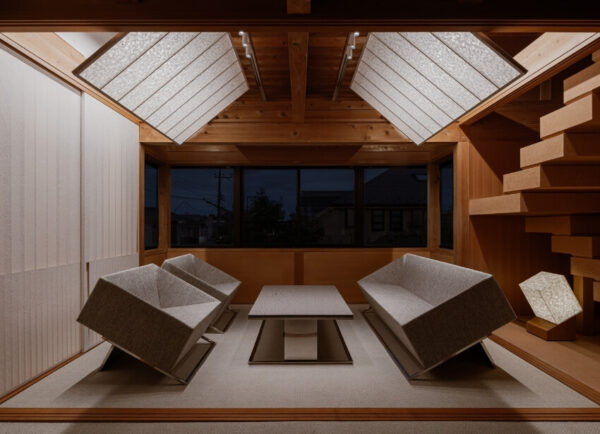
Symbolplus Office by SYMBOLPLUS INC., AMP Interior Design of the Year 2025 (Photo: Keishin Horikoshi)
Winners of the IDMP award receive recognition in AMP’s annual book, gain exposure through international design media and benefit from global press releases.
AMP’s Interior Design MasterPrize is open to both established firms and emerging designers. The submission deadline for the 2026 awards is August 31, 2026.
3. International Interior Design Association (IIDA) Awards
The IIDA Awards are a series of programs that include the Global Excellence Awards and the Interior Design Competition. Each program focuses on forward-thinking interiors that balance functionality with innovation.
Recent winners include 13&9 for the Fractal Chapel at State Hospital Graz in Austria, as well as YANG for the Xi’an Silk Road International Conference Center in China.
IIDA winners are featured on the IIDA website, as well as across renowned publications like the Interior Design magazine. They’re also honored across events like the “Revel in Design” gala in Chicago.
This award is great for firms and individuals who want to position themselves as industry leaders and innovators. The 2025 cycle concluded with a winners’ ceremony in Paris in February 2026. The 2026 submission window is expected to open in September 2026.
4. International Design Awards (IDA)
The IDA recognizes and promotes exceptional design worldwide across several disciplines, including their prestigious annual “Interior Design of the Year” award.
Awards for the Interior Design of the Year award are broken into multiple categories, including commercial (for workspace design, smart office design, retail, shopping centers etc), cultural/community (e.g., theaters, auditoriums, galleries, museums, healthcare facilities, libraries), residential (such as luxury living, affordable homes, small living spaces), and other (including conceptual projects, temporary and pop-up structures).
Recent winners of the Interior Design of the Year award include Hangzhou M2 Art Center by SpActrum, Emerald Bay by Dina Marciano Design and Switch Bahrain by Karim Rashid Inc. Winners of the IDA’s award receive the coveted IDA trophy and are also published across all their social media channels.
The 2025 ceremony was held in Bangkok in February 2026. The IDA 2026 competition is now open, with an early bird deadline of April 15, 2026.
5. INT Interior Design Awards
Dedicated specifically to interior design, encompass a broad range of interior projects across three main categories (residential, commercial and public interior design) and 85 subcategories.
Initial entry into the competition is free and submissions are reviewed by the INT team to ensure only high quality projects are selected as part of the longlist. Winners of the INT award receive widespread global recognition thanks to the brand’s expansive network, as well as in their annual INT Book of Interior Design.
2025 award winners include Watertown Exploratory Labs (WELL) by Elkus Manfredi Architects (commercial), Aux Mille-Voix High School by TLA + UN + NEUF (public interior of the year), and Walkway House by FGMF (residential).
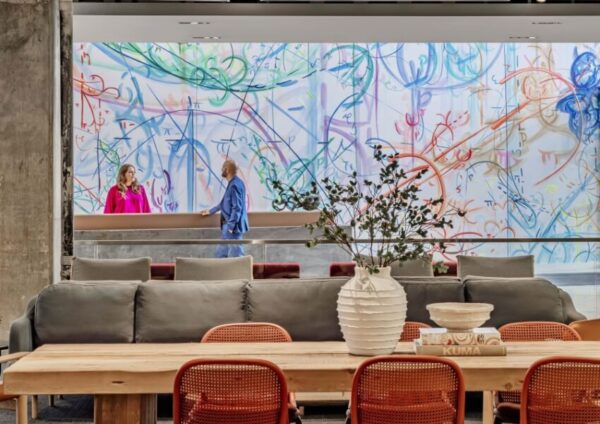
Watertown Exploratory Labs (WELL) by Elkus Manfredi Architects (Photo by Eric Laignel)
Entry dates for the 2026 awards have been announced with final submissions accepted until May 31, 2026.
6. RIBA Awards (Interior Architecture)
The RIBA Awards, organized by the Royal Institute of British Architects, primarily celebrate architecture, but they also recognize outstanding interior architecture projects.
These awards are unique because of their strong emphasis on design quality and impact, particularly within the UK.
The Stirling Prize is given to each year’s award winner who represents the UK’s best architect for that given year. Recent winners of the Stirling Prize include:
- The Elizabeth Line by Grimshaw, Maynard, Equation and AtkinsRéalis (2024)
- The John Morden Centre by Mæ (2023)
- Magdalene College Library by Niall McLaughlin Architects (2022)
Winners are recognized through RIBA’s prestigious network, featured in exhibitions, and highlighted in official RIBA publications.
For UK-based firms, a RIBA award for interiors carries significant weight in both professional and client-facing contexts.
Submissions for the 2026 RIBA Awards closed in December 2025, with regional shortlists now being announced. The 2027 entry window is expected to open in October 2026
7. AIA Interior Architecture Awards (US)
The AIA Interior Architecture Awards, run by the American Institute of Architects, highlight excellence in US-based interior projects. They emphasize designs that enhance the human experience and elevate everyday spaces.
2025 winners include:
- Sandi Simon Center for Dance at Chapman University
- House Zero by Lake|Flato Architects
- Intuit MTV-22 Bayshore Building Interiors by Clive Wilkinson Architects
Winners are celebrated at the AIA’s annual national conference, and their projects are published in AIA’s print and online platforms. For firms working in the United States, this award offers credibility and strong professional recognition.
The 2026 submission period is now closed, with winners expected to be publicly announced in June 2026. The 2027 submission window will open in autumn 2026.
What Do Judges Look for in Award-Winning Interior Design?
When evaluating projects, judges look for more than just beautiful interiors. They want designs that feel original, serve a clear purpose, and leave a lasting impression. Here are some of the qualities they pay closest attention to:
- Creativity and originality: Judges want to see fresh thinking. A winning project often pushes boundaries, whether through bold material choices, unexpected layouts, or a design concept that feels truly unique.
- Functionality: An interior must do more than look good. It has to work. Judges consider how well the space supports the people who use it every day.
- Storytelling: Great interiors tell a story. This could be about the client’s vision, the cultural context, or the community the space serves.
- Sustainability: Environmental responsibility has become a central theme in design awards. Judges look for spaces that use eco-friendly materials, reduce waste, and improve energy efficiency.
- Technical execution: Even the most creative ideas need to be executed well. Judges examine the level of detail, craftsmanship, and integration of different design elements.
Final Thoughts & Next Steps
Winning an interior design is your chance to strengthen your reputation, gain visibility in the global design community, and show clients that your work stands out in a competitive field.
Awards also open doors to new collaborations and put your projects alongside the best in the industry.
By understanding what judges look for and preparing submissions carefully, you can position your work for success and make the most of these opportunities.
We hope our guide has helped introduce some new interior design awards to you, both in your region and globally.
Immerse Yourself in Award-Winning Architecture Photography
Free PDF. Delivered to your inbox.
Explore images that capture light, mood and the soul of space.
Download for Firms & Individuals
Download for Press & Media
______________
What’s Inside
- Storytelling Shots
Images that do more than show buildings, they tell stories. - Atmospheric Beauty
Feel the light, texture and space in every frame. - Global Talent
Work from emerging and established photographers worldwide. - Curated Excellence
Selected by a panel of architects, curators and photo experts.
Prefer Print?
Grab a printed edition on Lulu at minimal cost.

Last updated: March 12, 2026
Why Architecture Awards Matter
Top architecture awards play a crucial role in celebrating innovation, cultural relevance, and sustainability in the built environment. For architects and firms, these awards validate ideas, elevate reputations, and open new doors professionally.
This guide highlights the most prestigious, globally respected architecture awards administered by foundations, institutes, or professional associations. Our focus is on honors that emphasize quality and public benefit, not popularity contests or media-driven recognition.
We answer key questions such as:
- What is the biggest award for architects?
- Which architecture competitions matter most?
- What are the most prestigious architecture prizes in the world?
What Is the Biggest Award for Architects?
The Pritzker Architecture Prize is widely regarded as the most prestigious award in the field. Often called “the Nobel Prize of architecture,” it honors a living architect whose built work demonstrates consistent and significant contributions to humanity.
- Established: 1979 by the Pritzker family (Hyatt Foundation)
- Awarded: Annually
- Notable Winners: Zaha Hadid, Tadao Ando, David Chipperfield, Frank Gehry, Francis Kéré, Riken Yamamoto (2024), Liu Jiakun (2025)
The 2026 laureate has not yet been announced. The traditional March announcement has been delayed, with no new date confirmed at this time.
Top Architecture Awards List: The Most Prestigious Design Prizes
Here are the five top architecture awards recognized for their excellence, influence, and global reach:
1. Pritzker Architecture Prize
- The most prestigious architecture prize globally
- Honors lifetime achievement and profound impact on the built environment
2. RIBA International Prize
- Recognizes buildings that make a significant contribution to society globally
- Awarded biennially by the Royal Institute of British Architects
3. AIA Gold Medal
- The highest honor from the American Institute of Architects
- Celebrates individuals whose work has had a lasting influence on the theory and practice of architecture.
The 2026 Gold Medal was awarded to Shigeru Ban, recognized for his pioneering use of renewable materials including paper and timber, and his humanitarian design work through disaster relief shelters worldwide.
4. Venice Architecture Biennale – Golden Lion
- Awards conceptual, experimental, and visionary work
- Reflects cultural and architectural innovation at a global scale
5. Architecture MasterPrize (AMP)
- Recognizes excellence in architecture, interior, and landscape design
- Celebrates innovation, aesthetics, and sustainable design
- Open to both emerging talents and established professionals
- Visit the homepage of the AMP Architecture Awards
Awards for Young or Emerging Architects
For early-career professionals and smaller practices, several awards provide excellent exposure:
- Young Architects Program (MoMA PS1)
- World Architecture Festival (WAF)
These architecture competitions help foster new talent and often serve as launching pads for future recognition.
FAQ: Architecture Awards & Competitions
What awards do architects get?
Architects may receive lifetime achievement honors (like the Pritzker or AIA Gold Medal) or project-specific awards (like AMP or RIBA) depending on their career stage and contribution.
What are the most prestigious architecture awards?
- Pritzker Architecture Prize
- RIBA International Prize
- AIA Gold Medal
- Venice Biennale – Golden Lion
- Architecture MasterPrize (AMP)
Are there awards for sustainable architecture?
Yes, many awards now feature sustainability categories, including AMP, Holcim Awards, and WAF. These recognize ecological responsibility and innovation in sustainable design.
Where can I find international architecture competitions?
You can explore platforms like Bustler or check the official sites of award programs such as AMP or WAF for open calls.
Being recognized by the top architecture awards can transform an architect’s career, expand their network, and bring visibility to impactful design. Awards like the Pritzker and AMP don’t just reward beauty—they honor work that contributes meaningfully to society.
For architects focused on excellence, innovation, and impact, entering these prestigious design prizes is a strategic step toward global recognition.
Unlock the AMP 2024 Book of Winners
Free PDF. Instant inbox delivery.
Enter your details below to get the definitive showcase of this year’s top architecture, interiors, landscape and product design, tailored to your needs.
Download for Firms & Individuals
Download for Press & Media
______________
Why You’ll Love It
- Global Inspiration
See 2024’s best entries from over 80 countries. - Real-World Impact
Meet the first-ever Social Impact Project of the Year—a Spanish social housing model that lifts communities. - Earth-Smart Design
Discover how winners use local, renewable materials to blend with nature. - Expert Curation
Handpicked by a jury of top architects, designers & scholars.
We are proud to present the 2024 winners of the Architecture MasterPrize. These projects reflect a deep commitment to creativity, sustainability, and social value. Join us in applauding these exceptional contributions to the world of architecture, interior, and landscape design.
Prefer Print?
Order a bound copy on Lulu at minimal cost.
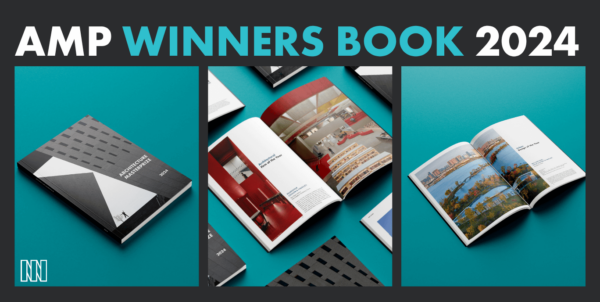
The Architecture MasterPrize (AMP) is delighted to present its Book of Winners, a definitive showcase of the 2024 AMP laureates and their transformative projects. This beautifully designed volume captures a decade of AMP’s commitment to celebrating ingenuity in architecture, interiors, landscape, product design, and photography, with submissions this year arriving from over 80 countries, reflecting the global design community’s vibrancy, diversity, and constant evolution.
A Global Benchmark for Architecture and Design
In this year’s edition, we celebrate another remarkable chapter in architectural creativity and innovation. The Architecture MasterPrize continues to be a place where design is recognized not only for its beauty but also for its impact on communities, the environment, and the future.
- Social Impact Project of the Year
2024 marks a historic moment for AMP with the introduction of the Social Impact Project of the Year award. Its first recipient, a social housing project in Spain, exemplifies how thoughtfully designed low-cost housing can transform lives and communities. - Sustainability at the Core
Across all categories, winners embraced environmentally conscious approaches, using local and renewable materials and working in harmony with natural surroundings. These projects respond to today’s urgent challenges while charting a responsible, resilient vision for tomorrow. - An International Jury
Our respected jury of architects, designers, curators, and academics reviewed each submission with thoughtfulness and expertise, ensuring that every project in the Book of Winners sets new benchmarks for what architecture can achieve.
We are proud to present the 2024 winners of the Architecture MasterPrize. These projects reflect a deep commitment to creativity, sustainability, and social value. Join us in applauding these exceptional contributions to the world of architecture, interior, and landscape design.
Get Your Copy
- Preview the Book: View the online version of the AMP 2024 Book of Winners
- Order from Lulu: Purchase a printed copy at minimal cost (printing & shipping)
- Download PDF: Free digital download of the Book of Winners
Architecture Photography MasterPrize 2024 Winners Book
A celebration of the art and impact of architectural photography – this volume honors images that do more than document buildings, they tell stories, capture atmosphere, and invite us to experience spaces we may never set foot in.
- Preview the Photography Book: See the online version of the Architecture Photography MasterPrize 2024 Winners
- Order from Lulu: Get your printed copy with minimal printing & shipping costs
- Download PDF: Free digital download of the Photography Winners Book
Join us in celebrating the best in architectural design and photography.
Order your copies today or download for free to explore the ideas that are shaping our built world.
Call for Entries: AMP 2025
Registrations for AMP 2025 are now open, and entries are accepted until the final deadline, September 30, 2025. We look forward to showcasing the next wave of groundbreaking projects at AMP.
Award-Winning Firms
For over a decade, the Architecture MasterPrize has recognized the world's most outstanding work in architecture, interior design, and landscape — judged by an international jury of leading practitioners and critics. Past winners include globally renowned firms from over 81 countries, alongside emerging voices redefining contemporary design.
Guggenheim
Bilbao
The Architecture MasterPrize gala returns to Bilbao for an evening celebrating the 2025/26 winners and global design excellence — presented in partnership with the Solomon R. Guggenheim Foundation on the bank of the Nervión River in the iconic Guggenheim Museum Bilbao.
⬥ Invitation Only
