Cultural architecture does more than house collections or seat audiences. At its best, it defines how a community understands itself, who it has been, and who it aspires to become. These are ten of the most significant cultural buildings recognized by the Architecture MasterPrize.
What Is Cultural Architecture?
Cultural architecture refers to buildings designed to serve the cultural life of a community or society. Museums, galleries, concert halls, opera houses, libraries, theatres, cultural centres, and civic arts institutions all fall within this category. These are not buildings defined by a single function; they are defined by a shared purpose: to preserve, create, celebrate, or transmit culture from one generation to the next.
The category is broader than it might first appear. A mosque, a temple, or an indigenous community hall can all be works of cultural architecture. A science centre, a national archive, or a memorial can be too. What unites them is that they serve as physical expressions of collective identity and shared values, spaces where society gives tangible form to what it considers worth remembering, celebrating, or protecting.
Cultural architecture is also one of the most technically demanding typologies. These buildings must manage acoustics, climate control, exhibition lighting, crowd circulation, and accessibility at a high level, while simultaneously operating as civic landmarks that represent an entire institution or community. Getting that balance right requires exceptional design, which is precisely why the Architecture MasterPrize has dedicated a category to it since the program’s founding.
Why Cultural Architecture Matters
The cultural buildings a society builds reveal its priorities. When the Basque government commissioned Frank Gehry to design the Guggenheim Museum Bilbao in the early 1990s, it was not only investing in a museum: it was making an argument about what Bilbao deserved to become. When Tadao Ando designed the He Art Museum in Guangdong, he was making an argument about what private cultural philanthropy in China could look like. When Renzo Piano placed the Istanbul Museum of Modern Art on the Bosphorus waterfront, opening the previously inaccessible shoreline to the public, he was making an argument about the relationship between a museum and a city.
Cultural architecture is important for several reasons beyond aesthetics. It preserves heritage and history, providing permanent homes for collections and archives. It shapes contemporary identity, giving communities spaces to gather around shared cultural experiences. It drives economic development: the ‘Bilbao Effect,’ the phenomenon of a landmark cultural building transforming a city’s trajectory, has been studied and replicated across the world. And it signals civic ambition, demonstrating that a city or institution takes seriously its responsibility to future generations.
Cultural buildings are among the most watched and discussed projects in the world. An exceptional museum or concert hall becomes a reference point for an entire city’s global identity, and a benchmark against which all subsequent architecture in that place is measured.
What Makes Cultural Architecture Exceptional?
The Architecture MasterPrize jury evaluates cultural architecture against the same criteria applied across all 41 AMP categories: design excellence (including aesthetics, environmental sensitivity, cultural relevance, and contextual consideration), originality, the use of innovative materials or technologies, and how well the building fulfills its functional requirements. In the cultural architecture category, two additional factors consistently distinguish the Best of Best from the very good.
- Civic presence.
Does the building contribute to its urban or landscape setting in a way that enriches the public realm? The best cultural buildings do not simply sit inside their sites but engage with them, opening up views, creating new public spaces, and establishing a dialogue with their surroundings.
- Programmatic ambition.
Does the building serve its community in ways that go beyond the minimum brief? Museums that include free educational spaces, concert halls that host community events, cultural centres that knit together multiple functions: these are the projects that consistently attract the jury’s highest recognition.
AMP Cultural Architecture Winners: Quick Reference
The table below covers the ten featured projects, drawing primarily from the 2025 Architecture MasterPrize edition, with the strongest 2024 and 2020 winners included for their international standing.
| Project | Architect | Country | AMP Distinction |
| Sports & Cultural Center Marie-José Perec and Joséphine Baker | Onze04 Architectes | France | Design of Year 2025 |
| Saint-Jean-de-Luz Cultural Centre | Dominique Coulon & Associés | France | Best of Best 2025 |
| La Coursive | PROJECTILES | France | Best of Best 2025 |
| CMP Inspiration | Kengo Kuma and Associates | Taiwan | Winner 2025 |
| Shenzhen Science & Technology Museum | Zaha Hadid Architects | China | Winner 2025 |
| Yohoo Museum | Aedas / Ken Wai | China | Winner 2025 |
| Border Library and Public Park | Fernanda Canales | Mexico | Winner 2025 |
| Istanbul Museum of Modern Art | Renzo Piano Building Workshop | Turkey | Best of Best 2024 |
| Zhuhai Jinwan Civic Arts Centre | Zaha Hadid Architects | China | Best of Best 2024 |
| He Art Museum | Tadao Ando | China | Design of Year 2020 |
Table: Selected Architecture MasterPrize winners in the Cultural Architecture category.
10 Outstanding Cultural Architecture Examples, Recognized by the Architecture MasterPrize
1. Sports and Cultural Center Marie-José Perec and Joséphine Baker, France – Onze04 Architectes
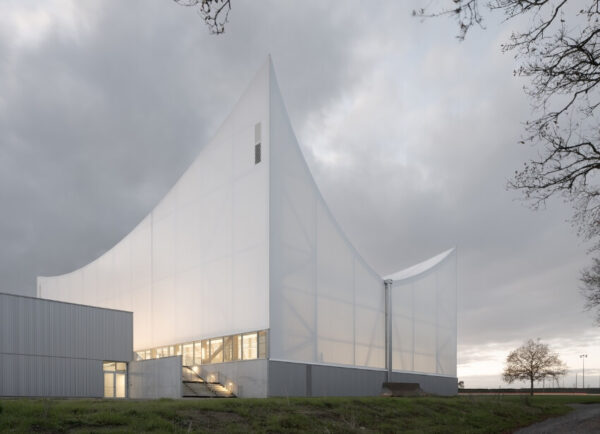
The Sports and Cultural Center Marie-José Perec and Joséphine Baker by Onze04 Architectes is the 2025 Architectural Design of the Year, the highest distinction the Architecture MasterPrize confers. Located in La Bouëxière, France, the building is designed as a civic connector rather than a closed object: it is organized into two distinct volumes, a multi-sports hall and a dance hall, with a public promenade running directly through the complex, physically linking existing community facilities with the surrounding neighbourhoods.
The main sports hall is covered by a dramatic textile roof with four rising peaks, reaching between 13 and 28 metres in height. The textile covering provides even, consistent natural light throughout the day, eliminating the harsh shadows and glare typical of sports halls. The project is named after two French sporting icons born to families with roots in the French Caribbean, and its programming reflects a commitment to sport and dance as tools of community cohesion. The jury’s recognition of a relatively modest-budget community building as the year’s highest architectural honour signals the AMP’s evolving definition of what design excellence means.
2. Saint-Jean-de-Luz Cultural Centre, France – Dominique Coulon & Associés
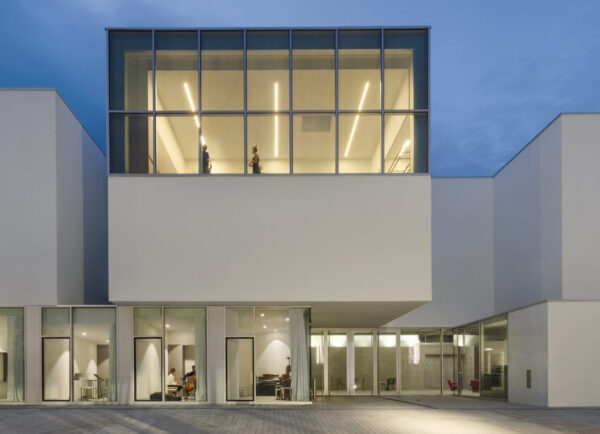
The Saint-Jean-de-Luz Cultural Centre by Dominique Coulon & Associés is a 2025 Best of Best winner, photographed by Eugeni Pons. Dominique Coulon is one of France’s most respected cultural architects, a practice that has now received AMP recognition across multiple editions, including the 2024 Architecture Firm of the Year title. The Saint-Jean-de-Luz project extends this record into the Basque Coast of southwest France.
Cultural centres on the Basque coast carry a particular weight: this region has one of the most distinct linguistic and cultural identities in Western Europe, and its cultural buildings are expected to serve not just functional but symbolic roles. Coulon’s design addresses this with the directness and material intelligence that characterises all his work. The 2025 Best of Best recognition confirms the project’s standing among the year’s most considered cultural buildings from around the world.
3. La Coursive, France – PROJECTILES
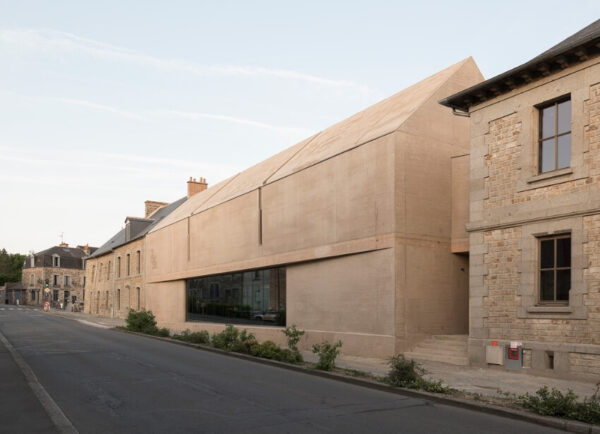
The La Coursive Heritage Interpretation Centre by Paris-based practice PROJECTILES is the second 2025 Best of Best winner in Cultural Architecture. Located at the foot of Fougères Castle, the largest medieval fortress in Western Europe, La Coursive is an Architecture and Heritage Interpretation Centre that tells the story of the city of Fougères in Brittany.
The project’s complexity lies in its context: the site falls within a strict heritage protection zone, and the design had to negotiate a set of existing historic buildings, including an 18th-century inn, a 19th-century adjoining structure, and a former school. PROJECTILES resolved this through what they describe as ‘urban sedimentation’, a contemporary extension that perpetuates the compositional logic of the historic surroundings while establishing a clearly new architectural identity. The 630 square metres of permanent and temporary exhibition space trace Fougères’ history of glassmaking, shoemaking, and the literary figures who shaped its cultural identity.
4. CMP Inspiration, Taiwan – Kengo Kuma and Associates
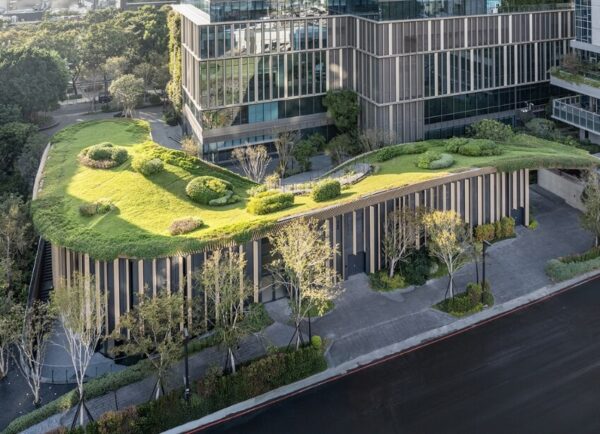
The CMP Inspiration cultural hub in Taichung, Taiwan, designed by Pritzker laureate Kengo Kuma and recognized in the 2025 AMP edition, repurposes a disused commercial area and former elementary school into a cultural landmark integrating public art, green infrastructure, and intergenerational exchange.
Kuma’s approach, dissolving architecture into its landscape rather than imposing upon it, is expressed here through the careful integration of vegetation, natural materials, and public programming that blurs the boundary between building and park. The project has transformed a once-declining district of Taichung into a vibrant space of everyday creativity over the 16 years since its conception. Its AMP recognition sits alongside Kuma’s broader presence in the 2025 edition as one of the Pritzker laureates whose work was featured across the program.
5. Shenzhen Science & Technology Museum, China – Zaha Hadid Architects
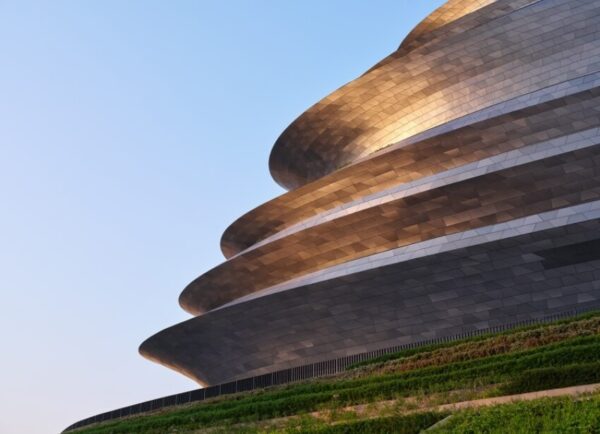
Zaha Hadid Architects’ Shenzhen Science and Technology Museum is among the firm’s most significant 2025 AMP-recognized projects, adding to a Hall of Fame record that includes the BEEAH Headquarters (BOB 2022), the Chengdu Science Fiction Museum (2024), the Zhuhai Jinwan Civic Arts Centre (BOB 2024), and the Masarycka mixed-use development in Prague.
The Shenzhen Science and Technology Museum is one of the most ambitious science institution commissions in Asia, serving a city that has become one of the world’s most significant technology and innovation centres in less than four decades. ZHA’s design continues the firm’s tradition of fluid, parametric form in service of large-scale public cultural institutions, creating a building whose architecture mirrors the dynamism and forward momentum of the discipline it houses.
6. Yohoo Museum, China – Aedas
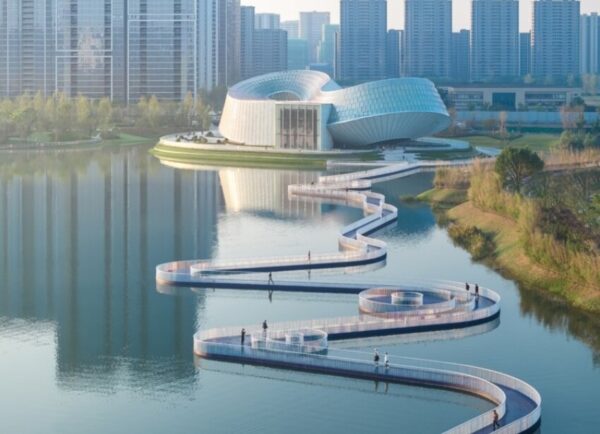
The Yohoo Museum by Aedas, designed by Lead Architect Ken Wai and located on Hangzhou’s Yohoo Lake, is a 2025 Architecture MasterPrize winner in Cultural Architecture. The building is defined by a double-ring structure inspired by ancient jade, the material that has been central to Chinese cultural identity for millennia. Photographed by Terrence Zhang, the building appears to float via a steel frame, its translucent ’emerald glass’ facades combining crystal clarity with jade-like warmth.
The circular courtyards at the heart of the building create a sequence of contemplative spaces that connect the building’s cultural program with the lake and landscape beyond. The Yohoo Museum extends Aedas’s remarkable record at the AMP, with the firm holding more than 33 Best of Best awards across multiple editions, the highest cumulative total of any practice in the program’s history. The project was commissioned by Hangzhou Liangzhu New City Transportation Investment Co., Ltd.
7. Border Library and Public Park, Mexico – Fernanda Canales
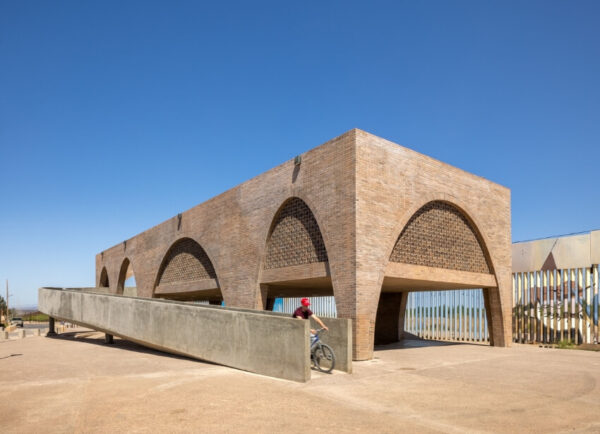
The Border Library and Public Park by Fernanda Canales is among the 2025 AMP’s most politically and socially resonant cultural architecture winners. Working at the literal border between Mexico and the United States, Canales has designed a library and public park that asserts the value of knowledge, access, and shared public space precisely where those values are most contested.
Fernanda Canales is one of Latin America’s most internationally respected architects, and the Border Library confirms her practice’s commitment to architecture as a form of civic argument. The building does not simply provide library services to a border community; it makes a case for what a border community deserves. Its AMP recognition places it alongside the program’s long tradition of celebrating cultural buildings that serve specific communities with particular care and precision.
8. Istanbul Museum of Modern Art, Turkey – Renzo Piano Building Workshop
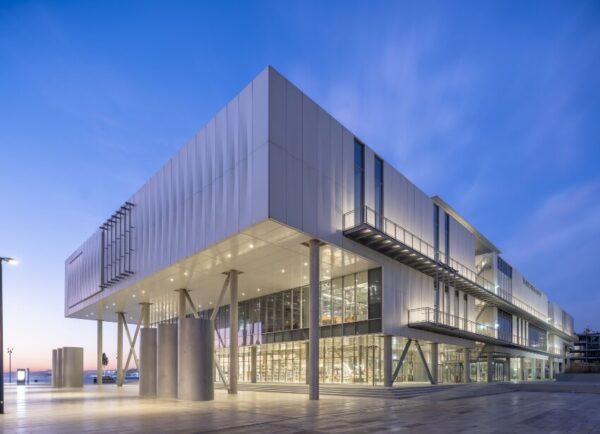
Pritzker laureate Renzo Piano’s new home for Istanbul Modern received Best of Best recognition at the 2024 Architecture MasterPrize, alongside the ArchDaily Building of the Year in Cultural Architecture and the World Architecture Festival’s top prize in Completed Buildings Culture. Opened in May 2023 on the Karaköy waterfront where the Bosphorus and Golden Horn meet, the building’s 10,500 square metres are wrapped in iridescent aluminium panels that subtly reflect the colours of the water and the changing sky.
Turkey’s first museum of modern and contemporary art has hosted 8.5 million visitors and provided free art education to 850,000 children and young people. Piano explicitly drew on the imagery of fish scales in the cladding, evoking the maritime history of a site used as a harbour for millennia. A transparent ground floor opens the previously inaccessible Bosphorus shoreline to the public for the first time, creating a new civic promenade connecting the waterfront with Tophane Park.
9. Zhuhai Jinwan Civic Arts Centre, China – Zaha Hadid Architects
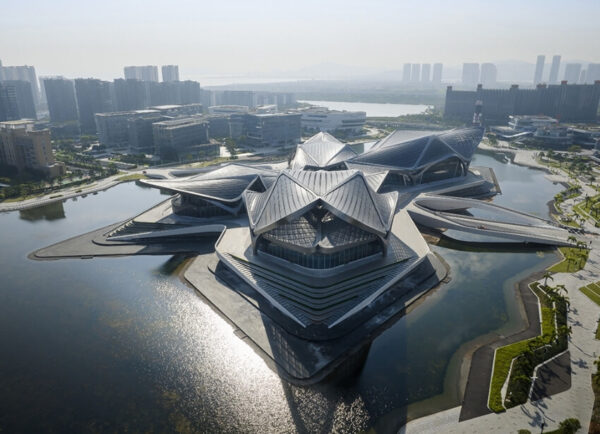
The Zhuhai Jinwan Civic Arts Centre is one of the most ambitious multi-institution cultural complexes built anywhere in recent years, and a Best of Best winner at the 2024 Architecture MasterPrize. It integrates a Performing Arts Centre, Science Centre, and Art Museum under latticed steel canopies whose configuration is optimized through repetition, symmetry, and scale variation.
The building’s landscaping and lake are integral elements of Zhuhai’s ‘sponge city’ initiative, targeting the natural permeation, storage, and re-use of 70% of the city’s rainwater. The double-insulated glazing is optimized for thermal performance in the sub-tropical climate. The result is a cultural centre that also functions as a piece of environmental infrastructure, a model for the integration of civic and ecological ambition that the AMP jury consistently recognizes with its highest distinctions.
10. He Art Museum, China – Tadao Ando
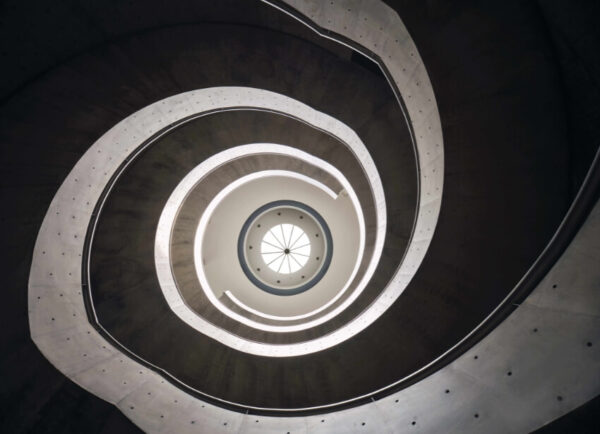
The He Art Museum in Shunde, Guangdong, designed by Pritzker laureate Tadao Ando, won the Architecture MasterPrize Architectural Design of the Year in 2020. It is the defining example of what Ando calls ‘spatial integration’: the use of geometric elements, principally the square and the circle, to create spaces that hold natural light as a material in its own right.
The museum features the world’s first and only double-helix staircase built in raw concrete, rising through the building’s circular central atrium to create a spatial experience that is simultaneously intimate and monumental. Established as a non-profit private art museum by the He family, the institution was conceived as a cultural gift to the surrounding community, hosting multi-dimensional exhibitions, educational programs, and events for both art enthusiasts and local residents.
How the Architecture MasterPrize Evaluates Cultural Architecture
The Architecture MasterPrize Cultural Architecture category is judged by an international jury of architects, curators, academics, and design critics. Entries are evaluated on design excellence, originality, the use of innovative materials or technologies, and the degree to which the project fulfills its functional brief. Cultural Architecture is one of 41 categories in the AMP.
Projects that score highest across the entire competition field receive the Best of Best title, the top distinction at the AMP above a standard Winner. From among the Best of Best projects, the jury selects the Architectural Design of the Year, which is the highest honour the prize can confer. In 2025, this distinction went to a cultural building, the Sports and Cultural Center Marie-José Perec and Joséphine Baker, confirming the category’s central place in the AMP’s values.
Architects and design firms from around the world can submit cultural architecture projects to the 2026 Architecture MasterPrize. Entries are accepted for completed buildings and works in progress.
Frequently Asked Questions: Cultural Architecture
Q: What is cultural architecture?
A: Cultural architecture refers to buildings designed to serve the cultural life of a community or society. This includes museums, art galleries, concert halls, opera houses, theatres, libraries, cultural centres, civic arts institutions, religious buildings, and memorials. These buildings are defined not by a single function but by a shared purpose: to preserve, create, celebrate, or transmit culture from one generation to the next.
Q: What are the main types of cultural buildings?
A: The main types of cultural buildings include museums and galleries (art, history, natural history, science), performing arts venues (concert halls, opera houses, theatres), libraries and archives, religious and ceremonial buildings (mosques, cathedrals, temples, synagogues), cultural centres and community arts spaces, and commemorative buildings such as memorials and mausoleums. Each type presents distinct architectural challenges around acoustics, lighting, climate control, and public circulation.
Q: Why is cultural architecture important?
A: Cultural architecture is important for several reasons. It preserves heritage and history by providing permanent homes for collections and archives. It shapes contemporary identity by giving communities spaces to gather around shared cultural experiences. It drives economic development: the ‘Bilbao Effect’ describes the documented phenomenon of a landmark cultural building transforming a city’s economy and global profile. And it signals civic ambition, demonstrating that a society takes seriously its responsibility to future generations.
Q: Which cultural buildings have won the Architecture MasterPrize?
A: Cultural architecture is one of the Architecture MasterPrize’s most competitive categories. The 2025 Architectural Design of the Year was awarded to the Sports and Cultural Center Marie-José Perec and Joséphine Baker by Onze04 Architectes (France). 2025 Best of Best winners include the Saint-Jean-de-Luz Cultural Centre by Dominique Coulon & Associés and La Coursive by PROJECTILES. Other notable winners include the Istanbul Museum of Modern Art by Renzo Piano Building Workshop (Best of Best 2024) and the He Art Museum by Tadao Ando (Design of the Year 2020). See the full list of winners.
Q: What makes a cultural building award-winning?
A: Award-winning cultural buildings consistently demonstrate a combination of exceptional design quality, strong contextual engagement, and programmatic ambition. The Architecture MasterPrize jury looks for projects that fulfill their functional brief at the highest level while making a meaningful contribution to the public realm, that use materials and technologies in innovative or distinctive ways, and that serve their community in ways that go beyond the minimum requirements of the program.
Q: How do I enter a cultural architecture project in the Architecture MasterPrize?
A: Architects and design firms from around the world can submit projects to the Architecture MasterPrize Cultural Architecture category. Entries are accepted for completed buildings and works in progress. Submit your project. The 2026 edition is currently accepting entries.
Q: What is the difference between cultural architecture and heritage architecture?
A: Cultural architecture is a broad category that includes all buildings designed to serve cultural functions, regardless of their age or style. Heritage architecture refers specifically to historic buildings and structures preserved or restored for their historical, architectural, or cultural significance. Many heritage buildings are also works of cultural architecture, but the categories are not the same. The Architecture MasterPrize has separate categories for Cultural Architecture and Heritage Architecture.
Explore More Award-Winning Cultural Architecture
To explore the full list of AMP cultural architecture winners, visit the AMP winners archive. For the complete Architecture MasterPrize Hall of Fame across all categories, see the AMP’s Icons of Architecture..
The Architecture MasterPrize 2026 edition is open for entries. Submit your cultural architecture project and join the architects recognized for building the institutions that shape how communities understand themselves. Submit your project.
The construction industry accounts for roughly 40% of global carbon emissions. A significant share of that comes not from how buildings operate but from the products that go into them: the insulation, glazing, cladding, systems, and materials that define a building’s embodied carbon before a single occupant arrives.
Sustainable architectural products address this directly. They are building products and systems designed to reduce environmental impact across their full lifecycle: in manufacture, in use, and at end of life. The best of them do not ask architects or clients to accept a performance trade-off in exchange for sustainability credentials. They compete with conventional alternatives on performance, cost, and specification convenience while delivering measurably better environmental outcomes.
This article covers what sustainable architectural product design actually involves, what criteria a jury evaluates when assessing it, and four products recognised by the Architecture MasterPrize (AMP) Product Design Award in the 2024 and 2025 editions that demonstrate what leadership in this category looks like in practice.
What Makes an Architectural Product Sustainable?
The word sustainable is used so broadly in the building industry that it has become almost meaningless without qualification. A product with recycled content is not automatically sustainable. A product with a low-carbon manufacturing process may still create end-of-life waste that undermines its credentials. Genuinely sustainable architectural products address multiple dimensions of environmental impact simultaneously.
The most rigorous framework for evaluating this is lifecycle assessment (LCA), which tracks a product’s environmental impact from raw material extraction through manufacturing, transport, installation, in-use performance, and eventual disposal or recycling. Products that perform well across the full lifecycle, not just at the manufacturing stage, represent the most credible sustainable credentials.
In practice, the criteria that distinguish the strongest sustainable architectural products include:
- Embodied carbon:
the total carbon emissions associated with manufacturing and transporting the product. For insulation, glazing, and cladding, embodied carbon is the primary environmental variable
- Renewable or waste-derived materials:
products made from agricultural byproducts, industrial waste streams, or rapidly renewable biological materials reduce dependence on virgin resource extraction
- In-use performance:
a product that reduces a building’s operational energy use, whether through better insulation, more efficient systems, or improved daylighting, compounds its environmental benefit over the building’s lifetime
- End-of-life strategy:
biodegradable, recyclable, or reusable products avoid the landfill burden that synthetic building materials typically generate at demolition
- Cost competitiveness:
sustainable products that cannot be specified within realistic project budgets remain niche. The most impactful products compete directly with conventional alternatives on cost
4 Award-Winning Sustainable Architectural Products: AMP 2024 and 2025
1. MykoFoam
Mykor | Product Design of the Year, AMP 2024 | Building Envelope & Construction Materials | UK / Portugal
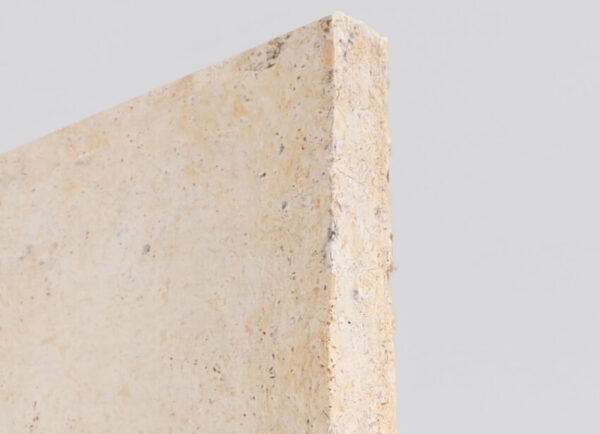
MykoFoam is a rigid insulation panel made from mycelium, the root structure of fungi, grown on cellulosic waste from the paper and pulp industry. Developed by UK-based startup Mykor, it was named the AMP Product Design of the Year for 2024, the program’s highest product honour, in recognition of both its environmental credentials and its practical performance specifications.
The environmental case is compelling and specific. Compared with expanded polystyrene (EPS), Mykor’s manufacturing process consumes 90% less water, 40% less energy, and produces 60% less CO2 emissions. The product’s embodied carbon is 213 kgCO2eq per cubic metre, significantly lower than conventional alternatives. It degrades within one year at end of life, eliminating the landfill burden associated with synthetic insulation. The product is fire resistant, VOC-free, vapour-permeable, and moisture resistant.
On performance, MykoFoam’s thermal properties are competitive with mineral wool, and its sound absorption is rated at 75% at 1000Hz. It costs up to 35% less than other sustainable insulation alternatives, addressing the cost-competitiveness gap that limits adoption of many bio-based building products. Mykor’s founders, including Valentina Dipietro, named to Forbes 30 Under 30 and recognised as a UN Young Champion of the Earth, developed the product to offer architects a credible substitute for plastic-based insulation without a performance penalty. The AMP jury’s decision to award it the program’s highest product distinction reflects the degree to which it succeeds.
2. Automist
Plumis | Best of Best, Equipment / Appliances / HVAC, AMP 2025 | United Kingdom
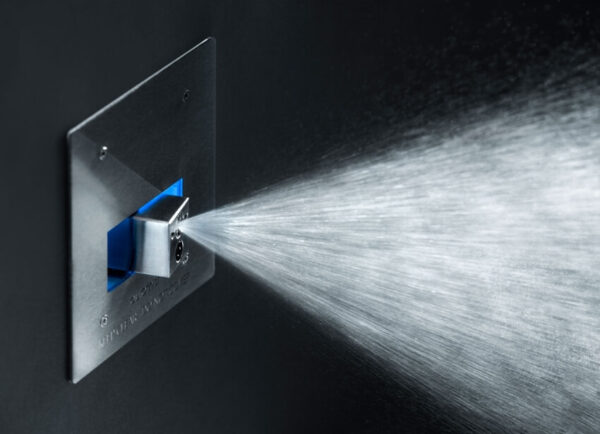
Automist is a water mist fire suppression system developed by London-based Plumis as a direct alternative to conventional sprinkler systems. Its sustainability credentials are primarily about resource efficiency: where a standard sprinkler system discharges approximately 60 litres of water per minute, Automist uses around 2.5 litres, a reduction of over 95%. In a fire event, the water damage to a building and its contents, and the associated waste and reconstruction carbon, can equal or exceed the fire damage itself. Automist’s approach to suppression minimises both.
The product also addresses a significant barrier to fire safety compliance in retrofit and heritage contexts. Conventional sprinklers require extensive pipe networks that are often impractical to install in existing buildings without significant structural intervention. Automist’s compact, wall-mounted format can be integrated into spaces where traditional suppression systems cannot, extending the reach of effective fire protection to older building stock and smaller residential properties. The AMP Best of Best distinction reflects both the product’s technical innovation and its practical implications for how buildings, particularly existing ones, can be protected more effectively and sustainably.
3. Pro Flow Pavers
Pro Flow Pavers | Best of Best, Sustainable Products, AMP 2024 | United States
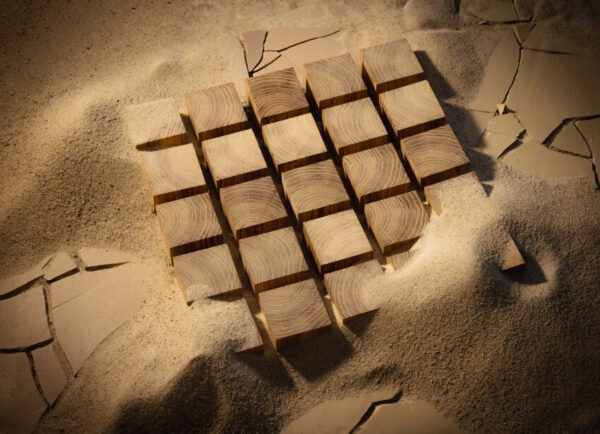
Pro Flow Pavers is a permeable paving system designed to manage stormwater at source rather than channelling it into drainage infrastructure. In conventional hard-surface urban environments, rainwater runs off impermeable surfaces into drainage systems that are increasingly overwhelmed by the intensity of precipitation events associated with changing weather patterns. Permeable paving allows water to infiltrate through the surface and into the ground beneath, reducing peak runoff volumes, recharging groundwater, and filtering pollutants before they enter drainage systems or waterways.
The sustainable product case for permeable paving is well established, but Pro Flow Pavers’ recognition reflects performance and specification qualities that go beyond basic permeability. The system is designed for the load-bearing and durability requirements of commercial and civic applications, not just residential contexts, which significantly broadens its potential application in urban environments where impermeable hardscape is most consequential. As cities face increasing pressure from both water scarcity and flash flooding, products that manage water at the building and site scale rather than relying on municipal infrastructure represent a meaningful contribution to urban resilience.
4. VELUX Skylight System
VELUX | Best of Best, Windows, Doors & Hardware, AMP 2025 | Denmark / International
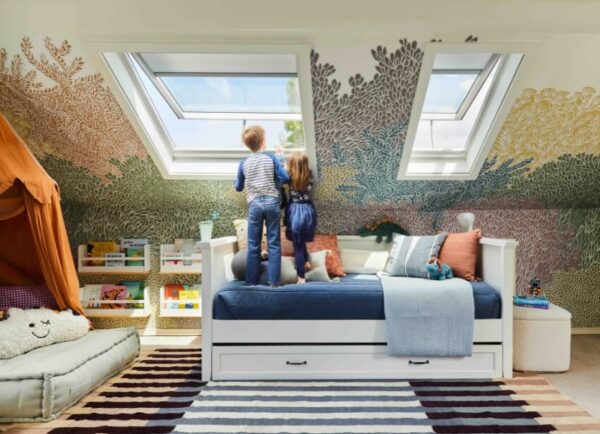
The VELUX Skylight System addresses one of the most consistent performance gaps in building design: the quality and quantity of natural light in interior spaces. Buildings that rely primarily on artificial lighting consume significantly more operational energy than those designed to maximise daylight penetration, and the research on daylight’s effects on occupant health, productivity, and wellbeing is extensive and consistent. A well-designed daylighting product is both a sustainability intervention and a human performance intervention simultaneously.
VELUX’s recognition at the AMP 2025 edition reflects a system engineered for both performance and integration. The product addresses the thermal efficiency of the roof assembly, the quality of diffused light it delivers to interior spaces, and its contribution to passive ventilation, which reduces reliance on mechanical cooling in buildings where natural cross-ventilation is achievable. For a company whose entire product focus is on roof windows and skylights, this kind of integrated performance thinking across multiple sustainability dimensions is what distinguishes the VELUX Skylight System from simpler glazing products. The jury’s Best of Best distinction indicates a product that sets a benchmark within its category rather than simply meeting it.
What the AMP Jury Evaluates in Sustainable Architectural Products
The AMP Product Design Award jury evaluates entries against three primary criteria: innovation, functionality, and overall design excellence. For products in the sustainable categories, this framework rewards products that advance the state of the art rather than simply meeting existing standards.
Innovation is assessed not only in the product’s technology or materials but in the problem it addresses. MykoFoam is innovative because it identifies a gap in the market for bio-based insulation that is genuinely cost-competitive. Automist is innovative because it rethinks fire suppression from first principles rather than incrementally improving existing systems. Pro Flow Pavers is innovative in its application of permeable technology to demanding commercial contexts. VELUX’s system is innovative in the integration of daylighting, thermal, and ventilation performance within a single product family.
Functionality means the product must work as specified in real building conditions. Sustainable credentials that depend on laboratory performance but degrade in practice, or that require specialist installation beyond normal construction trade skills, limit a product’s actual environmental impact regardless of its theoretical performance. The jury rewards products that architects and specifiers can confidently deploy at scale.
Design excellence in the product context means the product contributes to the quality of the built environment, not just its performance metrics. A fire suppression system that can be installed in heritage buildings extends protection to places that conventional systems cannot reach. A daylighting product that genuinely improves interior spatial quality creates value beyond energy savings. The strongest sustainable architectural products address the full brief of what a building is for.
What is the difference between sustainable architectural products and green building certification?
Green building certifications such as LEED, BREEAM, and WELL assess whole buildings against a set of performance criteria that include energy use, water efficiency, materials, indoor environment quality, and site factors. Sustainable architectural products are individual components that contribute to a building’s overall sustainability performance. A building can achieve LEED certification partly through specifying products with strong embodied carbon credentials or recycled content. The products themselves are not certified by these schemes, though manufacturers often provide Environmental Product Declarations (EPDs) that document a product’s lifecycle environmental impact in a standardised format that feeds into certification assessments.
Do sustainable architectural products cost more than conventional alternatives?
The cost premium associated with sustainable products varies widely by category and has been decreasing as manufacturing scales. MykoFoam is specifically designed to cost less than other sustainable insulation alternatives, and the cost gap with conventional synthetic insulation continues to narrow as production scales. Permeable paving products have reached cost parity with conventional hardscape in many commercial applications. Products like the VELUX Skylight System carry a higher upfront cost than basic skylights but deliver lifecycle value through reduced operational energy costs. The most relevant cost comparison for sustainable products is not the upfront purchase price but the whole-life cost including energy savings, maintenance, and replacement over the building’s lifetime.
Enter the AMP Product Design Award 2026
The AMP Product Design Award recognises innovation, functionality, and design excellence across all architectural product categories, including sustainable products, illumination, outdoor products, building envelope, furnishing, and more. Open to product designers and manufacturers from anywhere in the world. Regular Entry deadline is June 30, 2026.
ENTER AMP 2026
A historic building has already been photographed. Many times, usually from the same angles, in the same light, by photographers who arrived at the same hour and left with versions of the same image. That is the central challenge of historic architecture photography: how to produce work that is genuinely your own when the subject has been documented so thoroughly and so publicly.
It is also one of the most rewarding disciplines in architectural photography. Historic buildings carry accumulated time in a way that new construction cannot replicate. Their surfaces record weather, use, and repair. Their proportions reflect a different understanding of space and scale. The light that moves through their windows was designed for candles, not cameras. For a photographer who is willing to slow down and read a building rather than simply point a lens at it, historic architecture offers inexhaustible material.
This guide covers what historic architecture photography actually demands, why it is more technically and creatively challenging than it first appears, how experienced photographers approach its specific problems, and eight projects recognised by the Architecture Photography MasterPrize (APMP) in the 2025 edition that showcase what the discipline looks like at its highest level.
What Is Historic Architecture Photography?
Historic architecture photography is the practice of documenting buildings, interiors, and structures of historical significance in a way that communicates both their physical character and their accumulated meaning. It differs from general architectural photography in several important respects.
New buildings can be photographed to a brief: at a specific time, in specific conditions, to show a specific set of qualities the architect or client wants to communicate. Historic buildings are not owned in the same way by any single vision. They have been shaped by multiple periods, multiple uses, and multiple layers of intervention. The photographer’s first job is to understand what they are actually looking at, not just what the building appears to be.
Historic architecture photography also operates across a wider range of typologies than most other architectural photography specialisms. Castles, cathedrals, railway stations, civic buildings, vernacular houses, industrial structures, memorials, and ruins are all within its scope. Each presents different conditions, different access constraints, and different visual challenges. The railway station is lit from multiple artificial sources at inconsistent colour temperatures. The cathedral has windows designed for colour and spiritual effect, not photographic exposure. The castle sits in a landscape that changes with every season and every hour of daylight.
What the best practitioners share, across all of these typologies, is an understanding that historic architecture photography is fundamentally about time: how a building has changed, what it has survived, and what it means to the people who encounter it now.
The Real Challenges of Photographing Historic Buildings
The originality problem
Famous historic buildings have been photographed by professionals and amateurs for decades. The Fitzwilliam Museum in Cambridge, Antwerp Central Station, Nidaros Cathedral in Trondheim: each has an established visual canon of images that most photographers have encountered before they arrive. Working against that accumulated image bank, rather than simply contributing another version of it, requires both research and creative discipline. The photographer who has studied what has already been made has a better understanding of what remains unmade.
Light that was not designed for cameras
Historic buildings were lit for human occupancy, not photographic documentation. Cathedral windows are designed to produce spiritual atmosphere, not balanced exposures. The dynamic range between a stained glass window and the stone floor beneath it can exceed what any camera sensor captures cleanly in a single frame. Railway stations combine daylight from high above with artificial lighting of varying colour temperatures at platform level. The photographer must make decisions about how to handle this complexity: bracketing and compositing, choosing the moments when ambient light brings the scene into a workable range, or embracing the contrast as a characteristic of the space rather than a problem to solve.
Access and restrictions
Many significant historic buildings are managed by heritage organisations, trusts, or religious institutions that impose restrictions on photography. Tripods are frequently prohibited in public areas. Flash is almost universally banned in buildings with light-sensitive surfaces or artworks. Some spaces cannot be photographed at all without a commercial permit. Interiors that are open to the public during visiting hours are also occupied by other visitors, which complicates any attempt at a clean compositional frame. Researching access conditions, obtaining permits where needed, and identifying times when public traffic is minimal are all prerequisites for serious work in this area.
Converging verticals and spatial distortion
Historic buildings, particularly those with significant height, exaggerate the distortion effects that affect all architectural photography. Pointing a wide-angle lens upward at a cathedral nave produces converging verticals that, if unmanaged, undermine the sense of scale and proportion the building is designed to convey. Perspective control lenses, medium format cameras with view camera movements, and post-processing corrections are all tools for managing this problem. None of them is a complete solution, and the choice between technical correction and allowing some convergence as an honest record of spatial experience is a genuine creative decision in historic building photography.
The crowds problem
Busy historic sites present one of the most practically demanding challenges in the discipline. The most commonly visited buildings are most commonly photographed during the hours when they are most crowded. Practical strategies include shooting at opening time, during off-season visits, using long exposures to remove moving figures through motion blur, or taking multiple frames for compositing in post-processing. Modern AI-based tools have made crowd removal more accessible, though they raise honest questions about whether the result accurately represents the space as it is actually experienced.
How Experienced Photographers Approach Historic Architecture
Research before arrival
Photographers who produce the strongest work in historic settings almost universally describe preparation as the majority of the work. Understanding a building’s history, its architectural periods, its original function, and its subsequent uses informs every compositional decision made on site. Knowing that a particular window was inserted in the 18th century to replace an original Romanesque opening, or that a station concourse was doubled in the 1930s, shapes how a photographer reads the building’s spatial logic and what they choose to make visible.
Reading the light in advance
The direction and quality of light in a historic building changes across the day and across the year in ways that can be anticipated with available tools. Sun position apps, time-lapse studies of online images, and conversations with other photographers who have worked in the same location all contribute to an understanding of when a building reveals itself most fully. Returning to the same building multiple times, across different conditions, is a characteristic of the most considered work in this area. Historic buildings reward persistence in a way that commissioned architectural photography rarely permits.
Finding what has not been made
Working against the established image bank of a well-documented historic building requires the photographer to identify what it has not revealed. This might be a specific time of day when the light creates a relationship between surfaces that standard visiting hours do not capture. It might be a detail, a material, a spatial sequence, that other photographers have passed through without stopping to examine. It might be the building’s relationship to its context: the street, the landscape, the city that has grown up around it since it was built. The photographers whose work appears in awards programs consistently report that their strongest images came from this kind of extended looking, not from executing a predetermined plan.
9 Award-Winning Historic Architecture Photography Projects: APMP 2025
The following nine projects were recognised by the Architecture Photography MasterPrize in the 2025 edition. They span seven countries and cover interior and exterior photography across medieval, Baroque, Victorian, Gothic Revival, modernist, and East Asian heritage typologies. Two photographers, David Valinsky and Warren Diggles, each appear twice, recognised for different projects in the same edition, which reflects the consistency and range demanded by the discipline at its highest level.
-
Fitzwilliam Museum Entrance Hall
David Valinsky | Best of Best, Historic Interior | APMP 2025 | Cambridge, UK
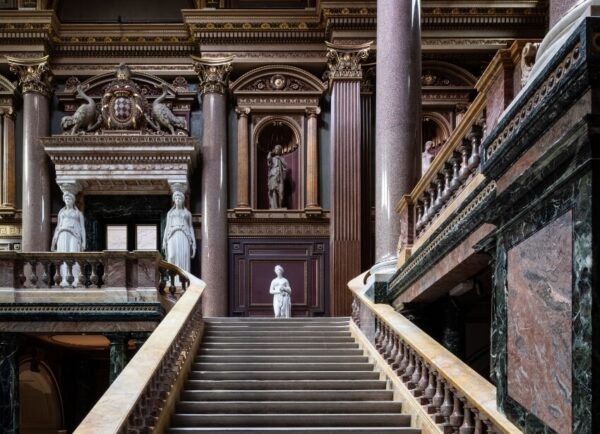
The Fitzwilliam Museum in Cambridge is one of Britain’s great neoclassical interiors: a 19th-century entrance hall of considerable scale and material richness, with polished marble floors, painted ceilings, and a spatial hierarchy designed to communicate institutional authority and cultural seriousness. Valinsky’s interior photography of the entrance hall finds the building at a moment when the light from its high windows falls across the surfaces in a way that reveals their depth and warmth without flattening the room’s three-dimensional complexity.
The photograph is a precise example of what distinguishes the best historic architecture photography from competent documentation: the building is read as a spatial experience, not recorded as a plan. The image conveys the scale, the material quality, and the accumulated presence of a room that has been in continuous use for over 170 years. It is the kind of image that makes someone who has visited the Fitzwilliam feel the building again, and makes someone who has not want to go.
View Fitzwilliam Museum Entrance Hall
-
Antwerpen-Centraal Station: A Crossroads Beyond Time
Onur Guney | Best of Best, Historic Interior | APMP 2025 | Antwerp, Belgium
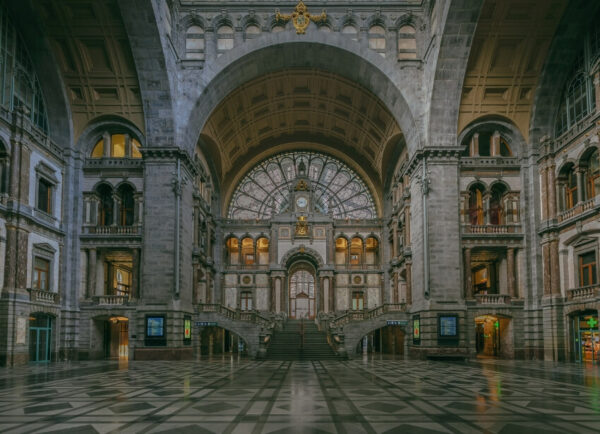
Antwerp Central Station is one of Europe’s most architecturally ambitious railway interiors: a late 19th-century steel and stone structure of cathedral-like scale that was subsequently extended with an underground network of platforms and connections in the 21st century. The building contains multiple architectural periods in active daily use, which makes it one of the most complex and rewarding subjects in European historic architecture photography.
Guney’s photographs address the station’s central spatial challenge: how to convey the extraordinary height of the original concourse while capturing the relationship between the 19th-century structure above and the contemporary infrastructure below. The images work through a rigorous control of vertical lines, which give the space its full measure of scale without the distortion that less considered photography of tall historic interiors typically produces. The title, ‘A Crossroads Beyond Time,’ is not rhetorical. It describes precisely what Guney’s camera finds in the building.
View Antwerpen-Centraal Station: A Crossroads Beyond Time
-
Nidaros Cathedral
Warren Diggles | Historic Interior | APMP 2025 | Trondheim, Norway
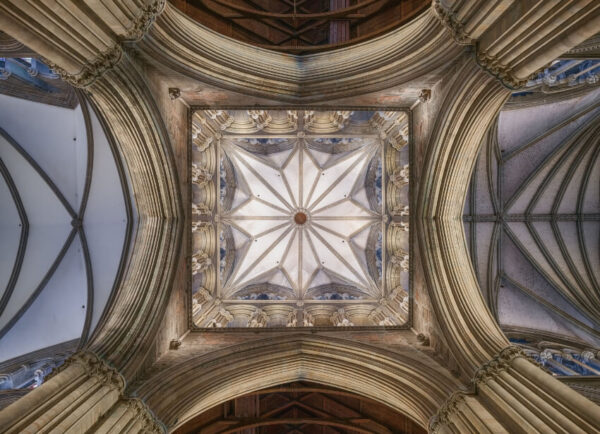
Nidaros Cathedral in Trondheim is Scandinavia’s largest medieval building and one of the most important pilgrimage sites in northern Europe. Its interior has been in continuous religious use for over eight centuries, and it carries the accumulated weight of that history in its stone, its light, and its spatial proportions. Photographing Nidaros is an exercise in working with an architectural interior that was designed to produce a specific spiritual experience, and understanding how to convey that experience through a photographic frame rather than simply recording the building’s physical dimensions.
Diggles’ approach to the cathedral interior uses the quality of the existing light as the primary compositional material. The images do not correct or supplement the cathedral’s natural illumination. They find the moments and angles at which the light, entering through windows designed for colour and atmosphere rather than even distribution, creates a spatial reading of the nave and its proportions that is both accurate and genuinely moving.
-
Old City Hall Interiors
Ulf Wallin | Historic Interior | APMP 2025 | Richmond, Virginia, USA
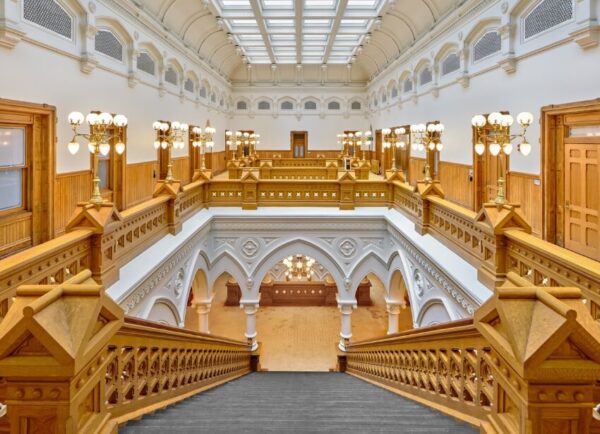
Old City Hall in Richmond, Virginia is a civic building of considerable material richness, its interiors reflecting the accumulated decisions of multiple generations of architects, administrators, and craftspeople. Wallin’s photography approaches the building as a document of American civic culture across time, finding in its rooms and corridors a visual record of the values, materials, and spatial sensibilities that different periods brought to the question of how a public institution should present itself.
The project showcases one of the defining qualities of the best historic architecture photography: the capacity to make a building that is very well known to local audiences look genuinely fresh to a wider international one. Wallin’s images of Old City Hall have the quality of a first encounter, achieved through a combination of careful light selection, precise compositional control, and an evident depth of understanding of the building’s spatial logic that comes from extended familiarity with the subject.
-
Falling Out of Time
Ana Skobe | Historic Exterior | APMP 2025 | Canary Island, Spain
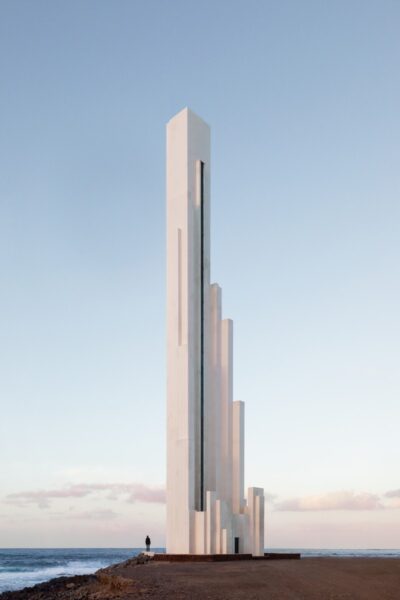
Ana Skobe’s ‘Falling Out of Time’ is an exterior photography project that approaches historic architecture not as a subject to be documented but as a surface through which time is made visible. The title captures the project’s central concern: the relationship between a building’s physical state and the temporal processes, aging, weathering, use, and partial abandonment, that have shaped it.
The project works with historic exteriors in a way that resists the conventional presentation of heritage buildings as finished, preserved objects. Skobe’s photographs find the places where history is most legible: where rendering has fallen away to reveal earlier construction, where vegetation has colonised a wall, where shadow falls across a surface in a way that makes the passage of time a visible presence in the image. This is historic architecture photography as a form of historical thinking, not just visual documentation.
-
Renaissance Awakening
Jan-Tore Oevrevik | Historic Exterior | APMP 2025 | Firenze, Italy
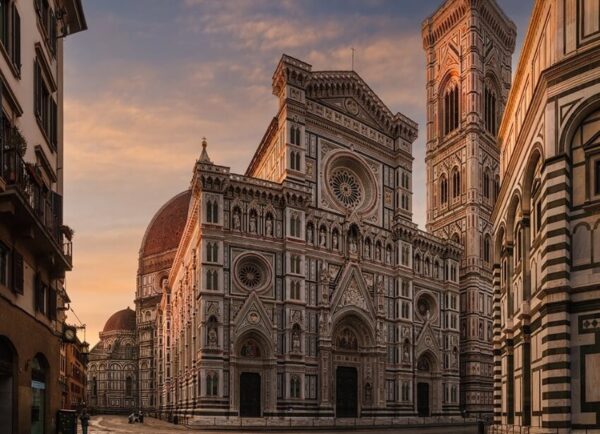
Jan-Tore Oevrevik’s ‘Renaissance Awakening’ is a project centred on the photography of historic exteriors that embody the architectural principles, symmetry, proportion, and material dignity, of the European Renaissance tradition. The title suggests both the historic period and a more active proposition: these buildings, photographed in the conditions Oevrevik finds for them, appear not as static monuments but as living presences.
The project is an example of historic architecture photography in which the photographer’s understanding of the buildings’ architectural language informs every compositional decision. Symmetry is not simply found; it is used. Proportion is not merely recorded; it is demonstrated through framing. The buildings that Oevrevik photographs are given back something of the authority and intention they were designed to project, through an approach to the camera’s placement and the light’s quality that serves the architecture rather than imposing upon it.
-
Fitzwilliam Museum Exterior
David Valinsky | Historic Exterior | APMP 2025 | Cambridge, UK

Valinsky’s exterior photography of the Fitzwilliam Museum, recognised in the same APMP 2025 edition as his interior work, demonstrates the range of approach that the most accomplished practitioners bring to a single subject. Where his entrance hall images work with the quality of interior light across surface and volume, his exterior photographs position the museum within the urban landscape of Cambridge with a different set of compositional concerns: the relationship between the building’s neoclassical facade and the street it commands, the way the building reads across different scales and distances, and the light conditions that best reveal the facade’s three-dimensional articulation.
Being recognised in both exterior and interior categories in a single edition is an unusual achievement in competitive architectural photography, and it reflects both the depth of Valinsky’s engagement with this particular building and the breadth of technical and compositional skill that serious historic architecture photography demands.
View Fitzwilliam Museum Exterior
-
Geisel Library
Warren Diggles | Historic Exterior | APMP 2025 | San Diego, USA
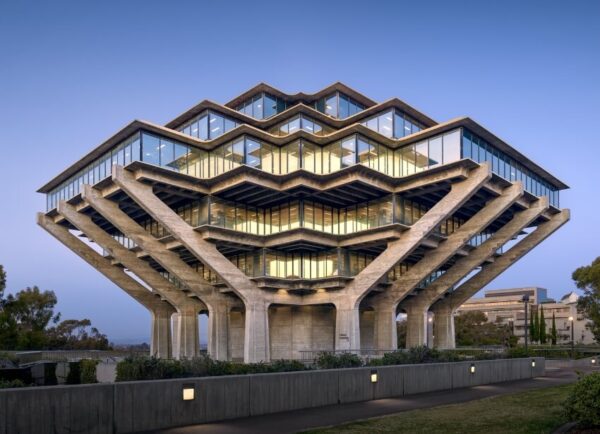
The Geisel Library at the University of California San Diego, designed by William Pereira and completed in 1970, occupies an interesting position in the category of historic architecture photography: it is a building whose significance lies not in medieval or classical heritage but in its status as one of the defining works of American Brutalist architecture. Photographing it requires an understanding of what makes Brutalist architecture visually compelling, the play of form and shadow, the drama of structural expression, the relationship between mass and void, and the ability to convey those qualities in conditions that reveal rather than flatten the building’s spatial ambition.
Diggles, recognised in the same edition for his work at Nidaros Cathedral, demonstrates with this project a range of engagement with the historic category that spans eight centuries of architectural production. His Geisel Library images find the building in light conditions that give full expression to Pereira’s formal intentions, placing the camera at angles that reveal the structure’s dramatic cantilevers and the way the building rises from its surrounding landscape.
-
Shaoxing Yangming Former Residence Memorial Hall
Fang Jia | Historic Exterior | APMP 2025 | Zhejiang, China
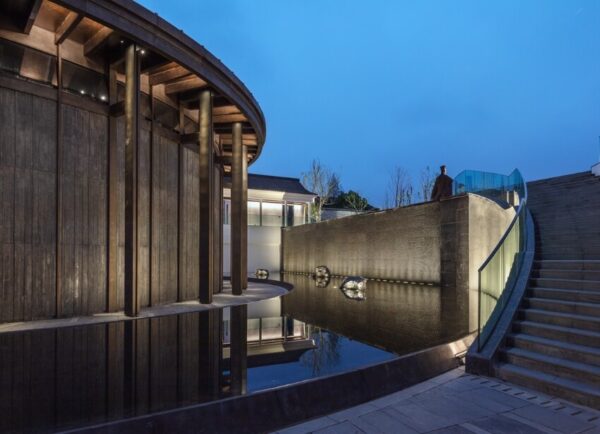
The Shaoxing Yangming Former Residence Memorial Hall is a heritage complex in Zhejiang Province, China, dedicated to Wang Yangming, the 15th-century Confucian philosopher and military strategist. The memorial hall represents a typology of historic architecture that sits outside the European tradition which dominates most international architectural photography discourse: a Chinese courtyard complex whose spatial logic, material character, and relationship to landscape reflect a different understanding of how built space and human experience relate to one another.
Fang Jia’s photography of the complex finds the heritage building in conditions that reveal its spatial and material qualities with precision and patience. The images convey the particular quality of light within a Chinese courtyard complex: filtered, directional, and moving across surfaces of timber, stone, and whitewashed render in ways that reward a photographer willing to wait for the right moment. This project extends the geographic and cultural range of historic architecture photography, making visible a heritage tradition that deserves wider international attention from both photographers and audiences.
View Shaoxing Yangming Former Residence Memorial Hall
Practical Guidance for Photographing Historic Buildings
For photographers approaching historic buildings with serious intent, the following considerations consistently separate work that stands out from work that documents:
- Research the building before you visit:
understand its construction date, its architectural periods, its significant features, and what has already been photographed extensively. This preparation shapes every decision made on site and gives you a basis for finding what remains unmade
- Check access conditions in advance:
many significant historic buildings prohibit tripods, flash, or photography entirely in certain areas. Knowing this before arrival prevents wasted journeys and allows you to plan for the technical constraints you will be working within
- Arrive at opening time or just before closing:
these windows of low occupancy are when the cleanest compositional frames are available in public buildings. For exteriors, the quality of early morning light is also generally superior to midday conditions for buildings with significant surface texture and relief
- Plan for multiple visits:
the best historic architecture photography is rarely made on a single visit. Understanding how the light moves through a building across the day, and returning when the conditions align with your compositional intentions, produces consistently stronger results than attempting to capture everything in a single session
- Use the building’s existing light as your primary material:
resist the tendency to supplement or correct historic buildings’ existing light with flash or supplementary sources. The quality of existing light in a well-considered historic building is typically more interesting than any artificial alternative, and it is more honest to the building’s character
Frequently Asked Questions About Historic Architecture Photography
What equipment do I need to photograph historic buildings?
A wide-angle lens is essential for most historic architecture photography, particularly interiors where spatial constraints prevent shooting from a distance. A full-frame camera with good high-ISO performance is valuable for low-light historic interiors where tripods are prohibited. A perspective control, or tilt-shift, lens is the most effective tool for managing converging verticals in tall spaces, though post-processing correction is an accessible alternative. A tripod is indispensable wherever it is permitted: many historic interiors have light levels that require longer exposures than hand-holding can deliver cleanly. A polarising filter is useful for exterior work on buildings with glazed facades or in locations where sky contrast is a compositional consideration.
How do you photograph historic building interiors without a tripod?
Where tripods are prohibited, the primary strategies are: raising ISO to achieve a shutter speed that eliminates camera shake, using image-stabilised lenses or in-body stabilisation at their limits, bracing the camera against a wall, column, or fixed surface rather than hand-holding freely, and selecting shooting positions that minimise the focal length required for the frame you need. Wide-angle lenses at their widest settings are generally more forgiving of slight camera movement than longer focal lengths. Shooting in RAW and accepting some noise in the file, which can be managed effectively in post-processing at current sensor standards, is preferable to missing the frame entirely.
How do you deal with crowds when photographing famous historic buildings?
The most effective strategies are timing, patience, and technique. Arriving at opening time eliminates most crowds at popular sites. Visiting during off-season periods, particularly for exterior photography where weather is manageable, significantly reduces occupancy at most heritage sites. For interior photography where crowds cannot be entirely avoided, long exposures averaging 20 to 30 seconds will render moving figures as transparent or invisible, though this requires a tripod and available permission to use one. Multiple exposures from a fixed position can be composited to remove people in post-processing. Some photographers choose to include people as a compositional element that gives scale and life to a historic interior, which is a legitimate and often more honest approach to the question of how these buildings are actually used.
Is there a difference between historic architecture photography and heritage documentation?
Yes, and it is an important one. Heritage documentation is a technical discipline concerned with accurate, comprehensive visual recording of a building for archival, conservation, or planning purposes. It follows specific protocols for coverage, lighting, and camera position to ensure that the resulting images serve as reliable records. Historic architecture photography is an interpretive discipline concerned with communicating a building’s character, significance, and spatial experience through images that are also, in the full sense, photographs. The best historic architecture photography is grounded in the same thorough understanding of the building that heritage documentation requires, but its aim is not completeness of record but quality of image. The two disciplines have different standards of success and are not interchangeable, though the skills developed in each inform the other.
Why Historic Architecture Photography Matters
Buildings change. Some are destroyed. Many are significantly altered in ways that remove the features that made them architecturally significant. A photograph of a historic building made with genuine understanding and skill is not simply a record: it is an argument for the building’s value, a demonstration of what it offers to anyone who encounters it with attention and patience.
The photographers recognised by the APMP in the Historic Architecture categories produce work that serves this purpose. Their images of the Fitzwilliam Museum, Antwerp Central Station, Nidaros Cathedral, and the other buildings featured here are not tourist photographs or documentation images. They are interpretations, made by photographers who have spent time with these buildings and found in them something worth the sustained effort of communicating. That is what the discipline, at its best, does.
For photographers considering historic architecture as a focus for their practice, the advice that emerges consistently from the photographers working at this level is simple: slow down, research before you shoot, and understand that the building has more to offer than what you can see in a single visit. The images that stand out in competitions and publications are almost always the result of a relationship with a subject, not a single encounter with it.
Enter the Architecture Photography MasterPrize 2026
The APMP is open to photographers of all levels, with categories covering exterior, interior, historic, landscape, detail, and cityscape photography of the built environment. The Regular Entry deadline is June 30, 2026.
ENTER APMP 2026
People spend around 90% of their lives indoors. That figure, from the US Environmental Protection Agency, has quietly become one of the most-cited statistics in contemporary design. It sits behind a growing body of research and, increasingly, behind a design philosophy: biophilic interior design.
Biophilic interior design is the practice of connecting people, within built environments, to the natural world. It draws on the biophilia hypothesis, the idea, developed by biologist E.O. Wilson in the 1980s, that human beings have an innate need to connect with other living systems and natural processes. That need did not disappear when we moved inside. What changed is that most of us now spend most of our time in spaces that offer no meaningful connection to nature at all.
Biophilic design is the profession’s answer to that problem. It is not a style or a trend. It is a framework for making interiors that work with human biology rather than against it. This guide covers what biophilic interior design actually involves beyond the surface-level understanding of it, what the evidence says about its effects, how designers apply it at its most considered level, and eight projects recognised by the Architecture MasterPrize (AMP) in the 2025 edition that demonstrate what the approach looks like when taken seriously.
What Is Biophilic Interior Design?
Biophilic interior design integrates natural elements, patterns, materials, and spatial qualities into interior spaces with the intention of creating a meaningful connection between occupants and the natural world. The key word is meaningful. Adding a potted plant to a lobby is not biophilic design. Biophilic design is a considered, evidence-based approach to the relationship between a space and the people who inhabit it.
The framework most widely used by designers and researchers is Terrapin Bright Green’s 14 Patterns of Biophilic Design, published in 2014 and since adopted in design practice around the world. The patterns fall into three categories:
- Nature in the Space:
direct experiences of nature within the interior: living plants, water features, animals, breezes, scents, natural light, and dynamic weather through windows
- Natural Analogues:
indirect references to nature through organic forms, natural materials, textures, colours, and patterns that evoke natural environments without requiring living elements
- Nature of the Space:
spatial configurations that reflect patterns humans have evolved to find comfortable, including prospect (open views), refuge (sheltered spaces), mystery (partially revealed spaces), and risk (a perceived but safe sense of peril)
A biophilic interior might draw on all three categories simultaneously. A well-designed biophilic office, for example, might have access to daylight and views of trees (Nature in the Space), use natural timber and stone surfaces (Natural Analogues), and be organised around a central open atrium with quieter enclosed alcoves at the perimeter (Nature of the Space). None of these elements in isolation makes a space biophilic. It is the intentional integration of them, calibrated to the specific context and the specific needs of the people who will use the space, that defines the discipline.
Why Biophilic Interior Design Works: What the Evidence Shows
The appeal of biophilic design is not merely aesthetic. The discipline is grounded in a substantial and growing body of peer-reviewed research across psychology, environmental health, neuroscience, and occupational science.
Productivity and creativity
A Human Spaces study of 7,600 workers across 16 countries found that employees in environments incorporating natural elements reported a 6% increase in productivity and a 15% increase in creativity compared with those in conventional offices. Separate research published in the International Journal of Environmental Research and Public Health found strong positive effects on productivity, workplace satisfaction, and collaborative behaviour in biophilic-designed office buildings. These are not marginal effects. In the context of operating costs for a commercial building, even a 6% productivity improvement substantially outweighs the cost of the design interventions that produced it.
Stress and wellbeing
Exposure to natural elements has been shown to reduce cortisol levels, lower heart rate, and improve reported mood in multiple controlled studies. Research from the University of Minnesota found that workers in environments with access to greenery reported 15% higher levels of overall wellbeing. In healthcare settings, the effects are more dramatic: a systematic review published in Frontiers in Built Environment found that biophilic design elements in hospitals reduce patient hospitalization time, pain levels, and anxiety, as well as reducing stress among medical staff. The implications extend well beyond hospitals. Any interior where occupants experience stress, which includes most offices, schools, and public spaces, is a candidate for biophilic intervention.
The 90% problem
The EPA statistic that people spend around 90% of their lives indoors is the context that makes biophilic design not a luxury but a practical necessity. We evolved in natural environments over hundreds of thousands of years. The indoor environments most of us now inhabit, with their artificial lighting, controlled temperatures, hard surfaces, and absence of living systems, are a very recent development. Biophilic interior design does not ask us to abandon buildings. It asks us to make buildings that acknowledge what we are.
What Biophilic Interior Design Is Not
The most common misunderstanding of biophilic design, reflected consistently in online discussions among designers and non-designers alike, is that it is essentially about plants. Add enough greenery and you have a biophilic space. This misreads both the science and the practice.
Plants are one tool among many in a biophilic interior designer’s kit. They provide direct contact with living systems, can improve air quality in certain concentrations, and have documented psychological benefits. But a space with living walls and no natural light, no connection to the exterior, no natural materials, and no spatial variety is not a biophilic space. It is a space with a lot of plants.
Genuine biophilic interior design works at a more fundamental level. It considers how daylight enters and moves through a space across the day. It addresses how materials feel as well as how they look. It thinks about the acoustic environment: natural spaces have varied and layered sound profiles that hard, parallel surfaces in conventional interiors cannot replicate. It considers the spatial sequence: how a person moves through a space, what they see, where they can pause and feel sheltered, where they have prospect and view.
A second common misconception is that biophilic design is expensive and therefore only for premium projects. Cost-effective biophilic interventions include maximising natural light through window placement and interior layout, using natural materials that are cost-competitive with synthetic alternatives, incorporating views of existing landscape rather than imported planting, and designing spatial variety into floor plans that would have been planned without it. The most cost-effective moment to introduce biophilic thinking is at the outset of a project, before spatial decisions have been made that are expensive to reverse.
7 Award-Winning Biophilic Interior Design Projects: AMP 2025
The following seven projects were recognised by the Architecture MasterPrize in the 2025 edition. They span residential, commercial, hospitality, and mixed typologies across Japan, Russia, Indonesia, Hong Kong, and Austria. Each takes a different approach to the central challenge of biophilic interior design: how to make an indoor space that genuinely connects its occupants to the natural world.
1. SYMBOLPLUS OFFICE
SYMBOLPLUS INC. | Satoshi Nobekawa | Interior Design of the Year, AMP 2025 | Japan
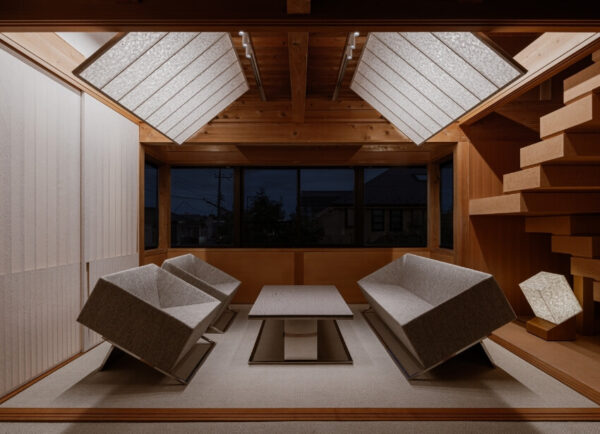
The highest interior design honour in the 2025 AMP edition went to a project that is, in many respects, an argument made in materials. SYMBOLPLUS OFFICE, in Tokyo, takes a 23-year-old timber building and transforms it into a hybrid-era workplace using red earth plaster, reclaimed Tosa washi paper, and traditional Japanese carpentry. There are no conventional finishes. Every surface is a natural material chosen for both its sensory quality and its cultural meaning.
The result is an interior that demonstrates one of biophilic design’s most important principles: that connection to nature does not require living plants if the materials themselves carry the depth, variation, and warmth of the natural world. The textures of red earth and handmade paper are not decorative choices. They are spatial ones, shaping how light behaves in the room, how sound moves, and how the people who work there feel across the course of a day. SYMBOLPLUS OFFICE is the Interior Design of the Year for 2025 because it gets this right at every scale.
2. TEN: Design That Blurs the Boundaries Between Interior and Nature
BABAYANTS ARCHITECTS | Artem Babayants | Interior Design | AMP 2025 | Russia
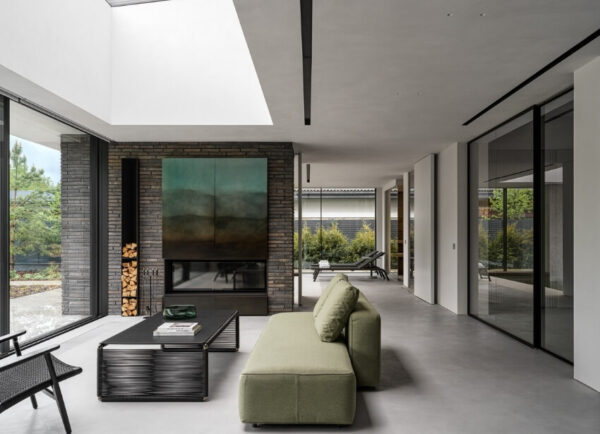
The title of this project is also its thesis. BABAYANTS ARCHITECTS’ TEN is a residential interior in Russia that approaches the boundary between inside and outside as a design problem to be dissolved rather than defined. The interior does not contain nature as a decorative element. It extends into it, with spatial sequences, material transitions, and visual connections that make the distinction between the built environment and the landscape around it genuinely ambiguous.
Projects like TEN demonstrate biophilic design at its most architecturally ambitious: not the addition of natural elements to a finished interior, but the reconception of what an interior fundamentally is. The name refers both to the design philosophy and to the ten spatial principles that structure the project, each of which addresses a different dimension of the human-nature connection within the built environment.
View TEN: Design That Blurs the Boundaries Between Interior and Nature
3. Sagehaus Office Garden
RAD+AR | Leviandri | Commercial Interior | AMP 2025 | Indonesia
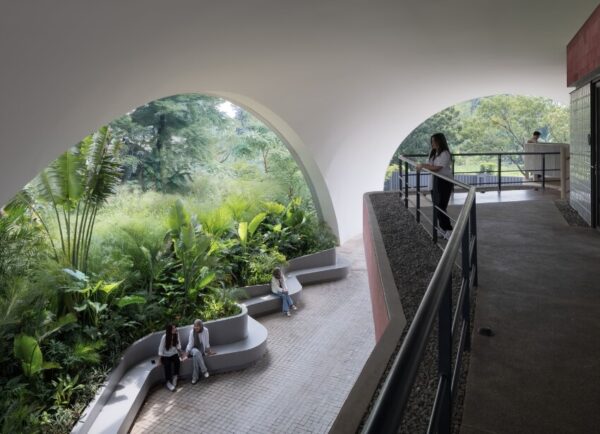
The Sagehaus Office Garden in Indonesia takes the biophilic office concept at face value: this is not a workspace that contains a garden as an amenity. It is a garden that has been organised to support work. RAD+AR’s design inverts the conventional relationship between the built and the planted, treating the landscape as the primary spatial system and the constructed elements as secondary to it.
The project is an instructive example of biophilic design’s ‘Nature of the Space’ dimension. The spatial organisation provides both prospect, through open garden views, and refuge, through sheltered work zones within the planted landscape. The result is an office environment that addresses the disconnection from nature that characterises most conventional workplaces not through decoration but through a fundamental rethinking of how a work space is structured.
4. Sanctuary Tunnel Garden
RAD+AR | Partogi Pandiangan | Installations & Structures | AMP 2025 | Indonesia
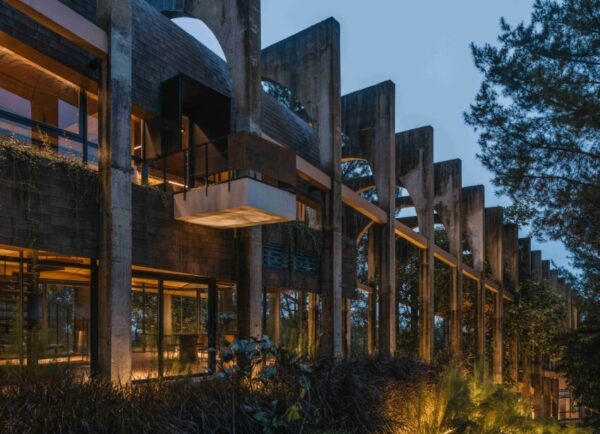
Also by RAD+AR, the Sanctuary Tunnel Garden approaches biophilic interior design through a spatial concept that is both literal and experiential. The project creates a tunnel through which living nature is not viewed but inhabited: the visitor moves through a sequence of planted spaces in which the vegetation is not background but enclosure. The experience is closer to moving through a landscape than entering a room.
This project addresses one of the most challenging aspects of biophilic design: how to give urban occupants access to the quality of immersion in nature that most of them no longer have in their daily lives. The tunnel format concentrates the sensory experience, intensifying contact with living plants, filtered light, and natural sound in a way that more diffuse interior greening rarely achieves.
5. Bamboo Sanctuary
Canter & Gallop Design Ltd. | Jonathan Ng, David Kung, Rafael Pardo | Residential Interior | AMP 2025 | Hong Kong
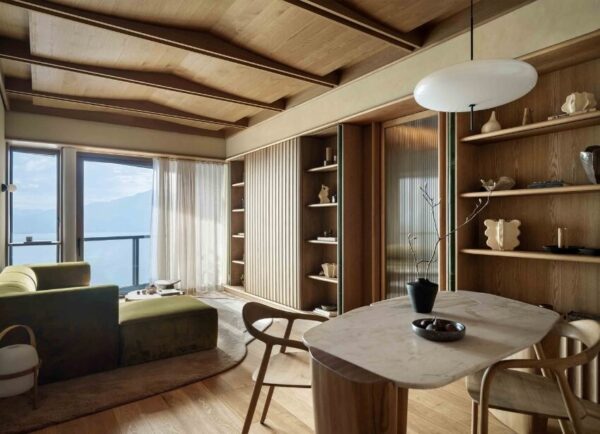
Bamboo Sanctuary is a residential interior in Hong Kong that uses bamboo not as a decorative motif but as a structural and atmospheric material. Canter & Gallop Design Ltd.’s project treats the material’s qualities, its density, its translucency when backlit, its association with forest environments, as the generator of the interior’s spatial and sensory character.
The project is a precise example of the Natural Analogues dimension of biophilic design: the bamboo does not represent nature as a symbol. It carries the actual qualities of a natural material, the organic variation of a growing thing, the warmth of plant matter, the visual rhythm of a grove, into an urban apartment context where direct access to landscape is limited. The interior gives its occupants a genuine sensory connection to the natural world within the constraints of high-density urban living.
6. House of Soil
Soil Studios | OJ Miu | Residential Interior | AMP 2025 | Hong Kong
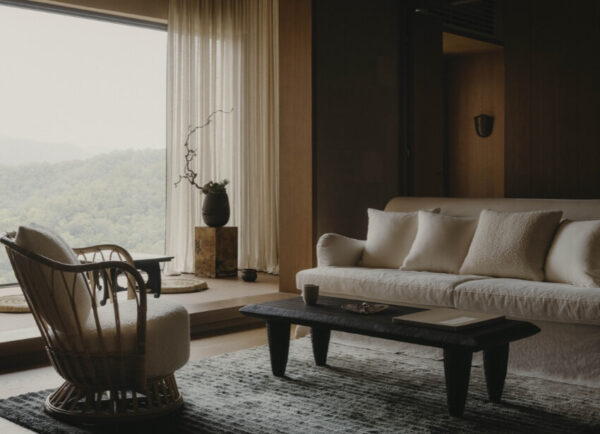
The name of this project is a programme statement. House of Soil, by Soil Studios, is a residential interior whose primary material is earth: raw, processed, and expressed in ways that make the geological world, rather than the manufactured one, the dominant presence in the space. The walls, surfaces, and spatial enclosure of the interior carry the texture, colour, and material intelligence of soil in its various states.
This is biophilic design operating at the level of material philosophy. The project does not gesture toward nature. It builds with it. The effect on occupants is not one of decoration but of grounding, a quality that the research on biophilic environments consistently identifies as among the most significant contributors to a sense of calm and belonging within an interior. House of Soil is among the most conceptually rigorous examples of biophilic interior design in the 2025 AMP edition.
7. Greenwood
interiorbygini | Angelina Doerfler | Residential Interior | AMP 2025 | Austria
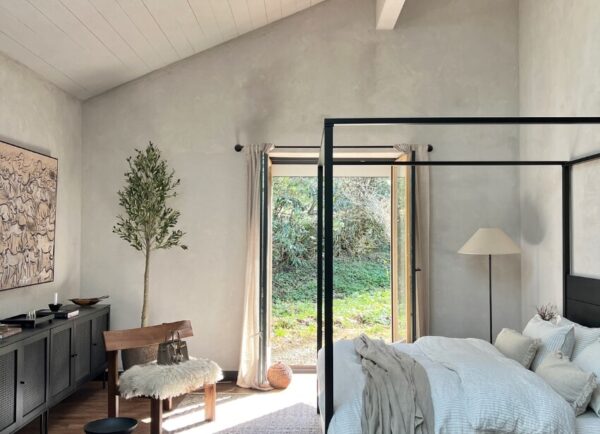
Greenwood, by interiorbygini, is a residential interior in Austria that takes the forest as its primary reference: not as a theme to be illustrated, but as a spatial and sensory model to be inhabited. The interior draws on the quality of light within a woodland, the layering of material from floor to canopy level, the variation in density and openness that characterises a natural forest environment, and translates these into the conditions of a domestic space.
The project is an example of biophilic design’s capacity to produce interiors that feel genuinely restorative, in the technical sense that the research uses the term: spaces that allow the kind of directed-attention recovery that exposure to natural environments consistently produces. Greenwood achieves this not through a literal representation of a forest but through a precise understanding of what makes forest environments psychologically beneficial and a careful application of those principles to a domestic interior at a human scale.
How Designers Apply Biophilic Interior Design in Practice
For designers approaching a biophilic brief, the starting point is almost never the selection of materials or plants. It begins with an analysis of the specific people who will use the space, the specific natural environment of the building’s location, and the specific constraints of the project. Biophilic design that is rooted in place, using local materials, responding to local climate and light conditions, connecting to local landscape, produces consistently stronger results than biophilic design that applies a generic formula.
The practical sequence that most experienced biophilic designers follow moves from the strategic to the specific:
- Maximise daylight access and quality first:
natural light is the single most impactful biophilic element in most interiors, and it costs nothing if addressed at the layout stage. Window placement, interior partition heights, material reflectivity, and ceiling heights all affect how daylight moves through a space
- Establish visual connections to the exterior:
even where outdoor access is impossible, views of landscape, sky, or water have documented positive effects on occupant wellbeing. Interior planning that preserves and frames these views is fundamental biophilic strategy
- Select materials for sensory quality, not just appearance:
natural materials carry variation, warmth, and textural depth that synthetic alternatives cannot replicate. Timber, stone, earth, bamboo, and natural textiles contribute to a biophilic environment through touch and acoustic quality as well as visual character
- Create spatial variety:
the monotony of open-plan spaces with uniform ceiling heights and identical lighting conditions is antithetical to biophilic design. Varied zones that offer different degrees of prospect and refuge support different activities and different psychological states
- Introduce living elements where they can be sustained:
plants require maintenance. Biophilic design that cannot be maintained is biophilic design that degrades. Plant selection and placement should be calibrated to the realistic care capacity of the space’s occupants
Frequently Asked Questions About Biophilic Interior Design
What is the difference between biophilic design and just adding plants?
Biophilic design is a comprehensive approach to the relationship between an interior and its occupants’ need for connection with nature. It encompasses daylight quality, natural materials, spatial organisation, acoustic environment, views, and living elements. Plants are one tool within this framework. A space with extensive planting but no natural light, no natural materials, and no spatial variety is not a biophilic interior. A space with carefully positioned windows, natural timber surfaces, and varied spatial zones but few plants may be more genuinely biophilic than a plant-heavy interior that does not address these other dimensions.
Does biophilic interior design cost more than conventional design?
Not necessarily, and often not significantly. The most impactful biophilic interventions, daylighting strategy, view preservation, spatial variety, and natural material selection, are most cost-effective when addressed at the design stage before construction decisions have been made. Natural materials such as timber and stone are cost-competitive with many synthetic alternatives, particularly when maintenance and replacement costs are factored in over a building’s life. The most expensive biophilic interventions are typically living walls and complex water features, both of which also carry the highest maintenance requirements. These are not necessary for effective biophilic design.
What spaces benefit most from biophilic interior design?
The research evidence is strongest for offices, healthcare environments, educational spaces, and residential interiors. In offices, biophilic design is linked to measurable productivity and creativity gains. In hospitals, it reduces patient recovery times and staff stress. In schools, access to natural light and views correlates with improved learning outcomes. In residential settings, biophilic interiors contribute to the sense of home as a genuinely restorative environment. That said, any interior where people spend significant time, which includes most built environments, is a candidate for biophilic intervention.
Is biophilic design the same as sustainable design?
The two are related but distinct. Sustainable design prioritises the environmental performance of a building: reducing energy consumption, minimising embodied carbon, using responsibly sourced materials. Biophilic design prioritises the psychological and physiological wellbeing of the people inside the building, specifically through connection with nature. The two approaches are frequently complementary: natural materials, daylighting, and natural ventilation benefit both human wellbeing and environmental performance. But a building can be highly sustainable without being biophilic, and a biophilic interior can include elements that are not particularly sustainable. The most considered contemporary practice integrates both.
Biophilic Interior Design and the Future of How We Work and Live Indoors
The 90% figure, the share of our lives spent indoors, is not going to decrease. If anything, the proportion of time people spend in built environments is likely to increase as urbanisation continues and as more work is conducted remotely from home environments. The question for designers, clients, and developers is not whether biophilic interior design matters. The research has settled that. The question is how to apply it with the rigour and specificity that produces genuine benefits, rather than the surface-level gestures that appropriate its language without delivering its substance.
The eight projects above represent a range of answers to that question, from the material philosophy of House of Soil and SYMBOLPLUS OFFICE to the spatial radicalism of TEN and Sagehaus Office Garden to the concentrated sensory experience of Sanctuary Tunnel Garden. What they share is a commitment to the foundational premise of biophilic interior design: that the spaces we inhabit should work with our biology, not in spite of it.
Interior designers, architects, and clients who take that premise seriously tend to produce spaces that are not only more pleasant to be in, but measurably more supportive of the health, creativity, and wellbeing of the people who use them. In a built environment where most interiors still offer their occupants very little connection to the natural world, that is a significant competitive and ethical advantage.
Enter the Architecture MasterPrize 2026
The AMP is open to interior designers, architects, and studios from anywhere in the world. The 2025 Interior Design of the Year, Best of Best distinctions, and Interior Design Firm of the Year are awarded alongside architecture and landscape categories in a single global program. The Regular Entry deadline is June 30, 2026.
Most discussions about architecture focus on what gets built. Adaptive reuse architecture is concerned with something more difficult: what gets kept, and what it becomes.
Adaptive reuse is the practice of repurposing an existing building for a use other than the one it was designed for. A factory becomes a community hub. An abandoned shelter becomes a public art space. A historic house is transformed into a civic institution. The shell remains; the interior logic, the programme, and often the life of the building are entirely reconceived.
It is one of the most demanding disciplines in architecture, requiring designers to work within the constraints of structures they did not create, materials they cannot always verify, and histories that carry obligations. It is also, increasingly, one of the most important. As cities become denser, as the construction industry accounts for a growing share of global carbon emissions, and as communities grow more protective of the built heritage that gives their neighbourhoods character, the case for reuse over demolition has become difficult to argue against.
This guide covers what adaptive reuse architecture actually involves, why it has become a central concern for the profession, what the real challenges look like from a design and delivery standpoint, and eight examples of award-winning adaptive reuse projects recognised by the Architecture MasterPrize (AMP) in the 2025 edition, drawn from six countries across three continents.
What Is Adaptive Reuse in Architecture?
Adaptive reuse means finding a new purpose for an existing building without demolishing it. The term entered architectural usage in the mid-1970s, though the practice is considerably older: buildings have been converted, extended, and reprogrammed throughout history, from Roman baths transformed into churches to Victorian warehouses turned into loft apartments.
What has changed is the intentionality and scale of the discipline. Adaptive reuse is now a recognised area of architectural expertise, with its own body of practice, regulatory frameworks, and increasingly, its own critical discourse. It sits at the intersection of architecture, heritage conservation, urban planning, and environmental strategy.
It is worth clarifying what adaptive reuse is not:
- Restoration returns a building to an earlier state, repairing damage and reinstating original features. Notre-Dame Cathedral’s ongoing post-fire work is an example of restoration.
- Preservation freezes a building at a particular moment in time, protecting its existing condition without necessarily changing its use.
- Renovation updates a building for the same use, improving performance or appearance without changing its programme.
Adaptive reuse is distinct from all three: it changes what a building is for, often substantially, while retaining as much of the original fabric as possible and treating that retention as a design resource rather than a constraint.
“The greenest building is the one that’s already built.” – Carl Elefante, architect and sustainability expert, Forum Journal
Why Adaptive Reuse Architecture Has Become So Important
The carbon argument
The construction industry accounts for approximately 40% of global carbon emissions. A significant portion of that comes not from operational energy use but from embodied carbon: the emissions associated with manufacturing and transporting building materials, and from the demolition of existing structures.
When a building is demolished, the embodied carbon locked into its structure, its concrete, its steel, its masonry, is effectively written off. When a building is adapted rather than demolished, that carbon remains in use. The structural system of a building, which carries the highest embodied carbon of any component, is preserved and put back to work.
A well-documented Milan adaptive reuse project showed 40% lower carbon emissions and 16% lower costs compared to an equivalent new build on the same site. This kind of data is increasingly influencing how developers, institutions, and municipalities think about the built environment. The question is no longer whether reuse is more sustainable than demolition. It almost always is. The question is whether the project economics and design brief can be structured to make reuse viable.
The urban and community argument
Beyond carbon, adaptive reuse addresses something that new construction cannot easily replicate: the quality of existing places. Historic buildings give neighbourhoods their visual identity and their sense of continuity. When they are demolished, that character is gone permanently. When they are successfully adapted, it is carried forward into a new context.
This is not simply a matter of aesthetics. Research on urban regeneration consistently shows that adaptive reuse projects tend to support economic vitality in their surrounding areas more effectively than equivalent new construction. They attract foot traffic, create destinations, and often function as catalysts for broader neighbourhood investment. A converted factory that becomes a community hub or cultural venue generates activity in ways that a new building on a cleared site frequently does not.
There is also a housing dimension that has become increasingly urgent. The conversion of underperforming office stock into residential use has accelerated significantly since 2020, particularly in North American and European cities where office vacancy rates remain elevated. New York City, for example, created a dedicated Office Conversion Accelerator Team to streamline approvals for adaptive reuse projects delivering 50 or more housing units. These are not marginal projects: one Manhattan conversion alone is delivering 571 market-rate apartments from a former Goldman Sachs headquarters.
The design argument
Architects who specialise in adaptive reuse often describe existing buildings as offering design possibilities that blank-site projects cannot. The material texture of an old structure, the proportions of its spaces, the way light enters through windows that were positioned for a different function, all of these become raw material for a new architectural language. The best adaptive reuse work uses the original building’s character as a collaborator rather than a constraint.
The Real Challenges of Adaptive Reuse
Adaptive reuse architecture is frequently discussed in terms of its benefits. The challenges are less often addressed in detail, but architects and clients who underestimate them do so at significant cost.
Structural uncertainty
Existing buildings, particularly older ones, often lack complete documentation. Original drawings may be lost, dimensions may not match what was recorded, and structural members may have been modified over the building’s life without record. Assessing what a building can accommodate structurally, and what it will cost to address deficiencies, is a fundamental early-stage challenge that can significantly affect project viability.
Building code compliance
Codes and regulations are written primarily for new construction. Applying them to existing buildings, particularly historic ones, requires interpretation and often negotiation with local authorities. Fire safety, accessibility, energy performance, and seismic requirements may all demand interventions that affect the building’s character or significantly increase project costs. Different jurisdictions handle this differently: some have developed specific adaptive reuse pathways that offer flexibility; others have not.
Hidden costs
Demolition costs, which can represent 5% to 10% of a total new-build construction budget, are avoided in adaptive reuse. But they are often replaced by discovery costs: asbestos removal, soil contamination remediation, structural remediation, and the cost of working around occupied fabric rather than clearing a site. These costs are difficult to anticipate fully in early-stage budgeting, which is why adaptive reuse projects tend to carry higher contingency allowances than equivalent new builds.
The image problem
A recurring observation among architects working in adaptive reuse is that the profession’s media and award culture has historically favoured new construction. Glossy images of completed new buildings are easier to produce and more visually dramatic than photographs of a conversion project in which the achievement lies partly in what was preserved. This is changing, but slowly. Awards programs that specifically recognise adaptive reuse work, alongside broader architecture awards programs that evaluate it on equal terms with new build, play a meaningful role in shifting that culture.
8 Award-Winning Adaptive Reuse Architecture Projects: AMP 2025
The following eight projects were recognised by the Architecture MasterPrize in the 2025 edition. They cover industrial, civic, cultural, hospitality, heritage, and community typologies across Australia, Belgium, Mexico, Singapore, Ireland, and China. Each represents a different approach to the central challenge of adaptive reuse: how to honour what already exists while making something genuinely new.
1. Boot Factory Community and Innovation Hub
Archer Office | Tomek Archer | Institutional Architecture | AMP 2025 | Australia
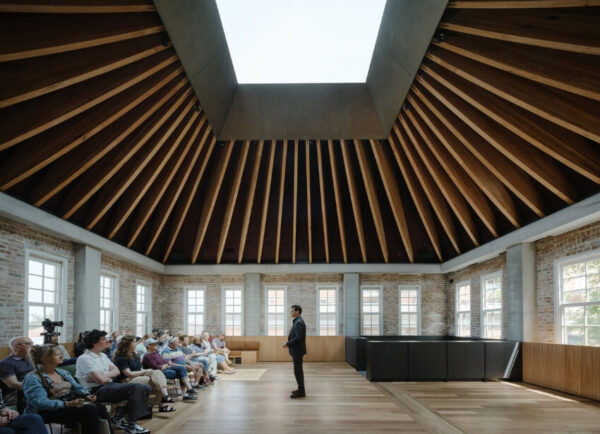
A former boot factory in regional Australia is not an obvious candidate for transformation into a community and innovation hub. The industrial heritage of the building, its robust materiality, its generous floor-to-ceiling heights, and its position within a working-class neighbourhood, were precisely what Archer Office chose to build upon rather than erase. The project retains the factory’s structural character while introducing new programme: collaborative workspaces, community facilities, and flexible event spaces that serve the surrounding population rather than displacing it. The project is a thoughtful example of adaptive reuse architecture in which the building’s history is treated as a social and spatial asset.
View Boot Factory Community and Innovation Hub
2. Reconversion of Hasselt Beguinage
Bovenbouw Architectuur and David Kohn Architects | Joris Willems | Historic Preservation | AMP 2025 | Belgium
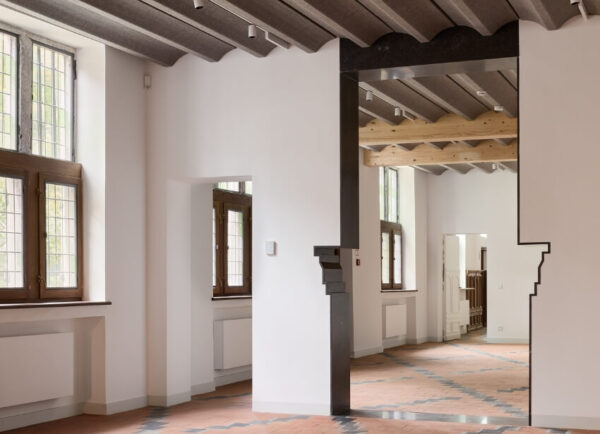
The Hasselt Beguinage is a medieval complex in Belgium, originally built to house Beguines, laywomen who lived in religious communities without taking formal vows. The reconversion by Bovenbouw Architectuur and David Kohn Architects transforms this historic ensemble into a contemporary mixed-use complex while maintaining the spatial logic and material character that give the complex its significance. The project is particularly notable for the precision of its interventions: new elements are legible as new, but they speak directly to the existing fabric rather than competing with it. The Hasselt Beguinage is among the more complex adaptive reuse examples from the 2025 AMP edition, both in terms of heritage sensitivity and programme complexity.
View Reconversion of Hasselt Beguinage
3. Border Library and Public Park
Fernanda Canales | Cultural Architecture | AMP 2025 | Mexico
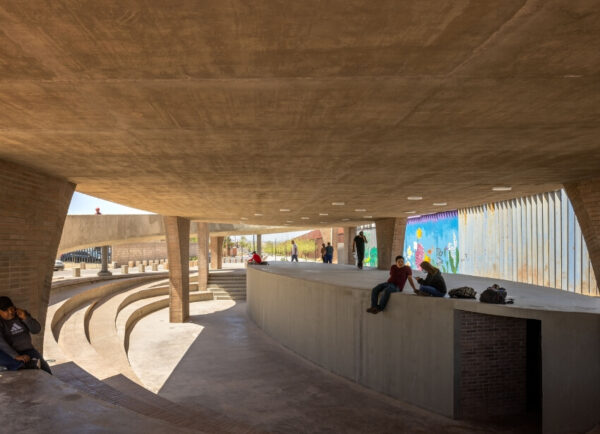
Fernanda Canales’ Border Library and Public Park in Mexico is an adaptive reuse project with an explicitly civic ambition: to create a public institution in a context where public space is scarce and where the relationship between community, territory, and built form carries particular political weight. The project works with an existing structure and its surrounding landscape to establish a library that reads as genuinely rooted in its context, not as an imported cultural gesture. Canales is one of the most rigorous voices in contemporary Mexican architecture, and this project reflects her consistent concern with what buildings owe to the communities they serve.
View Border Library and Public Park
4. Serrangel Art Pavilion
CE-ST Design Studio | Commercial Architecture | AMP 2023 | Singapore
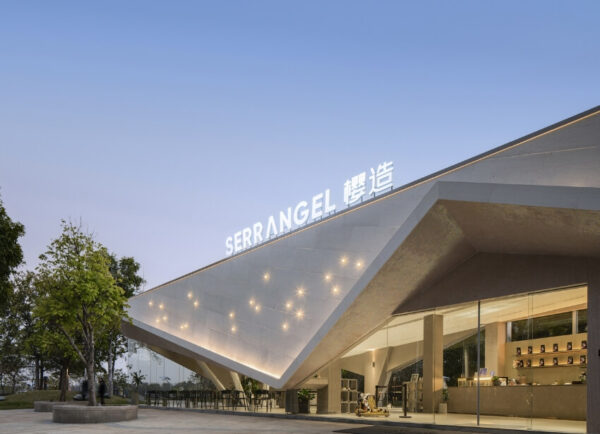
The Serrangel Art Pavilion began as an abandoned public rest shelter in Foshan, China. CE-ST Design Studio’s intervention transforms it into a community art space, its facade clad in recycled glass mosaics that reflect both the client’s commitment to sustainability and the project’s character as a place of visual culture. The project is a compact but precise example of adaptive reuse at a smaller scale: the existing structure defines the spatial possibilities; the new programme and materiality define what those possibilities mean. CE-ST navigated strict refurbishment regulations while producing a space that reads as genuinely new.
5. Renovation of Feria Hotel in Shenzhen Bay
MOZHAO Architects | Guansheng Zeng | Hospitality Architecture | AMP 2025 | China
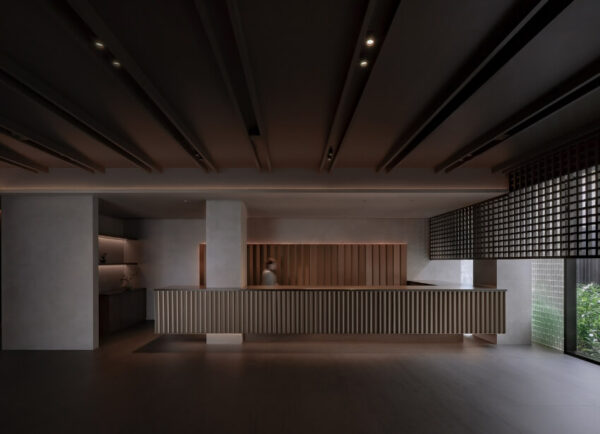
Hotel conversions represent one of the most commercially active areas of adaptive reuse architecture globally, driven by the economics of hospitality development and the attractiveness of existing buildings in established urban locations. MOZHAO Architects’ renovation of the Feria Hotel in Shenzhen Bay approaches the project as a design problem rather than a refurbishment exercise: the existing building provides the structural and spatial framework, and the new interior language is developed to work with and against that framework in ways that produce something coherent. The project demonstrates what adaptive reuse can achieve in the hospitality sector when the brief is approached architecturally.
View Renovation of Feria Hotel in Shenzhen Bay
6. House of Tan Yeok Nee
DP Architects | Chua Zi Jun Ziggy | Historic Preservation | AMP 2025 | Singapore
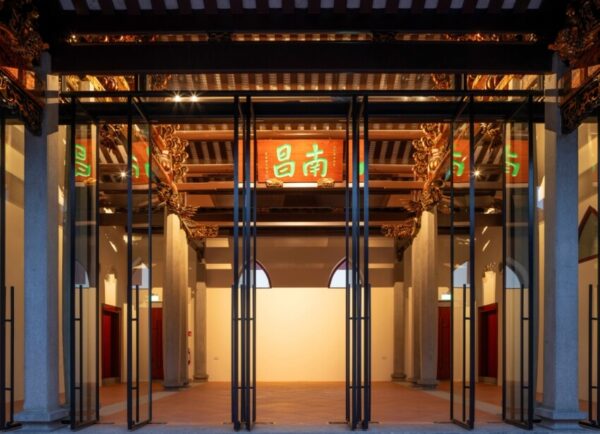
The House of Tan Yeok Nee is one of Singapore’s few surviving Teochew-style courtyard houses, built in the 1880s and listed as a national monument. DP Architects’ work on the building addresses the particular challenge of adaptive reuse for listed heritage structures: how to bring a building into contemporary use while maintaining the integrity of the features that justify its protection. The project is a careful exercise in restraint, allowing the building’s original spatial hierarchy and material character to remain primary while accommodating the demands of a contemporary institutional programme. Heritage adaptive reuse at this level of significance requires a different kind of design intelligence than new construction: the measure of success is what was not changed as much as what was.
7. Rooted Renewal: 94 Cafe
MNI Studio | Ken Chen | Commercial Architecture | AMP 2025 | Singapore
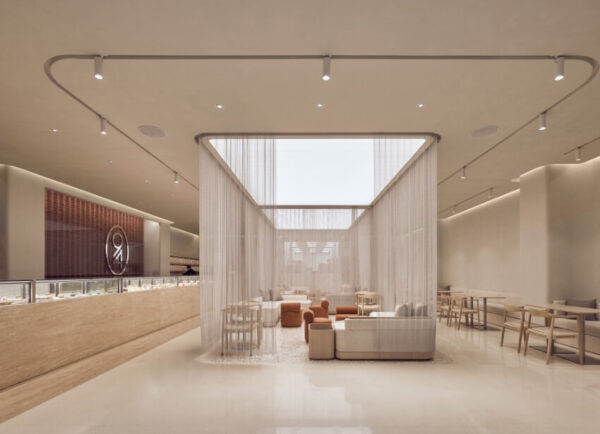
Not all adaptive reuse architecture operates at the scale of public institutions or large heritage complexes. MNI Studio’s Rooted Renewal project demonstrates what thoughtful adaptive reuse can achieve at a smaller, more intimate scale: the conversion of an existing commercial space into a cafe that draws on the material and spatial qualities of what was already there. The project’s title reflects its design philosophy. Renewal that is rooted in the existing fabric rather than superimposed on it tends to produce spaces that feel genuinely embedded in their context, rather than temporally and spatially displaced. This is adaptive reuse as neighbourhood architecture, which is arguably its most socially significant form.
8. Sadler’s Wells Theatre
O’Donnell + Tuomey | Cultural Architecture | AMP 2025 | Ireland
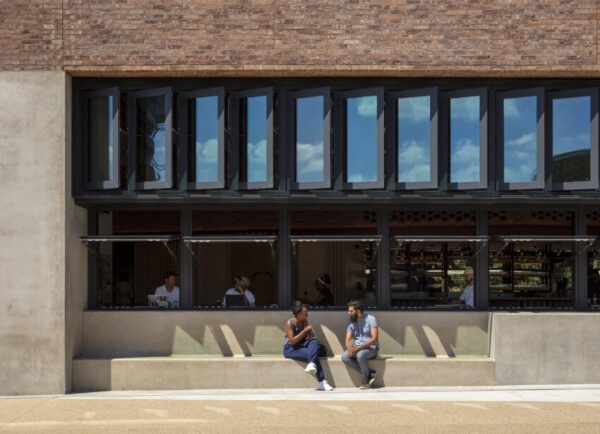
Sadler’s Wells Theatre in London is one of the world’s leading dance venues, with a history on the same Islington site stretching back to the 17th century. O’Donnell + Tuomey’s work on the building is an expansion and renovation that treats the theatre’s layered history as a design resource: successive phases of construction are acknowledged rather than concealed, and the new elements contribute to a spatial narrative that is richer for being evidently accumulated over time. O’Donnell + Tuomey are among the most distinguished practices working in the field of cultural adaptive reuse architecture in Europe, and this project represents a significant addition to a body of work that consistently addresses the relationship between new architecture and existing urban fabric with rigour and intelligence.
What Separates Successful Adaptive Reuse Projects from Unsuccessful Ones
Architects, developers, and urban planners who work regularly in adaptive reuse generally agree on the conditions that determine whether a project succeeds.
- Early structural assessment:
The most common source of cost overruns and design compromises in adaptive reuse is insufficient understanding of the existing building’s structural condition and capacity at the outset. Investing in thorough investigation before committing to a design approach saves time and money later.
- A design brief that respects the existing fabric:
Adaptive reuse projects that try to make an existing building perform in ways it was never designed for, imposing a programme on a structure that cannot accommodate it without extensive modification, tend to produce compromised results. The strongest projects develop their brief in dialogue with what the building offers.
- Material honesty:
The best adaptive reuse architecture makes the relationship between old and new legible. New interventions that pretend to be original, or original fabric that is concealed rather than celebrated, both undermine the spatial and historical intelligence that makes adaptive reuse compelling.
- Community engagement:
Buildings that have been part of a community’s life carry expectations. Adaptive reuse projects that engage with those expectations, understanding what the building means to the people who used it or lived near it, tend to produce outcomes with broader and more durable public support.
Frequently Asked Questions About Adaptive Reuse Architecture
Is adaptive reuse always cheaper than new construction?
Not always, but frequently. Demolition costs, which can represent 5% to 10% of a new-build budget, are avoided. Land acquisition costs are often lower or eliminated. However, discovery costs such as asbestos remediation, structural remediation, and the complexity of working with existing fabric can offset those savings. The financial case for adaptive reuse depends heavily on the specific building, its condition, the scope of the proposed new use, and the regulatory environment. In general, studies comparing equivalent projects show adaptive reuse to be cost-competitive with new construction and significantly more cost-effective on a whole-life carbon basis.
What kinds of buildings are most commonly adapted?
Industrial buildings, particularly factories and warehouses, are among the most commonly adapted building types, partly because their structural simplicity, generous floor heights, and robust construction make them well suited to a wide range of new uses. Religious buildings such as churches and chapels are converted at increasing rates as congregations shrink and buildings become too large or expensive to maintain for worship alone. Office buildings are increasingly converted to residential use, particularly in cities with high housing demand and elevated post-pandemic office vacancy rates. Heritage buildings of all types are candidates for adaptive reuse when their significance justifies the cost of retention.
What is the difference between adaptive reuse and renovation?
Renovation updates a building for the same use: improving its performance, replacing worn-out systems, refreshing its appearance. Adaptive reuse changes what a building is for. A renovated office building is still an office building. An adaptively reused office building might become apartments, a hotel, a school, or a community centre. The distinction matters because adaptive reuse involves a more fundamental reconception of the building’s spatial organisation, programme, and sometimes its relationship to its urban context.
Does adaptive reuse qualify for tax incentives or grants?
In many jurisdictions, yes. Historic tax credits in the United States, for example, can provide significant financial offsets for qualifying adaptive reuse projects involving listed buildings. European national and regional programmes vary widely but often include grants or tax relief for projects that preserve architectural heritage or contribute to urban regeneration objectives. Local governments and economic development agencies frequently offer additional incentives for adaptive reuse projects that deliver housing, community facilities, or jobs in target areas. The availability of these incentives is one reason adaptive reuse project economics are often more attractive than a simple construction cost comparison would suggest.
How does adaptive reuse contribute to reducing carbon emissions?
The primary carbon benefit of adaptive reuse is the preservation of embodied carbon. Every building contains significant carbon emissions in its materials: the energy consumed in manufacturing concrete, steel, glass, and other components is effectively stored in the structure. When a building is demolished, that embodied carbon is written off, and the replacement building requires a further carbon investment. Adaptive reuse retains the embodied carbon and, when combined with improvements to energy performance, can achieve whole-life carbon reductions of 30% to 50% or more compared with demolition and new construction on the same site.
Adaptive Reuse Architecture and the Future of the Built Environment
The International Energy Agency has estimated that 80% of the buildings that will exist in 2050 have already been built. That single figure reframes what architecture’s relationship to the existing built environment needs to be. The discipline cannot decarbonise the built environment primarily by designing better new buildings. It needs to get much better at working with what already exists.
Adaptive reuse architecture is not a niche specialisation or a sustainable add-on to conventional practice. It is, increasingly, a core competency for the profession and a central concern for anyone involved in shaping cities. The eight projects above represent a range of approaches to that challenge, from the conversion of a medieval Belgian beguinage to the transformation of a Singapore heritage house to the reimagining of a factory in regional Australia. What they share is an approach to design that treats existing buildings not as problems to be solved by demolition, but as resources to be understood and worked with.
That approach is not easier than building new. In many respects, it is harder. But the evidence, from carbon accounting, from community impact studies, from the quality of the architecture it produces at its best, suggests it is the more productive direction for the discipline to develop.
Enter the Architecture MasterPrize 2026
The AMP recognises design excellence across architecture, interior design, landscape architecture, and product design, including adaptive reuse and heritage conversion projects. Entries are open from anywhere in the world. The Regular Entry deadline is June 30, 2026.
ENTER AMP 2026
Since 2018, the Guggenheim Museum Bilbao has been the setting for the Architecture MasterPrize Winners Gala, bringing the global architecture community together at one of the most iconic buildings on earth to honor excellence in the built world.
Two Icons of the Built World, One Shared Stage
There is a particular logic to the Architecture MasterPrize choosing the Guggenheim Museum Bilbao as the home of its biennial Winners Gala. The museum, designed by Canadian-American architect Frank Gehry and opened in October 1997, is not simply a venue: it is an argument. An argument that architecture can transform a city, that design at the highest level is a civic act, and that a single building can shift the cultural identity of an entire region. These are precisely the values the Architecture MasterPrize (AMP) was created to celebrate.
Every two years, the AMP gathers the global architecture community, its winners, jurors, partners, and guests, at the banks of the Nervion River in the Basque Country of northern Spain. The ceremony brings together representatives from more than 72 countries who have submitted work to the competition, and the Guggenheim Museum Bilbao provides a backdrop that says more about the power of architecture than any speech could.
This article is the definitive reference for the Architecture MasterPrize at the Guggenheim Museum Bilbao: the history of the partnership, the story of the building itself, and a complete record of every AMP Winners Gala. For the full list of Architecture MasterPrize winners honored at these events, see the AMP Hall of Fame.
The Guggenheim Museum Bilbao: A Building That Changed Everything
To understand why the Guggenheim Museum Bilbao was the right choice for the AMP’s most important annual event, it helps to understand what the building is, and what it did.
Bilbao in the early 1990s was a city in crisis. The industrial economy that had sustained it for generations, steel, shipbuilding, heavy manufacturing, was collapsing. Unemployment was rising. The Nervion riverfront, once the industrial heart of the city, had become a derelict wasteland. The Basque government’s response was ambitious to the point of being audacious: it would commission an extraordinary cultural building on that very site, one that would put Bilbao on the international map and catalyze the regeneration of the entire city.
Frank Gehry’s Vision: From Fish Scales to Titanium
The commission went to Frank Gehry, the Los Angeles-based architect whose work had already earned him international recognition for its willingness to challenge every assumption about what a building could look like. Gehry’s design for Bilbao was, and remains, unlike anything built before or since.
The building’s outer skin is clad in approximately 33,000 paper-thin titanium panels, each just 0.38mm thick, fixed with clips that create a shallow central dent in each tile, making the surface appear to ripple and shimmer as the light and weather change across the Basque sky. The choice of titanium was characteristic of Gehry’s process: he tested a sample of the metal pinned outside his office and was captivated by the way it caught the light. The titanium panels are combined with golden limestone and expansive glass, creating three distinct material languages in constant dialogue.
“The randomness of the curves are designed to catch the light.” – Frank Gehry
From the river, the museum resembles a great ship at dock, a nod to Bilbao’s industrial and maritime history. From above, its plan unfolds like a flower, with petals spreading from a central atrium that Gehry nicknamed ‘The Flower’ for its shape. The atrium, rising 50 metres and flooded with natural light, serves as the organizing heart of the building, connecting nineteen galleries across 11,000 square metres of exhibition space.
The curves that define the building externally were only achievable through CATIA, a 3D design software originally developed for the French aerospace industry. Gehry used it to digitize his hand-built scale models and calculate the precise geometry of every structural element, from the steel frame to the titanium cladding. The building was completed on time and on budget, at approximately $89 million USD, a feat Gehry has described as inseparable from the precision that the software made possible.
The Bilbao Effect: Architecture as Urban Force
The Guggenheim Museum Bilbao opened on October 18, 1997, inaugurated by King Juan Carlos I of Spain. The response was immediate and global. Architect Philip Johnson, visiting shortly after its opening, called it ‘the greatest building of our time.’ Cultural critic Calvin Tomkins described it as ‘a fantastic dream ship of undulating form.’ The Independent called it ‘an astonishing architectural feat.’ Within months, Bilbao had become an international destination.
The economic and social transformation that followed has been so widely studied that it now has its own name: the Bilbao Effect. The term describes the phenomenon of a single, landmark cultural building acting as a catalyst for the comprehensive regeneration of a struggling city. Tourism surged. Investment followed. The riverfront was reclaimed. Bilbao’s civic identity was reborn.
The Bilbao Effect has since become a reference point in urban planning and cultural policy across the world: evidence that architecture, at its most ambitious, is not decoration but transformation.
Today the Guggenheim Museum Bilbao welcomes roughly one million visitors per year. It is a partnership between the Basque Institutions and the Solomon R. Guggenheim Foundation, and its permanent collection and rotating exhibitions represent some of the most significant modern and contemporary art in the world, including Richard Serra’s monumental steel installation The Matter of Time, which has occupied the museum’s largest gallery, measuring 130 by 30 metres, since 2005.
The Architecture MasterPrize and the Guggenheim: A Partnership Built on Shared Values
The Architecture MasterPrize was founded in 2016 by Hossein Farmani and the Farmani Group, building on the legacy of the earlier AAP Architecture Prize. From the outset, the AMP was conceived as a genuinely global platform: not a regional award or an industry trade prize, but a serious international competition evaluated by a distinguished international jury, with a mission to advance the appreciation of exceptional architectural design at every scale.
Choosing the Guggenheim Museum Bilbao as the venue for the AMP’s biennial Winners Gala was a statement of intent. The museum is not simply the most visually spectacular venue available: it is the single building in the world most closely associated with the idea that architecture matters, that design has the power to change lives, and that the built environment deserves to be taken seriously as an art form. These convictions are the bedrock of the Architecture MasterPrize.
The partnership with the Solomon R. Guggenheim Foundation has brought together two institutions with complementary missions. The Guggenheim Foundation, with its global network of museums in New York, Venice, Abu Dhabi, and Bilbao, has spent more than a century making the case that art and culture are central to human experience. The AMP makes the same case for architecture specifically, arguing that the buildings we inhabit, the spaces we move through, and the cities we call home are expressions of the highest human creativity.
Hossein Farmani: The Vision Behind the Award and the Gala
Hossein Farmani, founder of the Farmani Group and President of the Architecture MasterPrize, is one of the most active figures in international design recognition. His career spans more than four decades of building platforms for creative excellence: from founding VUE magazine in Los Angeles in 1985 to establishing the Lucie Awards for Photography, the International Design Awards, the Prix de la Photographie Paris, and many other programs that together form one of the world’s most significant private networks for creative recognition.
Farmani conceived the Architecture MasterPrize out of a conviction that architecture, despite its centrality to human life, remained underserved by existing international awards. He wanted a program that was genuinely global, not anchored to any single national tradition, and that was judged with the rigour of a serious academic jury rather than the politics of an industry association. The Guggenheim Museum Bilbao, itself a product of a transatlantic partnership between the Basque institutions and an American foundation, felt like a natural home.
“The legacy continues after last year’s memorable awards ceremony in Bilbao, where winners were recognized for their outstanding contributions. Over the past ten years, the awards have consistently showcased projects that challenge conventions and inspire fresh ways of thinking about the built environment.” – Hossein Farmani, President, Architecture MasterPrize
On the occasion of the AMP’s tenth anniversary in 2025, Farmani reflected on what the program had become:
“Reaching our tenth year is more than a milestone. It’s a powerful reflection of the profession’s relentless creativity. We are committed to making each edition our most impactful yet, shining a spotlight on projects that shape tomorrow’s world.” – Hossein Farmani, President, Architecture MasterPrize
Farmani’s vision for the AMP has expanded with each edition. The 2024 gala, held at the Guggenheim Bilbao on November 18, 2024, gathered more than 300 guests from the international architecture community, including representatives of firms from across Europe, Asia, the Americas, Africa, and Oceania, making it the largest AMP Winners Gala in the program’s history.
Farmani is supported in leading the AMP by an international team based across Los Angeles, Budapest, and Hong Kong, and by the AMP’s Head of Jury, Valerie Schweitzer (Valerie Schweitzer Architects), who leads the distinguished international panel that evaluates every submission. The full jury can be met at architectureprize.com/jury.
The Architecture MasterPrize Winners Gala: A Complete History
The Architecture MasterPrize Winners Gala has been held at some of the world’s most distinguished cultural institutions. Since 2018, the Guggenheim Museum Bilbao has served as its permanent home, and the 2025/26 biennial ceremony is confirmed for November 24, 2026. The table below documents every AMP Winners Gala from the prize’s founding.
| Edition | Venue | Highlights |
| 2025/26 | Guggenheim Museum Bilbao | Scheduled November 24, 2026. 2025/26 biennial edition celebrating the 10th anniversary of the AMP. |
| 2023/24 | Guggenheim Museum Bilbao | November 18, 2024. 300+ guests from the global architecture community. Largest AMP gala to date. |
| 2022 | Guggenheim Museum Bilbao | November 24, 2022. Biennial celebration of 2021 and 2022 winners. |
| 2020/21 | Online | Due to the global pandemic, winners were celebrated in a dedicated online ceremony. |
| 2018/19 | Guggenheim Museum Bilbao | October 14, 2019. Almost 300 guests from 150 architectural and design companies. |
| 2017 | New Museum, New York City | October 27, 2017. Over 250 guests attended the winners cocktail evening. |
| 2016 | Cooper Hewitt Smithsonian Design Museum, NYC | First dedicated AMP winners event at a leading design institution. |
Table 1: Architecture MasterPrize Winners Gala history, all editions. The Guggenheim Museum Bilbao has hosted every gala from 2018 onward.
The 2024 Winners Gala: An Evening of Global Architecture Excellence
The most recent Architecture MasterPrize Winners Gala, celebrating the 2023 and 2024 edition winners, took place at the Guggenheim Museum Bilbao on November 18, 2024. The evening gathered more than 300 guests from architectural firms and design practices representing over 72 countries, making it the most internationally diverse gathering in the AMP’s history.
Guests arrived at the museum along the Nervion riverfront, entering through the extraordinary central atrium. The ceremony moved through the museum’s galleries and event spaces, with the iconic titanium exterior visible through the building’s expansive glazing as dusk fell over Bilbao. The AMP trophies, crafted in the award’s distinctive angular form, were presented to the Design of the Year laureates and the Firm of the Year honorees, among others.
The 2024 edition recognized an exceptionally broad range of architectural work. The Architectural Design of the Year was awarded to the Johns Hopkins University Bloomberg Center by Rockwell Group (USA), a project that transformed a historic museum into a dynamic state-of-the-art university campus. The Interior Design of the Year went to Nobu by Cuaik CDS (Mexico), and the inaugural Social Impact Project of the Year recognized 54 Social Housing Units in Inca, Mallorca by F-AM Arquitectes (Spain).
Among the Best of Best honorees celebrated that evening were Renzo Piano Building Workshop (Istanbul Museum of Modern Art), Tadao Ando (MPavilion 10, Melbourne), Stanton Williams (UCL East Marshgate, London), and PARTISANS (Canvas House, Canada), alongside projects from across Asia, Europe, the Americas, and Oceania.
The 2024 gala was the largest in AMP history, with 300+ guests gathered under Frank Gehry’s titanium curves to celebrate architecture’s most ambitious and socially responsible work.
Looking Ahead: The 2025/26 Biennial Gala at Guggenheim Bilbao
The next Architecture MasterPrize Winners Gala is confirmed for Tuesday, November 24, 2026, at the Guggenheim Museum Bilbao. The event will celebrate the 2025/26 biennial edition winners and is presented in partnership with the Solomon R. Guggenheim Foundation on the bank of the Nervion River.
As with all previous galas held at the Guggenheim Bilbao, the event will be invitation-only, welcoming AMP winners, jurors, partners, and special guests from the global architecture community. For information on attending or on submitting work to the 2026 edition of the Architecture MasterPrize, visit architectureprize.com/event or submit your project at architectureprize.com/submit/register.php.
Why the Guggenheim Museum Bilbao Is the Right Home for the Architecture MasterPrize
The choice of the Guggenheim Museum Bilbao as the AMP’s permanent gala venue is not a matter of prestige alone. It reflects a deeper alignment between the values of the award and the story of the building.
The Guggenheim Bilbao was built as an act of civic conviction: the belief that architecture, at the highest level, is a form of public investment that pays returns across generations. The Basque government’s decision to commission Frank Gehry’s design was a gamble that paid off not just economically (the museum is estimated to have returned many times its construction cost in tourism revenue within its first decade) but culturally, transforming Bilbao’s self-image and its relationship with the rest of the world.
This is exactly the argument the Architecture MasterPrize makes every year with its winners list. The firms and projects recognized by the AMP, from Zaha Hadid Architects’ parametric masterpieces to Vo Trong Nghia’s bamboo architecture for tropical Vietnam, from BIG’s floating residences in Amsterdam to IBUKU’s bamboo wellness spaces in Bali, are all premised on the same conviction: that great design is not a luxury but a necessity, a gift to the cities and communities that receive it.
The Guggenheim Museum Bilbao is living proof of that conviction. Standing inside Frank Gehry’s atrium, surrounded by the work of the world’s most important contemporary artists, looking out through the glazing at the Nervion River and the Basque hills beyond, the AMP’s Winners Gala takes on a resonance that no hotel ballroom, however grand, could replicate.
“Architecture today navigates urgent questions about climate adaptation, social equity, and how communities shape their futures. The work we are seeing from every continent demonstrates that design excellence and environmental accountability are no longer separate ambitions. They are inseparable.” – Hossein Farmani, President, Architecture MasterPrize
Frequently Asked Questions: Architecture MasterPrize at the Guggenheim Museum Bilbao
Q: Where does the Architecture MasterPrize hold its winners ceremony?
A: The Architecture MasterPrize Winners Gala has been held at the Guggenheim Museum Bilbao in Spain since 2018. The biennial ceremony celebrates winners from two consecutive AMP editions in a single event. The next gala is scheduled for November 24, 2026. For event details, visit architectureprize.com/event.
Q: Who designed the Guggenheim Museum Bilbao?
A: The Guggenheim Museum Bilbao was designed by Canadian-American architect Frank Gehry and opened in October 1997. It is considered one of the most significant works of architecture of the 20th century, built with titanium, limestone, and glass on the bank of the Nervion River in the Basque Country of northern Spain. Philip Johnson described it as ‘the greatest building of our time.’
Q: When was the Guggenheim Museum Bilbao built?
A: Construction took place between October 1993 and October 1997. The museum was inaugurated on October 18, 1997, by King Juan Carlos I of Spain, at a cost of approximately $89 million USD. It was completed on time and on budget.
Q: What is the Bilbao Effect?
A: The Bilbao Effect is a term used in urban planning and cultural policy to describe the phenomenon where a single landmark cultural building acts as a catalyst for the comprehensive economic and social regeneration of a city. The Guggenheim Museum Bilbao is the defining example: the museum transformed Bilbao from a struggling post-industrial city into an international cultural destination within years of its opening, and the concept has been studied and replicated by city governments across the world.
Q: Who is Hossein Farmani and what is his role at the Architecture MasterPrize?
A: Hossein Farmani is the founder of the Farmani Group and President of the Architecture MasterPrize. He founded the AMP in 2016 (building on the predecessor AAP Architecture Prize) with a mission to advance the international recognition of architectural excellence. Farmani is also the founder of the Lucie Awards for Photography, the International Design Awards, and many other creative recognition programs. He has hosted every AMP Winners Gala at the Guggenheim Museum Bilbao and speaks at each ceremony. More information about the Farmani Group is available at farmanigroup.com.
Q: Is the AMP Winners Gala open to the public?
A: The Architecture MasterPrize Winners Gala is an invitation-only event, open to AMP winners, jury members, partners, and guests of the organization. For information about attending or about submitting work to the Architecture MasterPrize, visit the AMP event page.
Q: How many people attend the Architecture MasterPrize gala?
A: The scale of the gala has grown with the AMP itself. The 2019 gala drew almost 300 guests from 150 architectural and design companies. The 2024 gala, held on November 18, 2024, was the largest in AMP history, gathering more than 300 guests from architecture and design firms representing over 72 countries.
Q: What awards are presented at the Architecture MasterPrize gala?
A: The gala presents the Design of the Year awards in each main discipline (architectural design, interior design, landscape architecture), the Firm of the Year awards, the Product Design of the Year, the Photography awards, and the Student Architecture award. Best of Best winners are also recognized across all categories.
Q: Where did the Architecture MasterPrize hold its galas before the Guggenheim Bilbao?
A: Before establishing the Guggenheim Museum Bilbao as its permanent gala home in 2018, the AMP held its winners events at some of New York City’s most distinguished cultural institutions: the New Museum (2017) and the Cooper Hewitt Smithsonian Design Museum (2016).
Q: Can I submit my work to the Architecture MasterPrize?
A: Yes. The Architecture MasterPrize is fully open to submissions from architects and design professionals from around the world. Entries are accepted across 41 categories covering architecture, interior design, landscape architecture, product design, and architectural photography. Submit your project at architectureprize.com/submit/register.php.
Visit the Architecture MasterPrize
To explore the full list of Architecture MasterPrize winners honored at the Guggenheim Museum Bilbao galas, visit the AMP Hall of Fame. For information on the 2025/26 biennial gala and the 2026 edition of the competition, visit architectureprize.com.
The Architecture MasterPrize 2026 edition is currently open for entries. Join the architects and designers who have stood on the stage of the Guggenheim Museum Bilbao to receive their award. Submit at architectureprize.com/submit/register.php
A permanent record of the world’s most celebrated architectural work, spanning global powerhouses, rising icons, and the most recognized design leaders in the history of the Architecture MasterPrize.
What Is the Architecture MasterPrize?
The Architecture MasterPrize (AMP) is one of the world’s most respected international architecture awards, dedicated to advancing the appreciation of exceptional architectural, interior, and landscape design across the globe. The AMP is headquartered in Los Angeles, but it is a genuinely global competition: entries are welcomed from architects, designers, and studios anywhere in the world, and winners have come from more than 72 countries across every edition since the program’s founding in 2015 (originally operating as the AAP Architecture Prize).
Unlike many regionally focused accolades, the Architecture MasterPrize is judged entirely on merit. An independent international jury, composed of leading architects, curators, academics, journalists, and design critics, evaluates every entry across 41 categories. The result is a winners list that reads as a who’s who of the contemporary built world: from Pritzker laureates with decades of transformative work to rising studios redefining what architecture can mean in their regions.
This article is the definitive guide to Architecture MasterPrize winners across all editions, a comprehensive reference designed to answer one simple question: who has won the Architecture MasterPrize, and why does it matter?
How the Architecture MasterPrize Judging Works
Understanding the award structure is essential to appreciating why an AMP win carries real weight. The judging process operates across three distinct stages:
- Category Winners are selected in the main judging round. Jurors score each project on design excellence (including aesthetics, environmental sensitivity, cultural relevance, and contextual considerations), the originality of the concept, and whether the project fulfills its functional requirements.
- Best of Best (BOB) is the top distinction: a select group of projects that stand above the rest across the entire competition. It represents a higher recognition than a standard Winner, reserved for entries that excelled across the full field of submissions.
- Design of the Year is the highest and most esteemed title the AMP can confer. From among the Best of Best projects, the jury selects the Design of the Year in each main discipline (architectural design, interior design, landscape architecture). This is the singular most celebrated project of that edition and comes with the AMP trophy.
The AMP is judged by an international panel of architects, curators, academics, and design leaders. You can meet the current panel at the AMP Jury page.
The awards ceremony is held biennially, most recently at the Guggenheim Museum Bilbao in Spain, where both the 2023 and 2024 winner cohorts were celebrated on November 18, 2024.
Architecture MasterPrize Winners: The Complete Hall of Fame
The table below documents the firms and architects who have earned recognition in the AMP Hall of Fame, ordered by international standing and cumulative impact across editions.
| # | Firm / Architect | Country / Region | AMP Distinction |
| 1 | Zaha Hadid Architects | United Kingdom | 14+ BOB Awards |
| 2 | Renzo Piano Building Workshop | Italy | BOB, Design of Year (Istanbul Museum) |
| 3 | Tadao Ando | Japan | 2020 Architectural Design of Year |
| 4 | David Chipperfield Architects | UK / Germany | BOB, Multiple Editions |
| 5 | Steven Holl Architects | USA | Multiple Category Wins |
| 6 | Sou Fujimoto Architects | Japan | BOB Winner |
| 7 | Pei Cobb Freed & Partners | USA | BOB, Legacy Award |
| 8 | BIG – Bjarke Ingels Group | Denmark / USA | 2023 Architectural Design of Year |
| 9 | Snohetta | Norway / USA | Multiple BOB Wins |
| 10 | KPF (Kohn Pedersen Fox) | USA | 24+ BOB Awards |
| 11 | SOM (Skidmore, Owings & Merrill) | USA | Commercial + Civic Awards |
| 12 | SHoP Architects | USA | BOB Winner |
| 13 | Studio Libeskind | USA / Global | Cultural Architecture |
| 14 | Safdie Architects | USA / Israel | BOB, 2025 Edition |
| 15 | Ennead Architects | USA | BOB Green Architecture 2025 |
| 16 | Pelli Clarke Pelli | USA | High-Rise Excellence |
| 17 | Kengo Kuma | Japan | BOB, 2024 and 2025 Editions |
| 18 | Heatherwick Studio | United Kingdom | BOB Winner |
| 19 | Vo Trong Nghia (VTN Architects) | Vietnam | 2020 Interior Design of Year |
| 20 | Koichi Takada Architects | Australia | Multiple Category Wins |
| 21 | IBUKU | Indonesia | BOB, 2024 Edition |
Table 1: Architecture MasterPrize Hall of Fame, principal firms and architects. BOB = Best of Best.
Architecture MasterPrize Winners: Spotlight on the Defining Firms
The Hall of Fame is more than a list. Each entry represents a body of work that has shaped cities, reimagined materials, and expanded what architecture can accomplish for human life. Below are the firms whose AMP recognition is most emblematic of the prize’s global vision, with links to their awarded projects.
Zaha Hadid Architects
No firm has been more closely associated with the Architecture MasterPrize than Zaha Hadid Architects. With more than 14 Best of Best wins, ZHA has used the AMP to celebrate a practice that continues to define fluid, parametric form. Among the most celebrated AMP-recognized projects is the BEEAH Headquarters in Sharjah, UAE, a net-zero building whose dune-shaped form responds directly to its desert environment, and the Chengdu Science Fiction Museum, inaugurated by hosting the World Science Fiction Convention. In 2025, ZHA received recognition for the Capital International Exhibition and Convention Centre (mixed-use architecture).
KPF (Kohn Pedersen Fox)
KPF holds one of the most impressive records in AMP history, with more than 24 documented Best of Best wins. The firm’s 2025 AMP-recognized project, the T. Rowe Price Headquarters, continues a tradition of jury recognition for commercial and civic architecture that elevates the surrounding cityscape. KPF’s global portfolio, from 55 Hudson Yards in New York to major towers across Asia, consistently earns the jury’s respect for its blend of design ambition and functional rigor.
Aedas
Hong Kong and global in reach, Aedas is among the AMP’s most decorated firms by total win count, with over 33 Best of Best awards across multiple editions. Among its most acclaimed AMP-recognized projects is the Hong Kong West Kowloon Station, one of the largest below-grade rail terminuses in the world, which earned dual AMP Winner recognition in both the Transportation and Green Architecture categories for its vast sunken atrium and civic-scaled design that connects the station to the skyline and Victoria Peak. The firm also received recognition for the Founder International Financial Center in Wuhan, a 240-metre mixed-use tower whose twisting facade is inspired by the rising dragons associated with the ancient name of Pan Long City. Aedas exemplifies the prize’s embrace of Asia’s rapidly evolving architectural landscape, consistently delivering work that balances commercial scale with design intelligence across a genuinely global range of typologies.
Tadao Ando
The Pritzker Prize-winning Japanese architect Tadao Ando is one of the AMP’s most enduring figures. He won the 2020 Architectural Design of the Year for the He Art Museum in Shunde, China, distinguished by the world’s first double-helix staircase in raw concrete. In 2024, Ando received a Best of Best award for MPavilion 10 in Melbourne, his first Australian project, a precise geometric intervention in nature that reflects his lifelong commitment to concrete as a medium of spiritual experience.
BIG (Bjarke Ingels Group)
BIG’s 2023 Architectural Design of the Year win, for Sluishuis in Amsterdam IJburg (co-designed with Barcode Architects), was a landmark moment for the prize: a floating residential building whose double cantilever over the water created a new urban gateway for the city. BIG’s philosophy of architecture that is simultaneously good for people and the planet aligns naturally with the AMP’s evolving judging criteria.
Snohetta
Snohetta brings a distinctly humanistic approach to its AMP wins. The firm’s most recent recognition is the Pirelli 35 Office Building in Milan (2025 edition, in partnership with Park Architects), a transformation of a 1960s office block into a sustainable urban landmark that redefines the relationship between architecture, landscape, and public space in central Milan.
Renzo Piano Building Workshop
Renzo Piano Building Workshop received Best of Best recognition in the 2024 edition for the Istanbul Museum of Modern Art, a Bosphorus-front cultural building whose transparent, light-filled design evokes the shimmering reflections of the water it overlooks. Piano’s practice, refining every detail to the point where structure and material seem to dissolve into pure spatial experience, makes its projects among the most discussed at each year’s AMP jury review.
Kengo Kuma
Japanese architect Kengo Kuma, a Pritzker laureate recognized in both the 2024 and 2025 AMP editions, has built his international reputation on the precise use of natural materials. His 2025 AMP-recognized project, CMP Inspiration in Taichung, Taiwan, repurposes a disused commercial area into a cultural hub integrating public art, green infrastructure, and community exchange. His conviction that architecture should dissolve into its landscape rather than impose upon it resonates deeply with the AMP jury.
Heatherwick Studio
London-based Heatherwick Studio occupies a singular place in contemporary design, operating at the intersection of architecture, engineering, and sculpture. Its AMP wins reflect a practice willing to ask fundamental questions about what a building can be. Heatherwick’s inclusion in the AMP Hall of Fame validates a design tradition that is wholly its own.
Rising International Stars: Architecture MasterPrize Winners from Emerging Markets
One of the AMP’s most important contributions to global architectural culture is its consistent recognition of firms working outside the traditional centres of Europe and North America. The following Architecture MasterPrize winners represent the next wave of global design leadership.
Vo Trong Nghia / VTN Architects (Vietnam)
Vo Trong Nghia’s practice is one of the most discussed in contemporary tropical architecture. His AMP wins include the Nocenco Cafe, which received the 2020 Interior Design of the Year title, celebrating a space built entirely in bamboo with an understanding of Southeast Asia’s climate and social life. VTN Architects continue to receive AMP recognition for projects built around living walls, natural ventilation, and a deep connection between built form and local ecology.
Koichi Takada Architects (Australia)
Sydney-based Koichi Takada Architects explores the relationship between nature and the built environment through organic, biophilic design. Among the firm’s AMP-recognized projects is Arc in Sydney, a pair of 26-storey towers with an arched roofscape and 300,000 handcrafted bricks that blend with the surrounding heritage fabric. Takada’s work, including the Urban Forest tower in Brisbane with its cascading green balconies, has made the studio a leading voice in architecture that treats sustainability as a source of beauty rather than constraint.
IBUKU (Indonesia)
IBUKU, the Bali-based bamboo architecture practice led by Elora Hardy, is one of architecture’s most genuinely singular studios. The firm’s AMP-recognized work includes the Lumi Shala at Alchemy Yoga Center in Bali (2024 edition Best of Best), a wellness space with bamboo arches and five gridshell roof petals that control the flow of natural light. IBUKU’s recognition at the AMP reflects the prize’s commitment to celebrating work that expands the very definition of architectural excellence.
Full Architecture MasterPrize Winners List: Extended Hall of Fame
Beyond the headline names, the Architecture MasterPrize has recognized a remarkably diverse range of firms across more than a decade of editions. The table below documents the extended list of AMP award winners, representing architecture, interior design, and landscape practices from across the globe.
| Firm | Country | Firm | Country |
| Rockwell Group | USA | Adrian Smith + Gordon Gill | USA |
| Aedas | Hong Kong / Global | AECOM | USA / Global |
| Henning Larsen | Denmark | C.F. Moller Architects | Denmark |
| Perkins&Will | USA | Nikken Sekkei | Japan |
| Takenaka Corporation | Japan | HOK | USA / Global |
| Arup | UK / Global | WOHA | Singapore |
| Mario Cucinella Architects | Italy | Omar Gandhi Architects | Canada |
| Alison Brooks Architects | UK | KieranTimberlake | USA |
| Stanton Williams | UK | Turenscape | China |
| Peter Pichler Architecture | Italy | Wutopia Lab | China |
| Atelier Deshaus | China | Fernanda Canales | Mexico |
| Field Operations / James Corner | USA | PWP Landscape Architecture | USA |
| Diamond Schmitt | Canada | Hariri Pontarini Architects | Canada |
| Ralph Appelbaum Associates | USA | Bernardes Arquitetura | Brazil |
| Dominique Coulon & Associes | France | Baumschlager Eberle | Austria |
| Rob Mills Architecture & Interiors | Australia | White Arkitekter | Sweden |
| Montalba Architects | USA | Morphogenesis | India |
| Sordo Madaleno Arquitectos | Mexico | Hopkins Architects | UK |
| ENOTA | Slovenia | John Wardle Architects | Australia |
| MGA / Michael Green Architecture | Canada | PARTISANS | Canada |
| Mork Ulnes Architects | USA / Norway | Arthur Casas | Brazil |
| Jouin Manku | France | Kokaistudios | China / Italy |
| Ian Ritchie Architects | UK | Valode & Pistre | France |
| PCA-STREAM | France | LOHA | USA |
| Ezequiel Farca Studio | Mexico | Casson Mann | UK |
| Holzer Kobler Architekturen | Switzerland | Mino Caggiula Architects | Switzerland |
| Mitsubishi Jisho Design | Japan | Davide Macullo Architects | Switzerland |
| Fearon Hay Architects | New Zealand | Belzberg Architects | USA |
| OHLAB | Spain |
Table 2: Extended Architecture MasterPrize winners list across all editions.
Why Architecture MasterPrize Recognition Matters in 2026 and Beyond
The built environment is changing faster than at any point in modern history. Climate urgency, rapid urbanization, and a global reckoning with social equity are reshaping the criteria by which architecture is judged. The Architecture MasterPrize has evolved alongside these shifts, and the 2024 edition marked a historic first with the introduction of the Social Impact Project of the Year.
The inaugural Social Impact Project of the Year was awarded to 54 Social Housing Units in Inca, Mallorca by F-AM Arquitectes (Spain), praised by the jury for its transformative impact on the local community as an exemplary model for sustainable, low-cost housing. This new award category signals the AMP’s expanding definition of what architectural excellence means in the context of global social challenges.
For architects and design practices, an AMP win in 2026 signals the ability to operate at the intersection of design excellence and real-world responsibility. For clients and developers, the AMP Hall of Fame has become a key reference document: a curated shortlist of the world’s most consistently celebrated practices, validated by an independent international jury.
The Architecture MasterPrize Hall of Fame is the definitive, continuously updated record of which firms have earned the international jury’s recognition since 2015. It is the reference point for anyone seeking to understand the global landscape of award-winning design.
Frequently Asked Questions: Architecture MasterPrize Winners
Q: What is the Architecture MasterPrize (AMP)?
A: The Architecture MasterPrize is an annual international architecture award, headquartered in Los Angeles and global in scope: entries are accepted from architects and designers from around the world. The AMP recognizes excellence in architecture, interior design, landscape architecture, product design, and architectural photography across 41 categories, drawing entries from over 72 countries per edition. It has been running since 2015. For full details, visit the Architecture MasterPrize homepage.
Q: Who has won the most Architecture MasterPrize awards?
A: Among firms with the highest recorded Best of Best win counts, Aedas (Hong Kong / Global) leads with 33+ BOB awards, followed by KPF (Kohn Pedersen Fox, USA) with 24+ BOB awards, and Zaha Hadid Architects (UK) with 14+ BOB awards. Cumulative totals vary across editions.
Q: What is the Best of Best (BOB) award at AMP?
A: Best of Best is the top-scoring distinction at the AMP, awarded to a select group of projects that stand above the rest across the entire competition field. It represents a higher recognition than a standard Winner designation. From among all Best of Best projects, the jury then selects the Design of the Year in each main discipline, which is the highest and most esteemed title the AMP can confer.
Q: Who judges the Architecture MasterPrize?
A: The AMP is judged by an international panel of architects, interior designers, curators, journalists, architecture photographers, and academics. The jury is led by Head of Jury Valerie Schweitzer (Valerie Schweitzer Architects) and refreshed regularly, with members drawn from institutions such as the University of Maryland School of Architecture and the Wentworth Institute of Technology, alongside prominent practitioners and design critics from around the world. Meet the current panel at architectureprize.com/jury.
Q: Where is the Architecture MasterPrize ceremony held?
A: The AMP awards ceremony is held biennially. The most recent ceremony, on November 18, 2024, took place at the Guggenheim Museum Bilbao in Spain, celebrating both the 2023 and 2024 winners. The Guggenheim Bilbao, designed by Frank Gehry, is itself one of the defining architectural landmarks of the late 20th century.
Q: Can firms outside the US enter the Architecture MasterPrize?
A: Absolutely. The AMP is a global award, fully open to architects and design firms from anywhere in the world. The Los Angeles address is an organizational headquarters, not a geographic restriction. Entries have been received from over 72 countries, and the Hall of Fame reflects that global scope, with winners from Japan, Vietnam, Indonesia, Norway, Brazil, India, Mexico, Switzerland, New Zealand, Singapore, and dozens of other countries.
Q: What is the Architecture MasterPrize Hall of Fame?
A: The AMP Hall of Fame is a permanent, curated record of the world’s most consistently celebrated architectural practices, as recognized by the AMP jury since 2015. It is the authoritative reference for understanding which firms have demonstrated sustained excellence across multiple editions of the award.
Q: What is the Social Impact Project of the Year?
A: Introduced in 2024 for the first time in AMP history, the Social Impact Project of the Year recognizes architecture that demonstrates exceptional social value. The inaugural winner was 54 Social Housing Units in Inca, Mallorca by F-AM Arquitectes (Spain), awarded for its transformative impact as an exemplary model for sustainable, low-cost housing.
Q: Is the Architecture MasterPrize the same as the Pritzker Prize?
A: No. The Pritzker Architecture Prize is a lifetime achievement award given to a single architect or practice annually, widely regarded as the field’s highest individual honour. The Architecture MasterPrize is a project-based and firm-based award open to submission, recognizing specific buildings, interiors, landscapes, and products. Several Pritzker laureates, including Tadao Ando, Kengo Kuma, Alvaro Siza Vieira, and Shigeru Ban, have also received AMP recognition, demonstrating the natural overlap between the two programs.
Q: How do I find the full Architecture MasterPrize winners list?
A: The complete winners archive, organized by year and category, is available at architectureprize.com/winners. Individual project profiles link directly from the winners list and include project descriptions, images, and jury citations.
Explore the Full Architecture MasterPrize Winners Archive
For the most current and complete list of Architecture MasterPrize winners across all editions, visit the official AMP Winners Archive. This Hall of Fame page is updated following each annual edition.
The Architecture MasterPrize is open to submissions from architects and designers from around the world. The 2026 edition is currently accepting entries. Submit your work here.
The Architecture MasterPrize is pleased to present the winners of its 2025 edition, recognizing outstanding work across architecture, interior design, landscape architecture, product design, and architectural photography. This year’s submissions arrived from 72 countries, reflecting the global reach of the program and the wide range of perspectives represented in this year’s selection.
The 2025 honorees include an accomplished mix of internationally recognized studios, independent practitioners, and emerging talents. Among this year’s awarded projects are works by several Pritzker Prize laureates, including Álvaro Siza Vieira, Kengo Kuma, Zaha Hadid Architects, and Shigeru Ban, whose contributions continue to shape contemporary architectural discourse. Their presence sits alongside a wide range of respected international practices, such as Safdie Architects, Snøhetta, Dominique Coulon & Associés, Perkins&Will, Ennead Architects, Aedas, Alison Brooks Architects, ATELIER BRÜCKNER, and LAN, as well as leading landscape studios and interdisciplinary teams.
Across all AMP programs, the awarded projects, practices, and images highlight how architecture and related disciplines continue to influence culture, community, environmental responsibility, and the experience of the built environment.
Design of the Year Winners
This program recognizes the highest achievements across architectural design, interior design, landscape architecture, and social impact. The 2025 Design of the Year honorees reflect excellence across a wide range of project types and scales.
Architectural Design of the Year
Sports and Cultural Center Marie-José Perec and Joséphine Baker, Onze04 Architectes, France / Spain
Interior Design of the Year
Symbolplus Office, SYMBOLPLUS INC., Japan
Landscape Architecture of the Year
Bamboo Villa, 魏玛设计WEIMAR GROUP, China
Explore Design of the Year Winners
Explore Design of the Year Honorable Mentions
Firm of the Year Winners
The Firm of the Year distinctions celebrate architectural, interior, and landscape practices whose work demonstrates sustained excellence, design leadership, and meaningful contributions to the built environment.
Architectural Firm of the Year
Equator Works_, Singapore / Australia
Interior Design Firm of the Year
via architecture limited, Hong Kong
Landscape & Urban Design Firm of the Year
OKRA landscape architects, Netherlands
Explore Firm of the Year Winners
Product Design Winners
The Product Design program recognizes architectural products, systems, and material innovations that contribute to performance, sustainability, and quality in the built environment.
The 2025 winners present a diverse range of approaches addressing contemporary architectural needs.
Explore Product Design Winners
Architectural Photography Winners
The Architecture MasterPrize Photography program honors exceptional visual work that captures the built environment with clarity, sensitivity, and intention across both exterior and interior contexts.
Exterior Architecture Photography of the Year
Shoayb Khattab, United Arab Emirates
Interior Architecture Photography of the Year
Ng Chi Ho Gary, Hong Kong
Explore Architectural Photography Winners
Explore Architectural Photography Honorable Mentions
Student Winners
The Student program celebrates emerging talent whose work reflects curiosity, ambition, and thoughtful engagement with the future of the built environment.
Architecture Award Student Winners
Architecture Award Student Honorable Mentions
Photography Student Winners
AMP 2025 Notable Winners
The 2025 Architecture MasterPrize highlights a distinguished selection of projects recognized for their exceptional architectural quality, conceptual strength, and cultural relevance. These awarded works reflect a broad range of typologies, scales, and geographic contexts, offering insight into the directions shaping contemporary practice.
Notable projects include:
Cultural Architecture
Ala Álvaro Siza by Álvaro Siza Vieira
CMP Inspiration by KENGO KUMA AND ASSOCIATES
Uzbekistan Pavilion – Expo 2025 Osaka by ATELIER BRÜCKNER
Yohoo Museum by Aedas
Saint-Jean-de-Luz Cultural Centre by Dominique Coulon & Associés
Mixed Use Architecture
Capital International Exhibition & Convention Centre by Zaha Hadid Architects
Commercial Architecture
Pirelli 35 Office Building by Park and Snøhetta
Residential Architecture – Multi Unit
Knights Park by Alison Brooks Architects
Wood Up – 132 housing units, climbing gym, and café in Paris XIII by LAN
Edelman Fossil Park & Museum by Ennead Architects
and additional distinguished projects across this year’s categories.
A Year of Global Design Excellence
The 2025 Architecture MasterPrize winners reflect a broad spectrum of ideas and directions across architecture and related disciplines. From buildings and interiors to landscapes, products, and photography, this year’s honorees contribute to a more thoughtful, resilient, and imaginative future.
The AMP team extends warm congratulations to all 2025 winners and sincere appreciation to every participant whose work contributed to this year’s edition.
Next Steps
The Architecture MasterPrize has officially opened submissions for its 2026 edition, inviting architects, designers, and studios from around the world to submit their work across architecture, interior design, landscape architecture, product design, and architectural photography.
The announcement follows a 2025 edition that recognized exceptional work from 72 countries, including projects by Pritzker Prize laureate Álvaro Siza Vieira, alongside internationally recognized practices such as Kengo Kuma, Zaha Hadid Architects, Shigeru Ban, Safdie Architects, Snøhetta, Perkins&Will, Ennead Architects, Aedas, Alison Brooks Architects, Atelier Brückner, and OKRA landscape architects.
“Architecture today navigates urgent questions about climate adaptation, social equity, and how communities shape their futures,” said Hossein Farmani, President of the Architecture MasterPrize. “The work we’re seeing from every continent demonstrates that design excellence and environmental accountability are no longer separate ambitions -they’re inseparable. The 2026 edition will continue to honor projects that reflect both creative vision and cultural responsibility.”
Open to Established and Emerging Voices
The 2026 edition welcomes submissions from established firms, independent practitioners, emerging designers, and multidisciplinary studios across major categories and programs:
- Architectural Design
- Interior Design
- Landscape Architecture
- Architectural Product Design
- Architectural Photography
- Firm of the Year and Design of the Year Awards
Entries are evaluated by an international jury of academics, media professionals, and industry leaders. Winners receive recognition through editorial coverage, official certification, use of the AMP winner seal, inclusion in the online winners gallery, and promotion across international channels.
Submission Deadlines
Early Deadline: February 28, 2026
Regular Deadline: June 30, 2026
Final Deadline: August 31, 2026
About the Architecture MasterPrize
Founded in 2016 by Farmani Group, the Architecture MasterPrize (AMP) recognizes design excellence across architecture, interiors, landscape, product design, and photography. AMP provides international visibility to both established practices and emerging voices shaping the global built environment.
Last updated: March 12, 2026
Commercial spaces are an extension of a company’s brand and a key part of customer experience. And a well-designed office or retail space can significantly shape how people perceive a brand and how they feel within the environment.
Today’s best commercial architecture embraces innovation, sustainability, and community impact through cohesive and inviting design principles.
In this guide, we highlight some of the top commercial architecture awards, helping you identify competitions where you can benchmark your work against the very best in the industry. We’ll also cover what judges typically look for in award-winning commercial projects, and share tips on how you can maximize your chances of success.
Let’s dive in.
TL;DR: The best awards for commercial architecture are:
1. International Property Awards (Commercial divisions)
2. Commercial Architecture MasterPrize by AMP
3. RIBA Awards (Commercial Buildings)
4. Dezeen Awards (Commercial and Retail projects)
5. SBID International Design Awards (Commercial interiors)
Why Commercial Design Awards Matter
Before we get into detail about each of the awards we’ve listed above, let’s discuss what makes these competitions so important.
Firstly, award winners send signals to clients, developers, and investors that their work meets the highest industry standards.
Next, winning drives significant media visibility as competitions like AMP’s Commercial Architecture awards have extensive media partner networks.
The commercial architecture market is crowded and winning an award helps you distinguish yourself amongst the crowd.
Finally, awards are great motivators and help lift the standard of work that your team produces. Also, attending award events are great networking opportunities through which you may get to know other industry professionals, local governing bodies and other stakeholders.
Best Commercial Design Awards in 2026
Now let’s get stuck into the top commercial awards in architecture.
1. International Property Awards (Commercial divisions)
The International Property Awards is a long-running program that recognizes excellence in real estate development and architecture worldwide. This award covers a wide range of categories, among which are its commercial categories such as Best Office Architecture, Best Retail Development, Best Commercial Renovation.
Recent award winners include TSLAW Tower which won the Office Category at the FIABCI World Prix d’Excellence Awards 2025. Also the AURAFANTASY cinema project by Alexander Wong Architects.
The International Property Awards (IPA) are unique for their two-tier judging process and global scale. A project that wins in, say, the Asia Pacific Property Awards (the regional competition) might then go on to contend for the international title against winners from Europe, the Americas, and other regions.
Submission deadlines for this competition vary by region, and it’s best to check their website for full details.
2. Commercial Architecture MasterPrize by AMP
AMP’s Commercial Architecture MasterPrize is one of the most respected awards for commercial design. The annual competition attracts thousands or yearly entries from multiple countries each year and stands out for its truly international scope, esteemed judging panel, and the high calibre of projects it attracts.
Recent winners of the Commercial Architecture MasterPrize include Kansas Restaurant by Carla Bechelli Arquitectos, Montagne du Parc by Baumschlager Eberle Architekten and Kaizen Campus by ASPA KST.
This award provides entrants with the opportunity to be featured on the world stage. Alongside evaluating how beautiful a building is, the award also places an emphasis on innovation and sustainability in design.
The Commercial Architecture MasterPrize is an excellent award competition for architects and developers who have completed a commercial project that pushes boundaries or exemplifies excellence.
The submission deadline for the 2026 awards closes on August 31.
3. RIBA Awards (Commercial Buildings)
Given by the Royal Institute of British Architects, The RIBA Awards are among the most prestigious architectural accolades in the United Kingdom. Despite not being exclusively dedicated to commercial projects, they routinely honor some of the best commercial architecture as part of their annual program.
Recent award winners of the commercial building category include 8 Bleeding Heart Yard by GROUPWORK, London College of Fashion by Allies and Morrison, as well as Soho Place by Allford Hall Monaghan Morris.
The awards structure includes RIBA Regional Awards across various UK regions, National Awards, and the RIBA Stirling Prize for the best building in the UK each year. There’s also the RIBA International Awards.
The RIBA awards criteria emphasize not just looks, but how a building serves its users and community. That means commercial buildings that improve their occupants’ experience and neighborhood have a good shot of winning.
Entries for the RIBA UK Awards 2026 closed in December 2025, and regional shortlists are now being announced. The RIBA UK Awards 2027 entry window will open in October 2026.
4. Dezeen Awards (Commercial and Retail projects)
A relatively new award, the Dezeen Awards are run by a leading online design magazine that covers architecture, interior design, and design products, with an international outlook. Among their many award categories, they’ve reserved several spots for commercial spaces as well.
Recent award winners include Tojiro Knife Gallery Osaka by L/O and Katata Yoshihito Design (Retail interior (small) of the year) and Norton Folgate by Universal Design Studio (Workplace interior (large) of the year).
The Dezeen Awards stand out for their emphasis on cutting-edge design, as well as for their media platform. Since Dezeen is a publication, winning (or even being shortlisted) often means that projects get published to a wide global audience of design enthusiasts and professionals.
Dezeen Awards are open globally to architects and designers of all levels. Small studios, big firms, and even self-employed designers enter.
Dezeen Awards 2026 launched in February 2026, in partnership with new headline sponsor Trimble, and entries are currently open. The final deadline is June 3, 2026.
5. SBID International Design Awards (Commercial interiors)
Organized by the Society of British and International Interior Design, the SBID International Design Awards focus primarily on interior design across various sectors, with a strong representation of commercial interior categories.
Categories span retail design, office design, restaurant and bar design, hotel design, public space interiors, and anything that covers any sort of interior design. That includes commercial spaces as well, of course.
Recent award winners include Ixchel by The Nanu Group & Behind The Door Designs (Global Winner), Control Room B, Battersea Power Station by Ellis Design Studio (UK Winner) and 144 Oxford Anglo American by Paragon (Office Design over 2,000 SqM).
SBID’s awards are known for their robust judging process and a bit of public engagement as well. They employ expert judging panels (made up of industry leaders, press, and business figures in design) to score entries, combined with a public vote component.
Entries for the 2026 SBID International Design Awards are now open. The ceremony is scheduled for November 6, 2026 at the Royal Lancaster London.
What Judges Look for in Award-Winning Commercial Architecture
Every award has its own set of criteria, but there are common themes in what judges tend to value in commercial architecture entries.
- Design Excellence and Aesthetics: First impressions count, and a commercial project should have a compelling architectural vision or concept. That means that the design should be cohesive, visually striking, and appropriate for its purpose.
- Functionality and User Experience: Alongside visually stunning projects, judges consistently reward designs that marry form with function. This could be an office that boosts productivity through smart layout and natural light, or a mall that intuitively guides shoppers.
- Innovation and Use of Technology: Cutting-edge construction solutions like an unprecedented façade system or a fully net-zero energy design also catch the judges attention. Therefore, showing that your project pushes the envelope of conventional design (even modestly) can help increase your chances of winning.
- Sustainability and Environmental Impact: Modern awards place heavy emphasis on sustainability. Judges will evaluate how your commercial project addresses energy efficiency, ecological impact, and resilience.
- Community and Context Integration: The best commercial architecture responds to its surroundings and contributes positively to its community. Judging panels often consider whether a building is sensitive to its surroundings (whether urban or rural), if it respects local culture and history, as well as if the design creates a positive community impact.
Final Thoughts & Next Steps
If you’ve completed a commercial project that you believe in, don’t hesitate to throw your hat in the ring and enter one of the award competitions we’ve discussed above. Winning a commercial award will help shine a spotlight on your business and earn you international, regional and local recognition.
All the awards that we’ve mentioned share the same core principle: that great design can transform commercial spaces into something much more than mere real estate.
With its international reach and reputation for honoring visionary work, the AMP Commercial Architecture MasterPrize is a great place to earn international exposure. Submission deadlines for the 2026 competition close on August 31, so get in quick.
Award-Winning Firms
For over a decade, the Architecture MasterPrize has recognized the world's most outstanding work in architecture, interior design, and landscape — judged by an international jury of leading practitioners and critics. Past winners include globally renowned firms from over 81 countries, alongside emerging voices redefining contemporary design.
Guggenheim
Bilbao
The Architecture MasterPrize gala returns to Bilbao for an evening celebrating the 2025/26 winners and global design excellence — presented in partnership with the Solomon R. Guggenheim Foundation on the bank of the Nervión River in the iconic Guggenheim Museum Bilbao.
⬥ Invitation Only
